7.
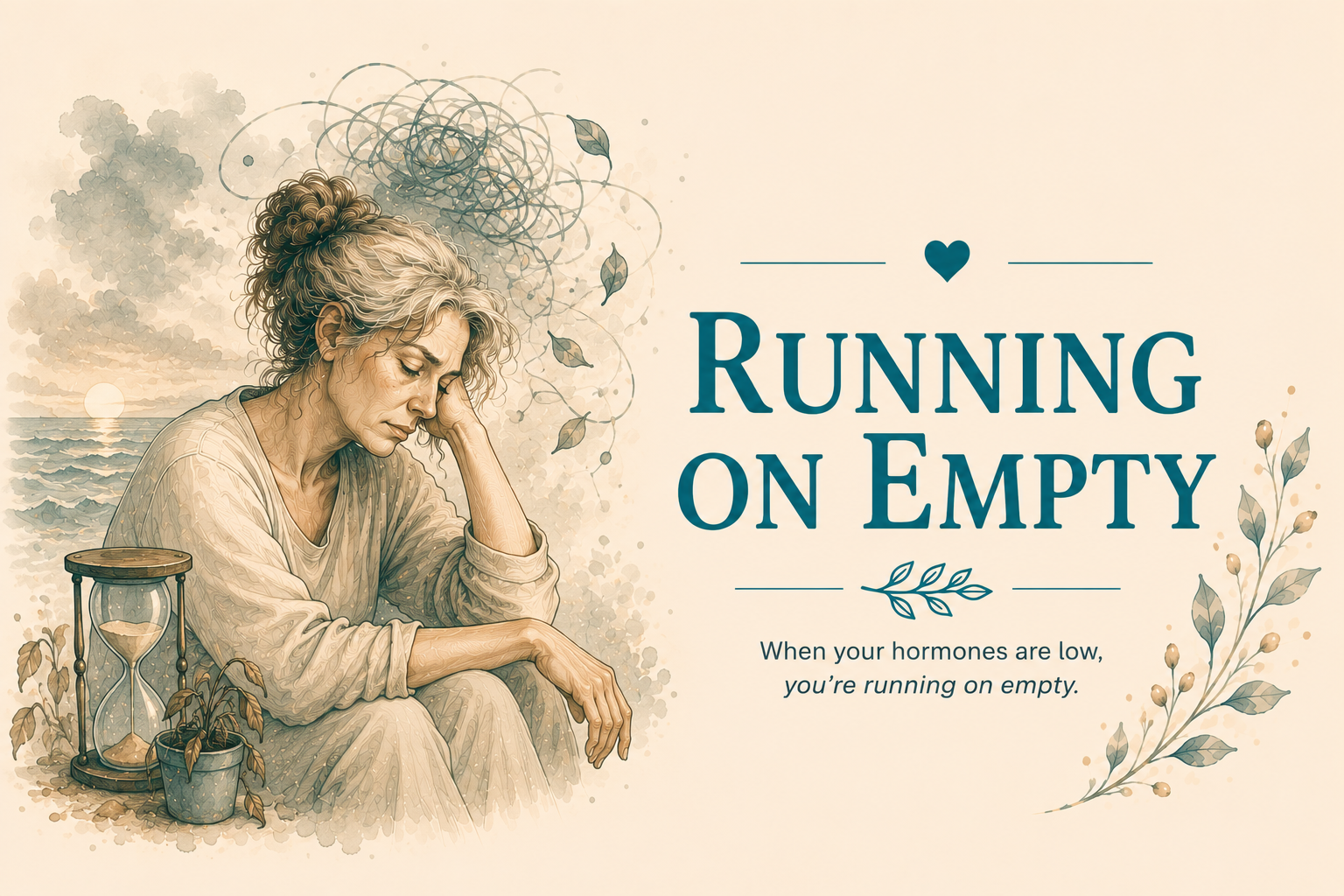
Running on Empty
If this was your top result, your symptoms may be pointing toward a pattern where your body is no longer receiving the same hormonal support it once did.You may be dealing with fatigue, low motivation, reduced confidence, brain fog, poor recovery, loss of libido, vaginal dryness, bladder symptoms, or a feeling that you’ve lost the spark you once had.And perhaps the most frustrating part?You may not feel like yourself anymore.You may have started wondering if this is simply what getting older feels like.If this is just how life is now.If the energetic, motivated, confident version of you is gone for good.Not because anything dramatic happened.But because the version of you that once felt energized, capable, resilient, and engaged seems harder to access.You still show up.You still do what needs to be done.But it feels like you’re operating with fewer internal resources than you once had.Your drive isn’t the same.Your recovery isn’t the same.Your resilience isn’t the same.And sometimes it feels like you’re spending more energy getting through the day than actually enjoying it.When your internal reserves feel depleted, it’s difficult to bring your best energy, focus, confidence, and enthusiasm to the things that matter most.These symptoms often aren’t random.They frequently occur together because they’re connected by the same underlying pattern.Why These Symptoms Tend To Show Up TogetherHormones do far more than regulate reproduction.They influence energy.Motivation.Mood.Muscle maintenance.Recovery.Brain function.Libido.And the health of vaginal and urinary tissues.As women move through menopause and into postmenopause, significant hormonal changes take place throughout the body.That’s why women with this pattern often experience a combination of fatigue, low motivation, reduced libido, vaginal dryness, bladder symptoms, poor recovery, brain fog, and a feeling of simply not being themselves.While these symptoms may seem unrelated, they are often connected by the same underlying issue: the body is no longer receiving the hormonal support it once relied upon.What May Be Driving ItUnlike some of the other menopause types, Running On Empty is often less about imbalance and more about a loss of support.During and after menopause, significant hormonal changes take place throughout the body.For some women, hormone levels decline substantially.For others, hormone levels may appear adequate on paper while symptoms suggest the body still isn’t receiving the support it needs.As hormone levels change, many women begin noticing that they simply don’t feel like themselves anymore.For some, this shows up as fatigue, low motivation, reduced confidence, poor recovery, brain fog, or loss of libido.For others, it may also include vaginal dryness, painful sex, bladder irritation, urinary urgency, recurrent urinary tract infections, or other symptoms associated with Genitourinary Syndrome of Menopause (GSM).The important thing to understand is this:These changes don’t occur simply because you’re getting older.They often reflect the loss of hormonal support that many systems throughout the body once relied upon.And while symptoms matter, the conversation doesn’t stop there.Many women are surprised to learn that menopause does not end when their periods stop.In reality, menopause is a transition into a new hormonal landscape that may influence health for decades to come.Hormonal changes during and after menopause may affect muscle mass, bone density, cardiovascular health, metabolic health, cognitive health, sexual health, and overall quality of life in the years ahead.This doesn’t mean decline is inevitable.It means awareness matters.Understanding what is changing gives you the opportunity to make informed decisions about how you want to support your health moving forward.And once you recognize the pattern, it becomes much easier to know where to focus.Ready for The Next Step?Your Menopause Type is more than a name for your symptoms. It helps you recognize the pattern behind them and make better decisions about what your body may need.The time you have just spent completing the assessment has given you a more useful place to begin. But understanding your pattern is only valuable if it helps you change how you feel.That is where the 6-Step Menopause Reset Roadmap comes in. It helps you turn what you have learned into a clear plan that addresses the whole picture, so you can stop guessing, focus on what matters most and make progress that lasts.Step 1 of the Roadmap is the 5-Day Menopause Clarity Challenge, a short guided experience that helps you connect your symptoms, understand your results and decide what to focus on first.You have already completed the assessment portion, so you are partway there.Join My Menopause Wellness Club FREE to finish Step 1. When you’re ready to go further, the complete Roadmap will help you create meaningful change in your energy, sleep, stress, metabolism, strength and hormones, so you can feel like yourself again.