2.
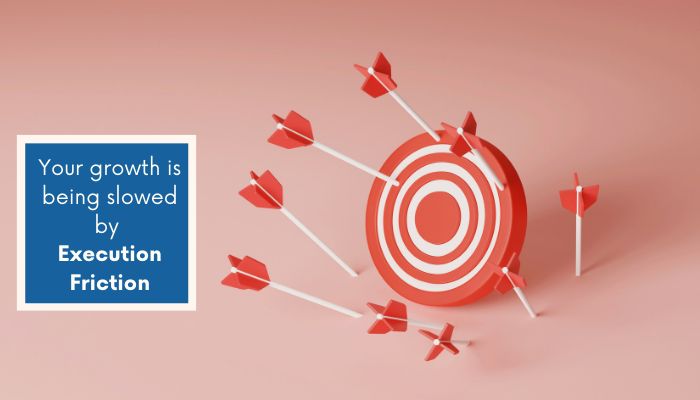
Execution Friction
Specifically: gaps between what your strategy intends — and how it’s actually experienced by different customers across channels and touchpoints.What this means Your strategy may be directionally sound.The friction isn’t in what you’re trying to do — it’s in how consistently and effectively it shows up in the real world.As organizations grow, execution friction often emerges when good intentions aren’t translated into experiences that account for how different customers actually engage, evaluate relevance, and build trust.In practice, this often looks like:products and offerings designed with a one-size-fits-all assumption that breaks down as customer identities, needs, and contexts varymessaging that sounds right internally, but lacks the customer intimacy, representation, or authenticity needed to truly landbrand stories that feel generic — or overcorrected — because cultural intelligence isn’t embedded into how messages are developed and reviewedinconsistencies across the experience — for example, strong resonance on social, but a very different (and less relevant) experience on the website or in productaccess and inclusion signals that exist, but are poorly placed or inconsistently delivered — for example, a Spanish-language experience technically available, but buried in a footer rather than integrated into the core journeyThe result is a brand that means one thing internally — but feels very different depending on who the customer is and how they encounter it.Why this matters as you scaleExecution friction doesn’t disappear with scale — it intensifies.As volume increases, small inconsistencies turn into systemic experience problems, leading to:rising acquisition costsuneven customer experiences and rates of customer successmissed opportunities to convert, retain, and build loyaltyEven strong strategies underperform when execution isn’t designed to support variation in customer expectations, needs, and lived contexts.The right next stepBased on your result, the most important next step isn’t adding more tactics — it’s understanding where execution is breaking down and why.That work starts with:examining how strategy is translated into real customer experiencesunderstanding how different types of customers experience your brand at key touchpoints — and whether that experience matches your intentidentifying where messaging, product delivery, or placement isn’t resonating with certain customer segmentspinpointing which touchpoints are creating friction, confusion, or drop-offThis clarity makes it possible to improve performance without guessing or overcorrecting.If you want support doing this workIf you’d like help working through this with structure, focus, and a strategic outside perspective, the Friction Finder Growth Audit can help.The audit is designed to help you see how your brand is actually experienced across key touchpoints, not just how it’s intended to show up.Using a structured evaluation approach, it helps:examine how strategy translates into real customer experiencesunderstand how different types of customers experience your brand at critical touchpoints — and where that experience breaks from intentsurface execution gaps related to messaging, product delivery, placement, and contextprioritize the friction points most likely to be affecting conversion, retention, and trustIt’s not about adding more tactics.It’s about making execution visible — so you can fix what actually matters.