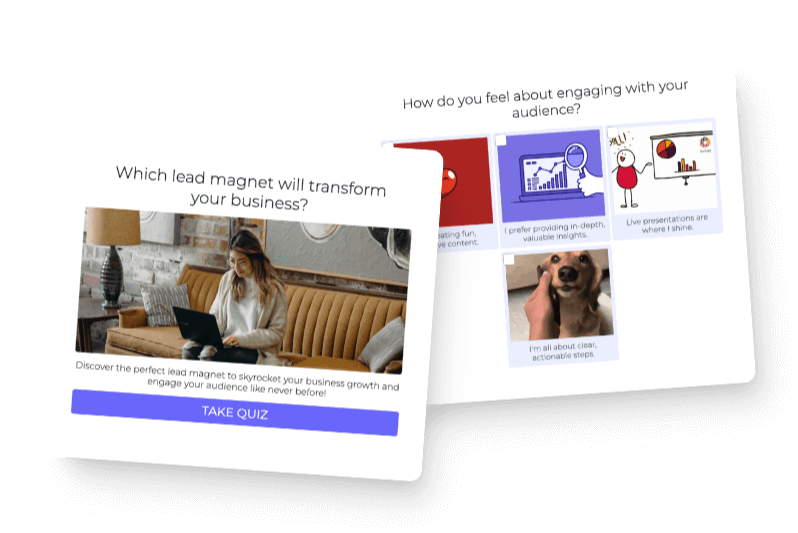

The most effective type of assessments identify if a person has a problem. This has been the trend since 2024 and I expect it to continue through 2026. People want to know if they are experiencing a problem, to explain why they feel like something is wrong.
Steps to Create Effective Assessments in 2026.
- Determine what problem your audience wants to know if they have.
- Create your assessment outcomes (you have the problem, you do not have the problem, you might have the problem)
- Write questions to determine if someone has the problem, each question has an answer choice corresponding to each of the outcomes (an answer choice for “you do not have the problem” an answer choice for “you do have the problem” an answer choice for “you might have the problem”)
- Set up your opt-in form to ask people if they would like to learn more about solving the problem by opting in. This part is optional.
- Promote your assessment through Intstagram, Podcasts, YouTube, Facebook Ads, and your Website.
Examples of Effective Assessments
1. Are You Living in a Highly Sensitive Body? From Michelle Shapiro, RD.
- Why it Works: This assessment is effective because it answers a question Michelle’s audience wants to know the answer to. Michelle said it’s been one of her most effective lead magnets driving from Podcasts and Instagram as well.
- How it Works: In this assessment, you answer 12 questions about how your body reacts and responds to a variety of situations, then you are given a report on whether or not you are living in a Highly Sensitive Body.

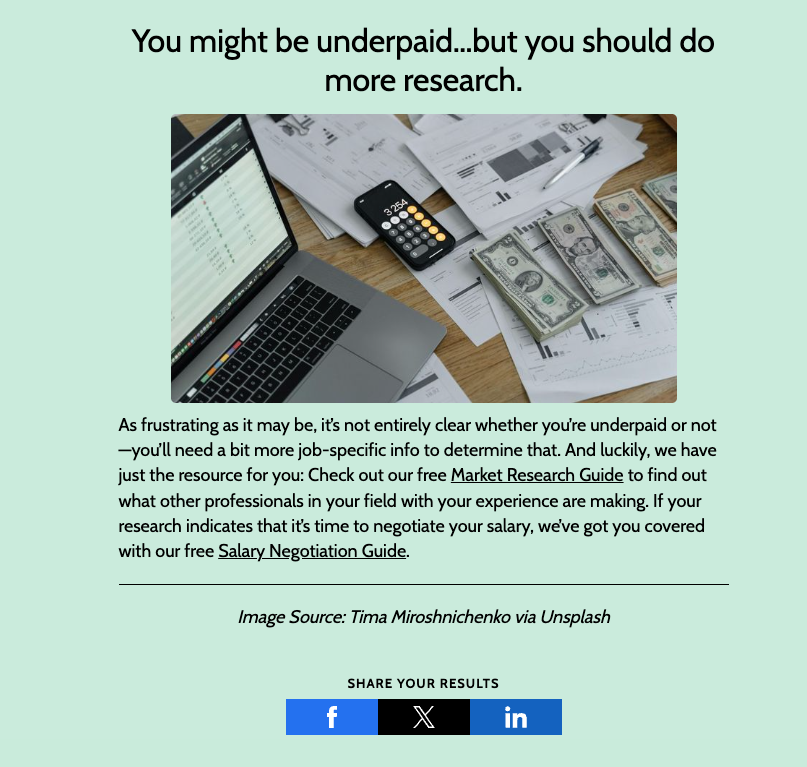
2. Are You Underpaid? From Salary Transparent Street
- Why it Works: This assessment is effective because it answers a key question from the audience. Salary Transparent Street conducts on-the-street interviews about jobs and salaries, posted on Instagram and TikTok. The viewing audience is naturally thinking “Am I being paid enough” as they watch, so this assessment is right there, featured in the link-in-bio, for anyone who is curious to know the answer to that question.
- How it Works: You answer a few questions about your salary situation, and then the assessment gives you a recommendation on whether or not you are underpaid. It’s simple but effective, and when I interviewed Hannah, the founder of Salary Transparent Street, she said it converted higher than a previous PDF version of the same assessment.