
Evergreen content used to mean an article that could rank in search for years. The usual advice was to answer a common question, optimize the page, and wait for people to find it.
That can still work, but the discovery layer is changing. People now ask AI chatbots for explanations, comparisons, and recommendations that once required opening several search results. A chatbot can summarize common advice without sending someone to every page that contributed to the answer.
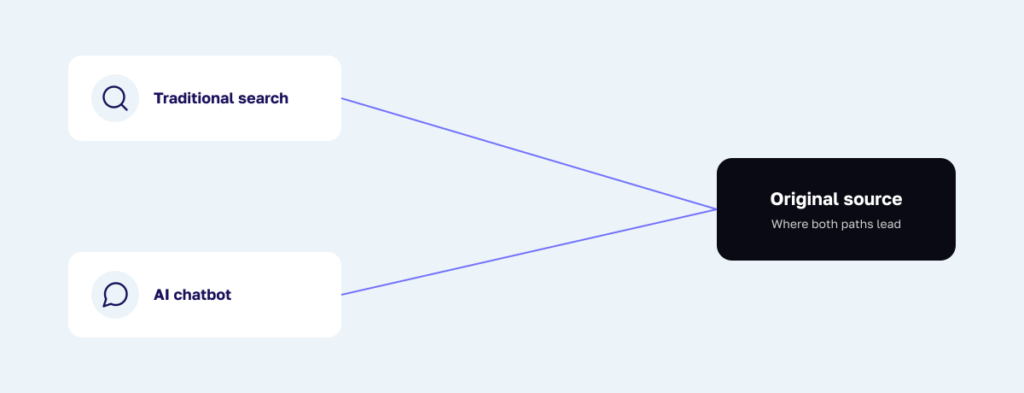
This does not mean websites are disappearing or that AI chatbots have replaced search. Google says its foundational SEO guidance still applies to AI search features, and ChatGPT search provides links to relevant sources. The safer conclusion is that AI is becoming another important way people discover and evaluate content.
For creators and companies, that changes what qualifies as durable content. A generic summary is easy for someone else to recreate and easy for an AI system to compress. A customer story, firsthand lesson, proprietary dataset, or original framework has a source. If you are that source, your content has a stronger reason to keep being found, referenced, and recommended.
Evergreen does not mean untouched forever
The original version of this article promised 47 ideas that would keep bringing in customers forever. But many of its examples depended on old rankings, social-share totals, search volumes, tools, and annual trend lists. Those details did not stay evergreen.
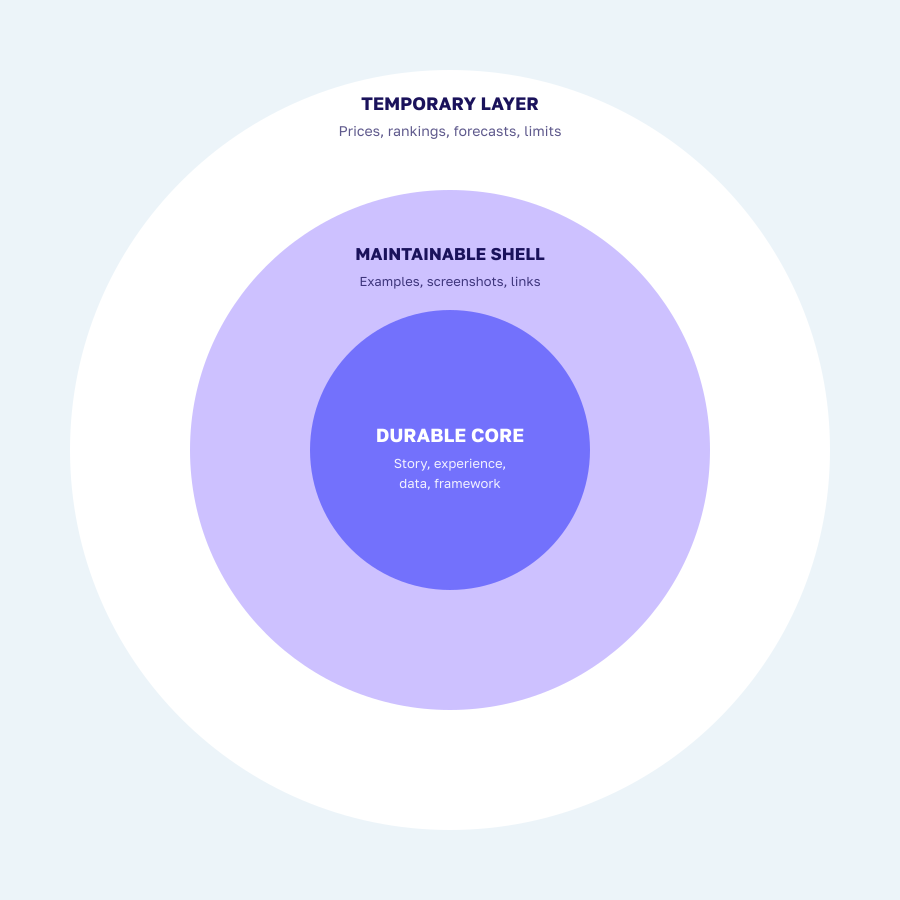
A better definition is content with a durable core. The central story, experience, dataset, or framework remains useful, while the surrounding examples, screenshots, links, and product details can be maintained. You are building an asset that deserves updates, not a page you can abandon.
In 2026, the most resilient content tends to come from information that cannot be produced by summarizing other websites. It comes from what your company has seen, measured, tested, created, and learned.
Eight evergreen content types for the age of AI
1. Customer stories with a real transformation
A strong customer story contains information that does not exist anywhere else. It shows what the customer was trying to do, what they chose, how they implemented it, what changed, and what they would do differently. That makes it more than a testimonial.
Advice With Erin is a good example for Interact. Erin McGoff kept hearing the same career questions from her audience, recognized six recurring profiles, and turned those patterns into a Career Quiz. The quiz has generated more than 140,000 leads, but the lasting value of the story is the process: listen for repeated questions, define the patterns, and turn them into useful outcomes.
TONIC Site Shop gives us another kind of customer story. Its Template Match Quiz has added more than 80,000 subscribers since its first version launched in 2018. The quiz changed as the company and its customers changed, which makes the story valuable as both evidence and a lesson in maintaining an evergreen asset.
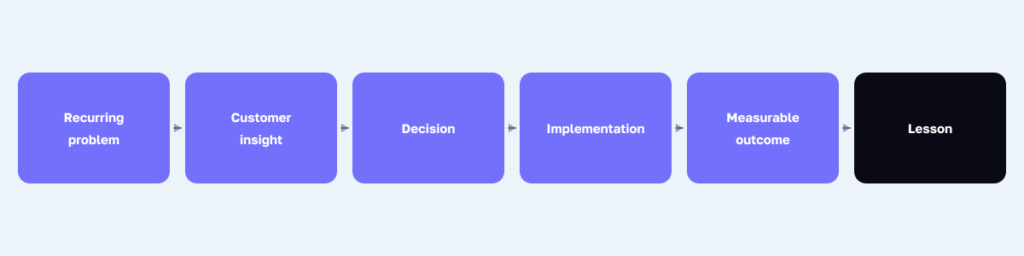
The number alone is not the story. The durable part is what the customer understood about their audience and how they turned that understanding into an experience. A chatbot can repeat the number, but your interview and evidence remain the original source.
2. Your experience as the founder or creator
Your experience is another source that competitors cannot reproduce honestly. You know why the company exists, which early assumptions were wrong, what customers kept asking for, which tradeoffs shaped the product, and how your point of view changed over time.
For example, the story of why we started Interact is not a generic article about lead generation. We had built a website that was getting traffic, but almost none of that attention was turning into a relationship. The missing step between attention and purchase became the reason for building the company.
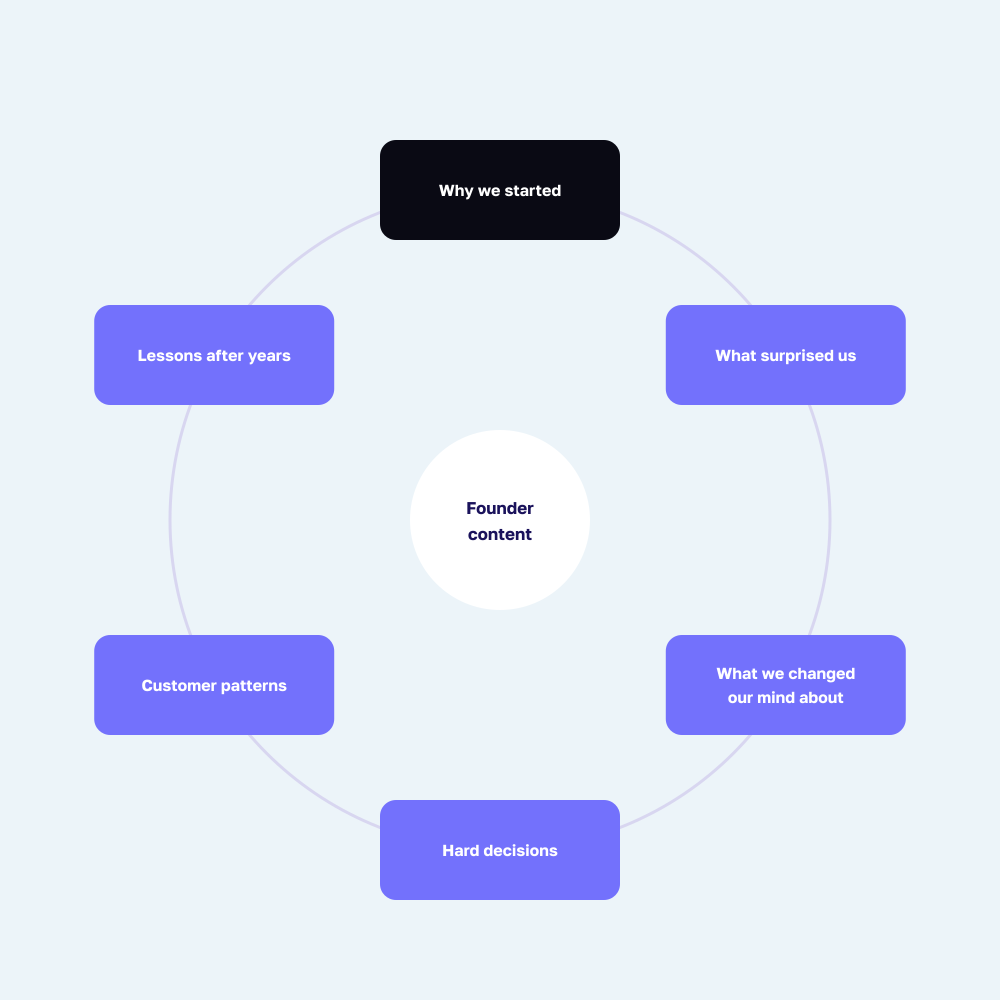
Founder content works when it teaches through specific events rather than turning into a biography. “Here are seven leadership tips” is generic. “Here is the decision I made, what I expected, what happened, and what I learned” is grounded in experience.
This material can stay useful for years because the lesson does not depend on a feature list or a platform trend. Review it when the company’s perspective changes, but do not sand away the uncertainty or mistakes that make the experience credible.
3. Proprietary data and benchmarks
If your company serves enough customers or processes enough activity, you may have data that can answer questions no outside writer can answer. The opportunity is not to publish the largest possible number. It is to publish a useful finding with enough methodology that readers can understand what the number represents.
The Interact Quiz Conversion Rate Report is one example. It defines conversion from quiz start to lead and reports results from activity on the Interact platform. That distinction matters because “quiz conversion rate” could otherwise mean visitor to start, start to completion, or completion to purchase.
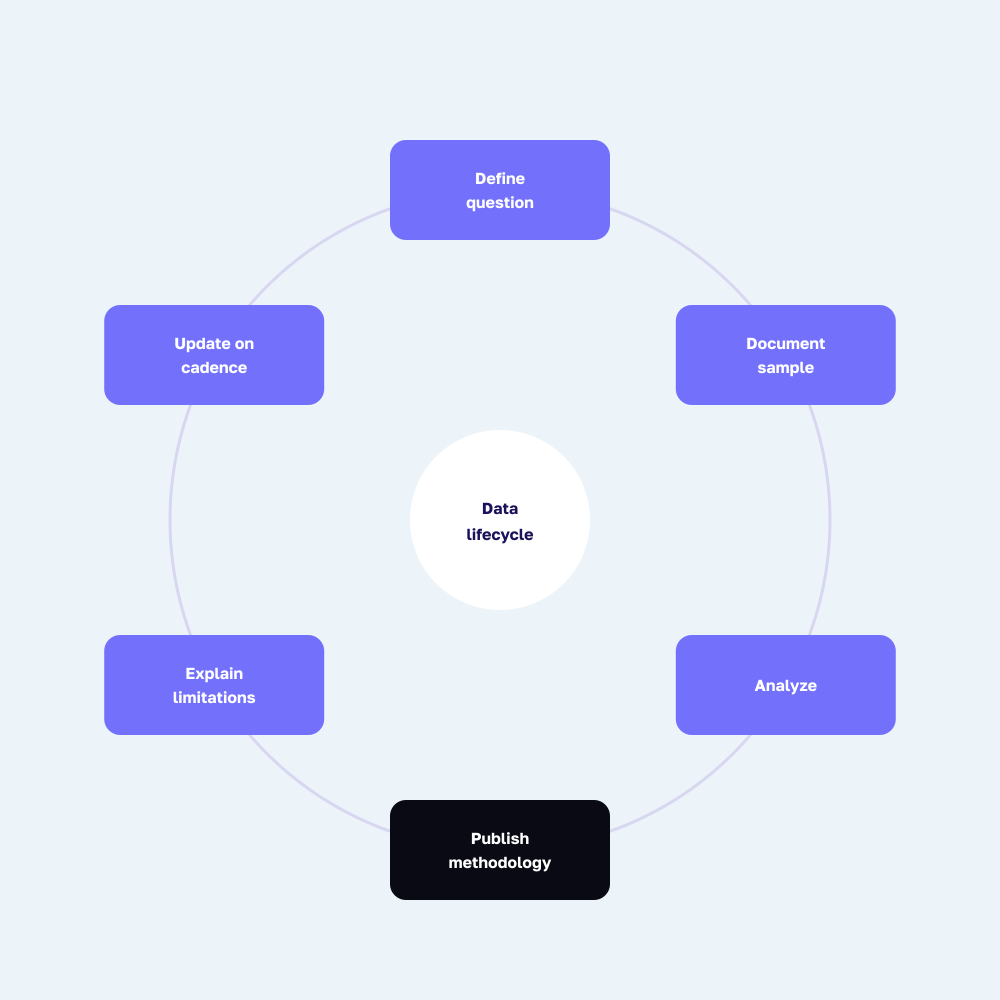
Data content is not automatically evergreen. The methodology can be durable, while the figures need a date and an update schedule. Keep the same canonical page when the question remains the same, clearly identify the measurement window, and preserve enough context for people to compare versions responsibly.
This is especially useful in an AI recommendation environment. Original data gives search engines, chatbots, journalists, and other creators something specific to cite. There is still no guarantee that a system will surface your page, but there is a clearer reason for it to treat the page as a source rather than another summary.
4. Original frameworks developed from repeated work
A framework packages your judgment into a form other people can use. The strongest frameworks are not invented because the content calendar needs a post. They emerge after you see the same problem across many customers and find a reliable way to explain it.
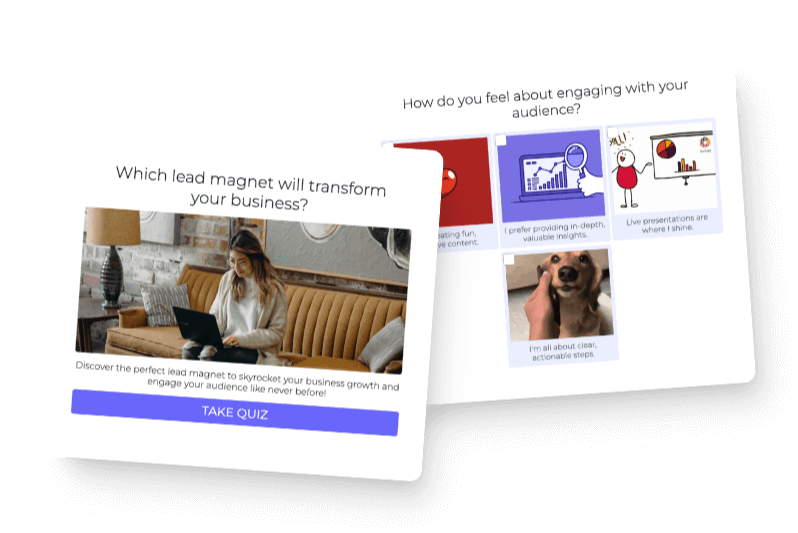
At Interact, one useful framework is the quiz as a guide to the next step. A company may have dozens of articles, products, services, and resources. The quiz asks a few questions, understands what the person needs, and directs them toward the most relevant option.
Another is the idea of scaling your best guidance. An expert already knows how to ask questions and recommend the next step in a one-to-one conversation. The quiz captures part of that judgment so the business can help more people without pretending every person needs the same answer.
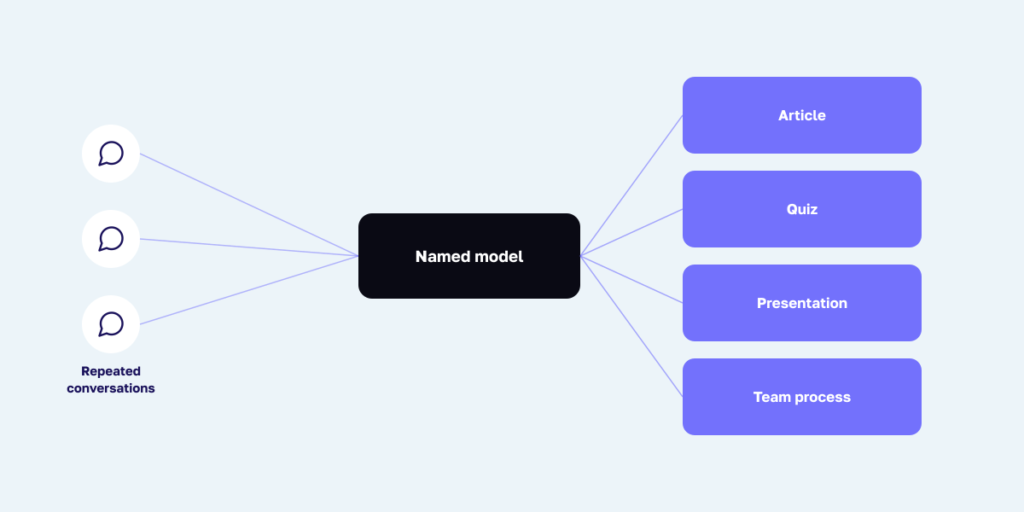
A named framework is not automatically defensible. Explain where it came from, show it in use, and identify where it does not apply. The examples and boundaries are what turn a catchy phrase into lasting intellectual property.
5. Experiments with the full setup and result
Experiment content shows what happened when you tried something under defined conditions. It can cover a marketing test, product change, onboarding sequence, pricing presentation, quiz variation, or internal workflow.
Publish the starting point, the change, the measurement window, the result, and the limits. A test that worked with an established audience may not work the same way with cold traffic. A test with 200 visits should not be presented like a finding from 200,000 visits.
The outcome does not need to be positive. A failed experiment can be more useful when it explains the assumption behind the test and what the company changed afterward. That record of real decision-making is difficult to replace with generic advice.
6. Patterns from customer conversations
Your support inbox, sales calls, interviews, direct messages, and implementation work contain recurring questions. One message may be anecdotal. The same concern appearing across dozens of conversations may reveal a durable content topic.
This is how many strong quizzes begin. Advice With Erin noticed recurring career profiles. The Car Mom repeatedly helped families weigh seating, car seats, cargo space, and driving needs. Their content and quizzes work because the questions came from real conversations, not a keyword list alone.
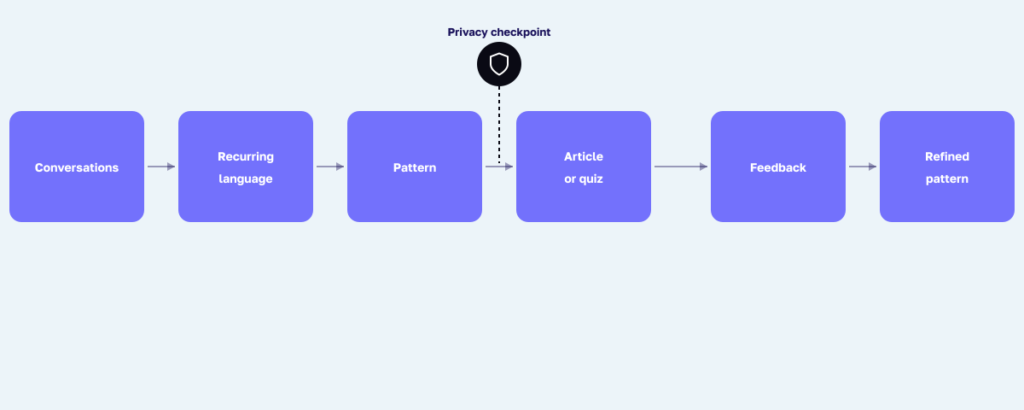
Protect privacy while using these patterns. Aggregate themes, remove identifying details, and ask permission before attributing a quote or story. The goal is to preserve the customer’s language and problem, not expose the person.
7. Behind-the-scenes decisions and processes
People often see the finished product without seeing the reasoning that produced it. A decision post can explain why you chose one direction, what alternatives you considered, what constraint mattered most, and how the team will know whether the choice was right.
This can include how you designed a product feature, created a quiz outcome, selected an integration, changed a workflow, or decided what not to build. The durable lesson is usually the decision principle. Product screenshots and implementation details may need updates, but the reasoning can remain valuable.
The key is specificity. “We care about simplicity” says very little. “We removed three configuration steps because first-time quiz creators were abandoning the setup before they could test an idea” gives the reader a decision, evidence, and tradeoff.
8. Interactive tools built from your expertise
Some expertise is more useful as an experience than as another article. A quiz, assessment, recommender, calculator, checklist, or template lets the audience apply the idea to their own situation.
The article can explain the problem and the method, while the interactive tool answers, “What does this mean for me?” That creates a useful next step for readers and gives the company direct feedback about the questions people are trying to solve.
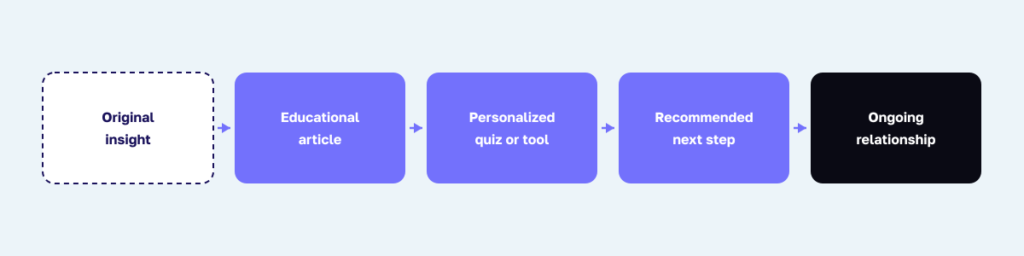
Interactive content also produces material for future evergreen pieces. The questions people skip, the outcomes they receive, and the follow-up questions they ask can reveal where the original explanation needs more depth. Use aggregate data and appropriate consent rather than turning personal responses into content without permission.
What AI changes about evergreen content
AI chatbots are good at organizing and summarizing information that already exists. That makes generic content less differentiated. It does not make publishing original content pointless. AI search experiences still depend on discoverable sources, and people still need somewhere to verify a claim, study the full methodology, understand the author, or take the next step.
Google’s guidance for AI search recommends unique, valuable, non-commodity content and says ordinary SEO fundamentals still matter. It explicitly warns against chasing special AEO or GEO tricks instead of creating useful content. OpenAI’s publisher guidance explains how sites can allow ChatGPT’s search crawler and measure referral traffic from ChatGPT search.
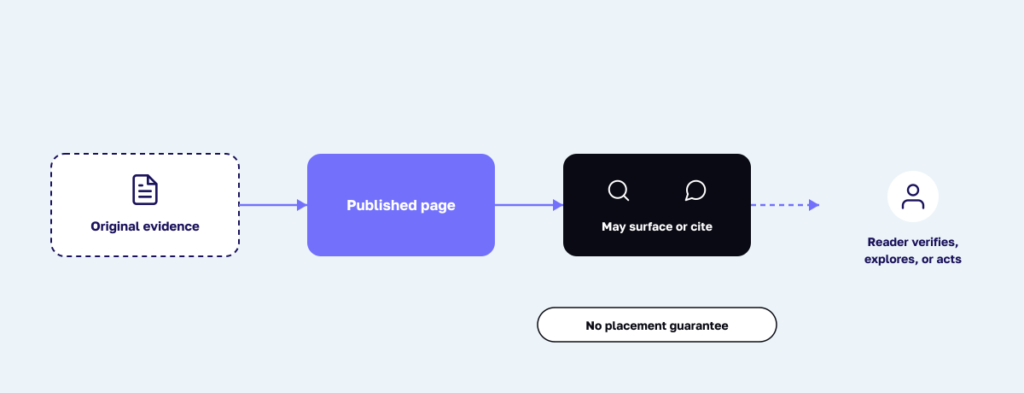
That is why I would not build a 2026 content strategy around trying to guess the exact sentence format a chatbot prefers. These systems will continue to change. I would build around becoming the clearest original source on questions your company is genuinely qualified to answer.
Make the page easy to understand, crawl, quote, and verify. But do not confuse accessibility to machines with usefulness to people. The content needs to reward the person who reaches the source.
How to make original content easier to recommend and trust
- Use a title that clearly states the question, story, dataset, or framework the page contains.
- Put the central answer or finding near the beginning instead of hiding it behind a long introduction.
- Name the author and explain why that person or company has direct experience with the topic.
- For data, include the sample, measurement definition, time period, methodology, and meaningful limitations.
- For stories, identify the customer, problem, process, result, and source of each metric when permission allows.
- For frameworks, define the parts, show an example, and explain the boundaries.
- Link to primary evidence and keep important pages crawlable and indexable.
- Connect the article to a useful next step, such as a related guide, quiz, template, product, or newsletter.
None of these actions guarantee a citation, ranking, or recommendation. They make the page more useful and easier to evaluate regardless of whether the visitor arrives through Google, ChatGPT, another chatbot, a social post, or an email.
A maintenance system for evergreen content
Every evergreen page should have three content layers. The first is the durable core: the story, experience, method, dataset definition, or framework. The second is the maintainable shell: examples, screenshots, links, product names, and calls to action. The third is temporary context: current prices, platform limits, rankings, forecasts, and trend statistics.
Protect the durable core. Review the maintainable shell on a schedule that matches how quickly the topic changes. Date, replace, or remove temporary context before it becomes misleading.
- Review product tutorials and integration articles whenever the interface or supported workflow changes.
- Review benchmark pages when a new measurement window is available.
- Review customer stories when a result is updated, the implementation changes, or the customer asks for a revision.
- Review external links, screenshots, product names, and calls to action at least during each substantive article update.
- Remove unsupported numbers instead of replacing one stale statistic with another weak statistic.
How to find your company’s best evergreen topics
You probably do not need 47 ideas. You need a smaller set of source-rich topics that your company can keep improving. Start with these questions:
- Which customer transformation could only be documented through our relationship with that customer?
- What have we learned from years of building this company or practicing this craft?
- What data do we have that could answer a real question for our market?
- Which patterns keep appearing across customer conversations?
- What framework have we developed to explain or solve a recurring problem?
- What have we tested that would save someone else time, money, or avoidable mistakes?
- Which part of our expertise would be more useful as a quiz, calculator, template, or other interactive tool?
A good answer should lead to material your company can support with interviews, records, examples, data, or direct experience. If the idea can be written just as credibly by anyone after an hour of internet research, it is probably not your strongest evergreen opportunity.
Evergreen content FAQ
Is evergreen content still worth creating in 2026?
Yes, but the strongest evergreen content has an original source behind it. Customer stories, firsthand experience, proprietary data, and tested frameworks give the page a reason to remain useful even when AI tools can summarize common advice.
Will AI chatbots replace search engines?
No one can responsibly promise what the final discovery landscape will look like. Search engines are adding AI experiences, chatbots can search the web, and people move between search, social, email, communities, and direct recommendations. Build content that works as a credible source across those paths.
Do I need special AEO or GEO formatting?
Clear structure helps readers and machines understand a page, but there is no universal formatting trick that guarantees placement. Google’s current guidance says foundational SEO still applies to its AI features and prioritizes unique, people-first content over special AI-search hacks.
How often should evergreen content be updated?
Update it according to the fastest-changing important element on the page. A founder story may need few changes. A benchmark, product tutorial, integration guide, or comparison may need scheduled reviews or event-based updates.
What is the best evergreen content type to start with?
Start with the source you already have. If customers are getting meaningful results, document one story. If your team has useful data, answer one question with it. If you keep explaining the same idea, turn that explanation into a framework or interactive tool.
The bottom line
The internet already has enough summaries of summaries. The opportunity in 2026 is to publish the material that future summaries need to come from.
Tell the customer story only you can document. Share the lesson you earned by building the company. Publish the data only your product can produce. Explain the framework that came from years of repeated work. Then maintain the page so the source stays trustworthy.
If AI chatbots become a larger recommendation engine for content, original sources should still matter because recommendations need something worth recommending. There are no guarantees about which page an AI system will cite or send traffic to, but being the source gives your content a stronger reason to remain valuable.