
People do not usually end up watching a deep-dive video about personal finance because they are casually looking for something to do.
As Tae Kim put it during our conversation, they are probably not choosing between watching Netflix and learning how to organize their investment accounts. They are watching because something about money is already bothering them.
Maybe they know they should be tracking their finances more closely. Maybe they have several investment accounts and are not entirely sure what is in each one. Maybe they are earning enough money but still do not feel as though they are making progress. Or maybe they simply have the persistent feeling that they should be doing better, without knowing exactly where to begin.
That is the mental state in which many people discover Tae’s YouTube channel, Financial Tortoise.
His videos give them information. They explain how investing works, how to keep track of finances, and how to build wealth slowly over time. But as Tae’s audience grew, he recognized a limitation that exists in almost all educational content.
The same video can reach thousands of people, but the people watching it are not all in the same place.
One person may already have a strong financial system and want to optimize it. Another may not know how many financial accounts they have. Someone else may understand what they are supposed to do but feel too overwhelmed to start.
The information can be broadly useful while still meaning something different to each person.
Tae’s interactive assessments create a way for people to find themselves within that information.
Content can explain the subject without locating the person
Tae’s approach to personal finance is grounded in his own experience.
His family immigrated from South Korea when he was nine years old. His parents were blue-collar workers, and the version of financial success he grew up with was relatively straightforward: study hard, attend a good college, and get a good job.
That path helped him build a successful career in finance, but it did not give him a complete framework for building wealth.
As he explained, he knew how to earn money, but he did not know how to convert those earnings into wealth. He made many of the mistakes that come from having a good income without much financial literacy. He bought an expensive car, spent money to appear successful, and left business school with six figures in student debt.
It was not until he got married and reached his early thirties that he began seriously educating himself about personal finance. He started tracking his money, paying down debt, investing more intentionally, and gradually undoing earlier decisions.
That journey eventually became the foundation of Financial Tortoise.
He could explain the principles he had learned through YouTube, but he also understood that knowing the principles is not always the problem. Most people already know, at least generally, that they should save, invest, manage debt, and keep track of their money.
The harder question is often much more personal:
How am I actually doing?
That is where Tae’s interactive content begins.
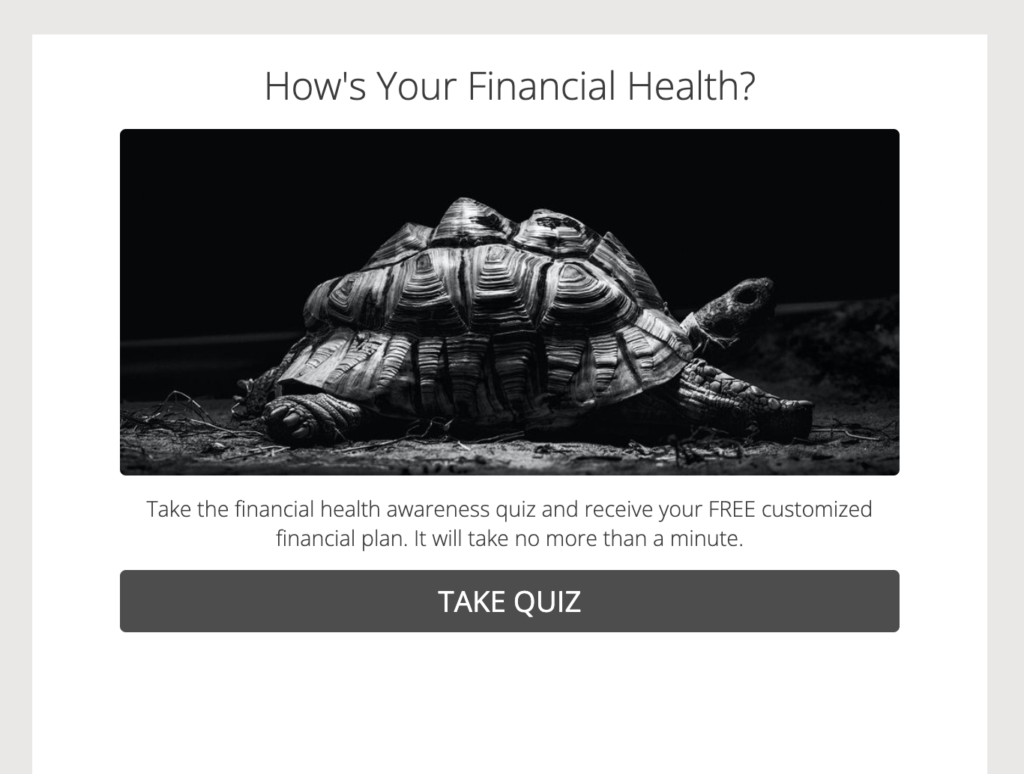
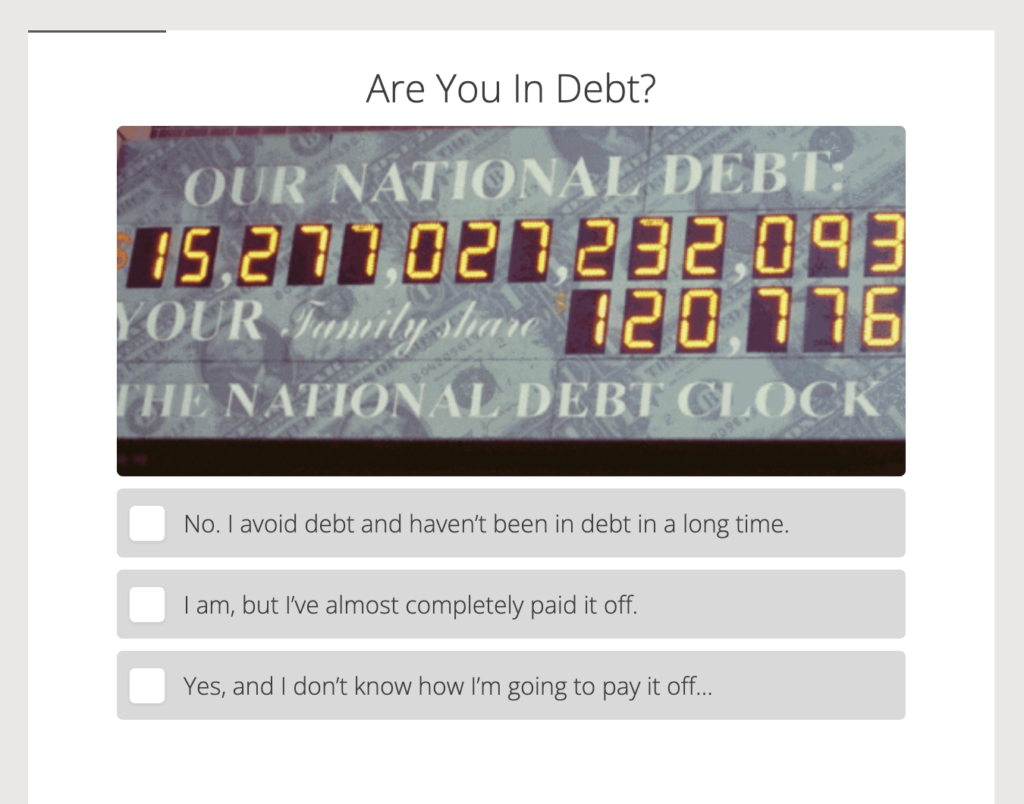
One of his experiences asks people to assess their overall financial health. The questions explore how they feel about money, whether they have a way to track their investments, how well they understand their accounts, and how organized their financial life feels.
At the end, the person receives an outcome and guidance based on their answers. Tae describes the experience as a way to help someone see whether they are doing well, where they could improve, and which tips are most appropriate for their situation.
The assessment does not introduce an entirely new subject. It helps the participant locate themselves within the subject Tae is already teaching.
The next question is often, “What does this mean for me?”
This is something that comes up repeatedly in educational content.
You can create a thorough article, video, podcast, or guide that explains an idea clearly. The person consuming it may understand every point and still be unsure what to do next.
The problem is not always a lack of information. Sometimes the person has not been able to connect the information to their own circumstances.
Tae’s financial-health assessment makes that connection more explicit. Instead of continuing to provide general advice, it asks the viewer to reflect on their own behavior.
Do you know what accounts you have?
Do you have a system for tracking your investments?
How do you currently feel about money?
The answers begin to turn an abstract subject into something personal. The participant can see whether they are already in a strong position, whether there are specific areas to improve, or whether they need to begin with the fundamentals.
Tae described the process as funneling people toward a particular outcome and then giving them tips suited to that situation. Someone who is already doing well may receive ideas for optimizing their finances. Someone who feels disorganized may receive a more foundational next step.
The content is still based on the same financial principles. What changes is the starting point.
That may be one of the most useful roles interactive content can play. It does not necessarily need to teach something completely different from the rest of your content. It can help people understand which part of what you already teach is most relevant to them.
The experience continues the reason they came to the content
There is a tendency to treat lead generation as a separate layer that gets attached to content after the fact.
A person watches a video about one subject and is then offered a generic checklist, newsletter, or downloadable guide because the business wants an email address.
Sometimes that works. But it can also feel like a change in direction.
Tae’s approach feels more natural because the interactive experience continues the same conversation that brought someone to the channel.
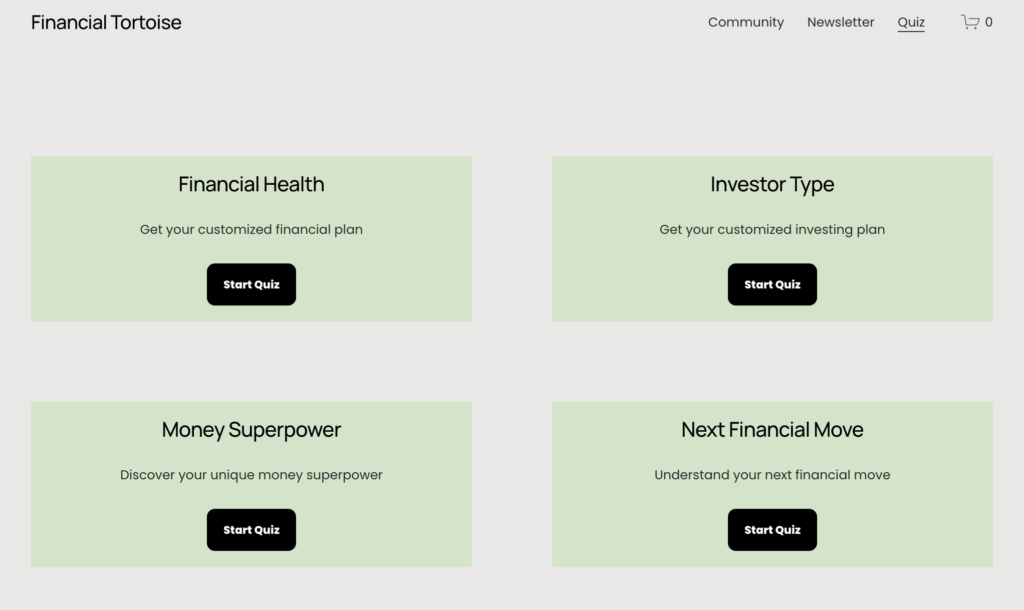
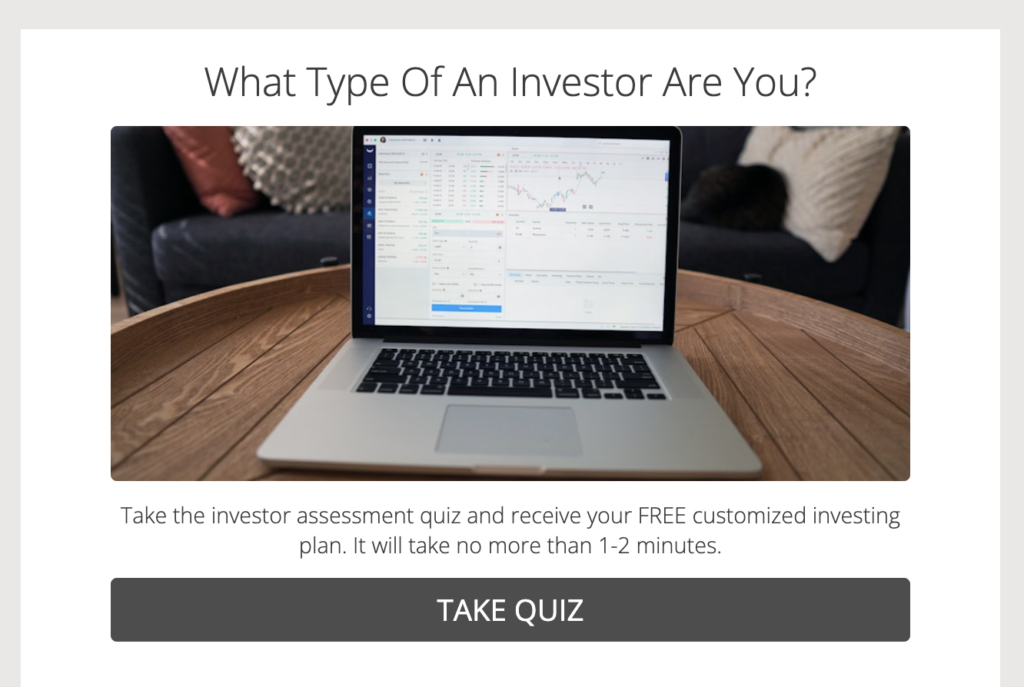
A person who is concerned about their finances can assess their financial health. Someone thinking about investing can explore their investor type and receive a customized investing plan. Someone who feels discouraged about money can identify their money superpower. Tae’s collection also includes an experience designed to help someone understand their next financial move.
The subject does not suddenly change once the viewer clicks away from YouTube. The next experience goes deeper into the same concern.
That continuity matters.
The person is not being asked to become interested in something new. They are being offered a way to better understand the issue that already has their attention.
Tae said the assessments have worked well because they give people something more interactive than simply receiving information through another video. They answer five or seven questions, receive a specific outcome, and get a tailored resource based on what they shared.
Lead generation is part of the system, but it is not the only thing happening.
The participant receives something useful. Tae learns more about what they need. The relationship can then continue in a more relevant way.

One audience can contain many different starting points
YouTube is an incredibly efficient way to reach people.
Tae can record a video from his living room and share it with thousands, or even millions, of viewers around the world. That reach would have been difficult to imagine not very long ago.
But the efficiency of one-to-many content comes with a tradeoff.
Everyone watches the same video.
That is not a problem when the goal is to explain a general idea. It becomes more limiting when the right next step depends on the person.
Two people can watch the same video about investing and need very different things afterward. One may need help opening an account. Another may need to simplify a portfolio that has become too complicated. A third may already be in a good position but want to reduce fees or improve diversification.
The video cannot know which viewer is which.
An assessment can ask.
This is where Tae’s use of Interact and Kit becomes useful. Once someone completes an experience, they can be added to his email list with a tag connected to the assessment or their responses. Tae can then place them into an email sequence that follows naturally from the experience they completed.
The follow-up does not have to guess why the person joined the list. The person has already said something about what they are working through.
That creates a more useful transition from an anonymous viewer to an understood audience member.
A YouTube view shows that someone was interested enough to watch. Their answers provide more context about what that interest means.
Helping someone see a strength can be more inviting than diagnosing a weakness
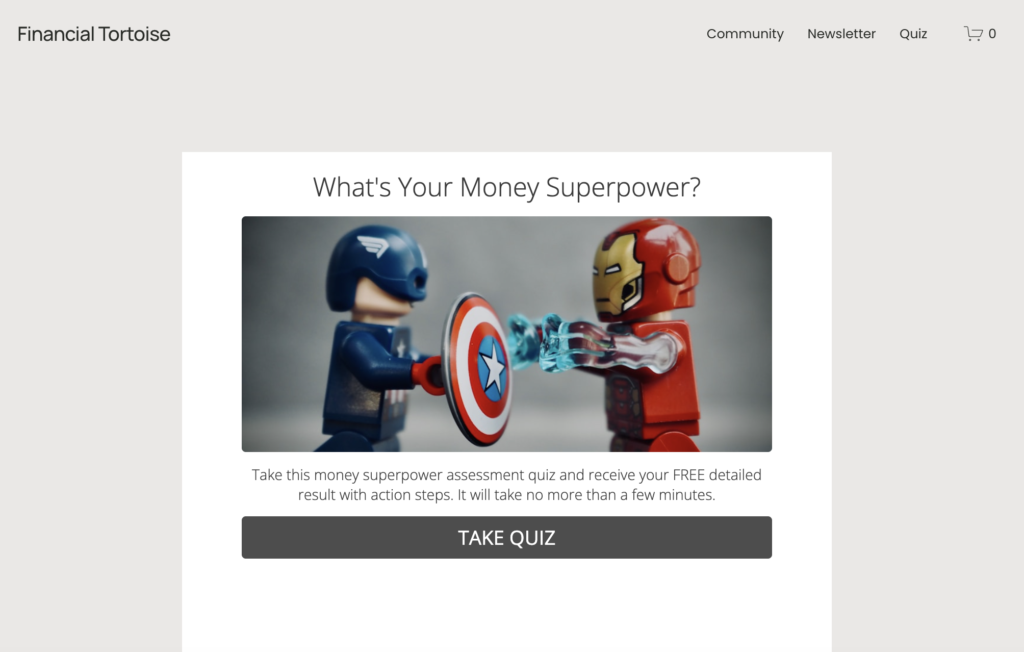
One of Tae’s more popular experiences is called “What Is Your Money Superpower?”
I found that example especially interesting because money is such an emotional topic.
Many people already feel behind. They may be embarrassed by past decisions, anxious about debt, or uncomfortable looking at their accounts. An experience that begins by pointing out everything they are doing wrong may reinforce the exact feelings that cause them to avoid the subject.
Tae took a different approach.
As he explained, people generally prefer talking about their strengths rather than being told they are bad with money. The premise of the experience is that everyone has some form of financial strength, even if they also have areas to improve.
The framing does not pretend that every financial habit is equally useful. It simply gives the person a more encouraging place to begin.
That makes sense to me.
People are often more willing to look honestly at what needs to change once they feel that the conversation understands what they are already doing well.
The experience still helps Tae understand the participant. It still leads toward relevant guidance. But it does so without making the person feel as though they have failed an exam.
This is especially important for content built around topics people already feel sensitive about. Money is one example, but the same dynamic can show up in health, careers, relationships, parenting, and business.
The way the experience is framed can determine whether someone feels curious enough to participate or defensive before they even begin.
People often need orientation before they need more information
There is now an enormous amount of financial information available online.
A person can find thousands of videos about investing, budgeting, retirement, debt, and building wealth. AI can answer almost any basic question about those subjects in seconds.
The existence of more information does not automatically make it easier to act.
In some cases, it makes the problem harder. There are more strategies to consider, more opinions to compare, and more possible starting points.
Tae’s interactive content offers a form of orientation.
It helps someone step back from the entire universe of financial advice and consider their own position.
What is already working?
What is unclear?
Where is the most obvious gap?
What deserves attention first?
Once the person understands where they stand, the information becomes easier to navigate. They do not have to consume everything. They can focus on the part that applies to them.
That is a useful way to think about the relationship between broad content and personalization.
The broad content explains the landscape. The personalized experience helps someone find their current location on the map.
The business benefits because the audience benefits
It would be incomplete to talk about Tae’s approach without acknowledging that the assessments also generate leads.
When someone finishes an experience, they can join his email list. Interact passes the relevant information into Kit, where Tae can use tags and sequences to follow up.
That is clearly valuable for his business.
But the reason the system works is that the experience has value before the email sequence begins.
The participant gets a result, guidance, and a clearer understanding of their situation. Tae gets a subscriber with more context than a name and email address.
Both sides know why the relationship is continuing.
That is different from collecting an email address first and trying to determine what the person wants later.
The assessment creates a small conversation before the follow-up begins.
It asks the person to share where they are. It gives them something useful in response. The next email can then continue from that point rather than starting over with a generic introduction.
Lead generation becomes a byproduct of providing direction.
Helping people find themselves in the content
Tae’s assessments work because they are not disconnected from what he already teaches.
They are built around the same pain points that bring people to Financial Tortoise in the first place.
People want to know whether their finances are healthy.
They want to understand how they approach investing.
They want to feel that they have some strengths, even if they still have work to do.
The videos explain the ideas. The interactive experiences help each person see where they fit.
That is the larger opportunity.
As content becomes easier to create and information becomes easier to access, it may be worth thinking beyond what else we can explain.
We can also think about how to help someone interpret what has already been explained.
How can they recognize their starting point?
How can they identify the part that applies to them?
How can they leave with a next step that reflects what they actually need?
People do not always need another complete answer.
Sometimes they need a way to find themselves within the answer.