

If you want to use a quiz to promote your book, start with a question your reader wants answered about themselves. Then look at how your book helps them explore that same topic in more depth.
That connection is what I like about Katherine Morgan Schafler’s Perfectionist Profile Quiz. The quiz helps someone explore their perfectionist profile, and her book, The Perfectionist’s Guide to Losing Control, is about that same topic.
It’s an excellent quiz in its own right. Someone who is curious about their perfectionism has a reason to take it. And once they’ve explored their profile, the book is a natural place to continue. The quiz dovetails into the book perfectly.
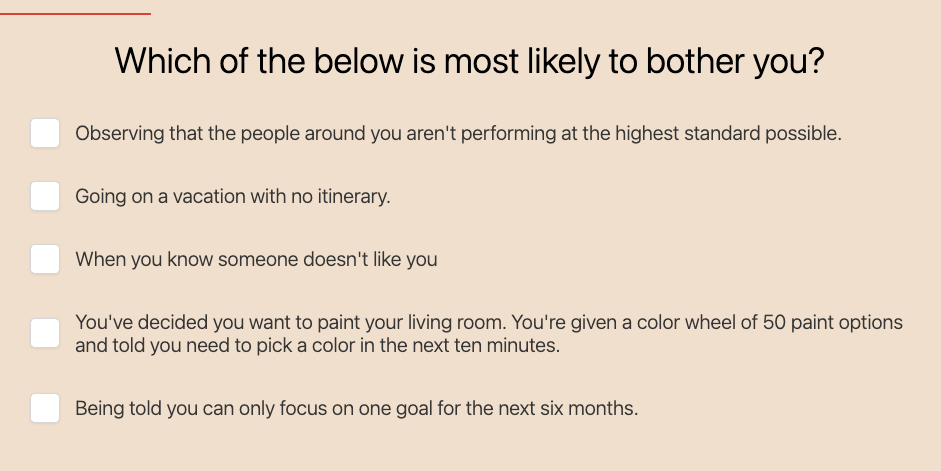
A person might come across your book and be interested in the general subject. With a quiz, they get to consider how that subject shows up for them. They answer questions about themselves and receive an explanation that helps them understand what their answers suggest.
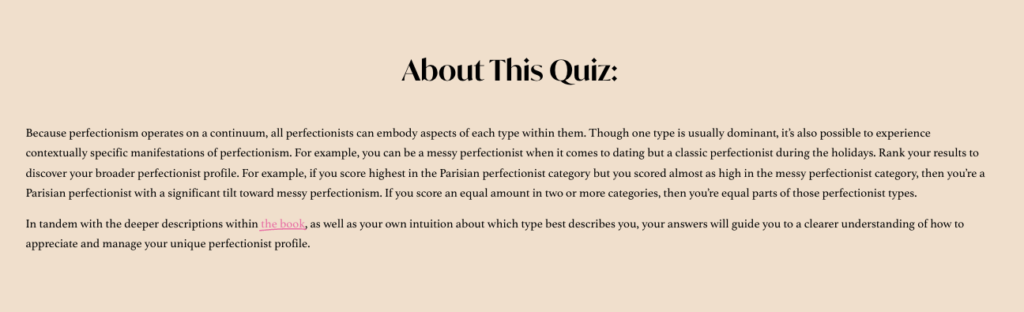
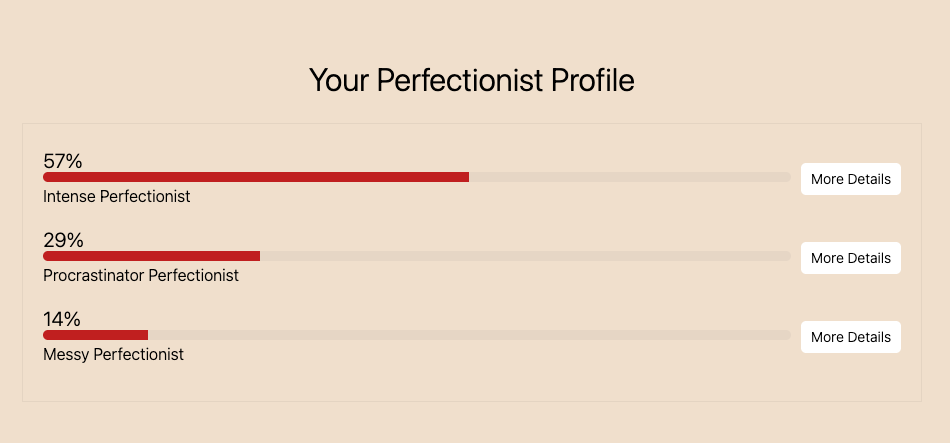
Katherine’s quiz also makes room for people to relate to more than one perfectionist type. Her quiz page explains how to consider the different profiles together and points readers toward the deeper descriptions in the book. That gives someone a way to keep exploring the mix of patterns that fits them.
For an author creating a quiz, I would look for a question that your book is already equipped to help answer. Think about the people you wrote it for and what they want to understand, change, or do differently.
If you’re writing a book about making decisions, for example, you could create a quiz that helps someone recognize what tends to happen when they have an important choice to make. Perhaps they keep collecting information, look to other people for reassurance, or struggle to choose between several appealing options. Those are illustrative directions you could explore if they fit the ideas in your book.
Once you’ve chosen that question, think about the different answers someone could receive. What would each result help them understand? What would make one person’s explanation different from another’s?
Your knowledge of the subject matters here. You know the distinctions you’re trying to make and the everyday situations that reveal them. Use those situations to write questions people can answer from their own experience. They should be able to participate before they’ve learned your terminology or read the book.
Put that same care into the results. Explain what the person got, what it means, and how it might show up in their life. Give them something useful to think about or try. You want someone to finish reading their result and feel that taking the quiz was worthwhile.
Then connect the book to what they’ve just learned. Explain what they can explore further by reading it. That could be a fuller explanation of their pattern, examples that help them recognize it, or guidance for working with it, depending on what your book actually provides.
The quiz can also be useful to someone who already has your book. You can invite readers to take it as a way to connect the ideas they’re reading with their own experiences. That gives the quiz a role in helping people engage with the book as well as discover it.
Make the quiz easy to find wherever you’re already talking about the book. Give people a clear description of what they’ll learn about themselves, and let the quiz deliver on that promise.
When you’re reviewing the finished quiz, follow one person’s path from the title through the questions and result to the book recommendation. Does each step develop the same topic? Can they see why the book relates to what they’ve just discovered? Katherine’s quiz is a good example to study because that connection is so clear.