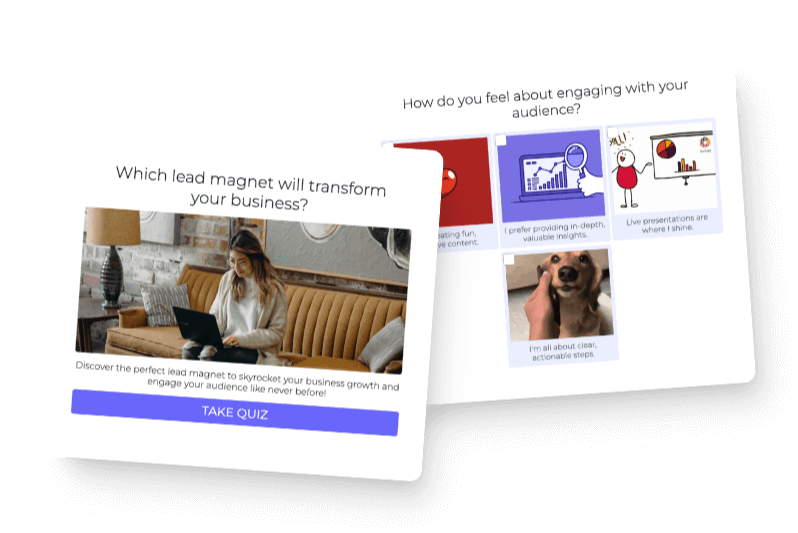

How Gretchen Rubin Media and Atlassian use interactive content to make existing attention more valuable.
Most businesses do not have unlimited attention. Even businesses that have built a meaningful audience only get a few moments at a time.
Someone sees a post that resonates with them. They watch a video, listen to part of a podcast, or read an article. For a moment, they are interested enough to wonder who made this and what else they might have to say.
Then the moment passes.
That is the part of content marketing that I think we sometimes skip over. We spend a lot of time thinking about how to earn attention, but not nearly as much time thinking about what happens immediately after we get it.
The business opportunity is not simply to create more content. It is to make more of the attention you already have while you have it.
The handoff after someone becomes interested
Most content is created for a broad audience. You publish a post about a problem that a lot of people experience, and the job of that post is to make someone stop and pay attention.
But once they do, the experience usually stays broad.
They visit your website and see the same homepage as everyone else. They click the link in your social media bio and see a list of six or seven different things they could explore. They may find a collection of articles, products, podcast episodes, books, services, or courses.
At that point, the person has to figure out what is relevant to them.
This is where a lot of attention disappears. The content did its job and created curiosity, but there was no clear handoff between that moment of interest and the part of the business that would be most useful to that particular person.
Personalization can make that handoff much stronger.
Instead of asking someone to navigate your entire body of work on their own, you can help them recognize where they fit. You can ask a few questions, understand what they are trying to accomplish, and point them toward the ideas, products, or next steps that make the most sense for them.
That is what a quiz, assessment, or other interactive experience can do.
People are naturally interested in learning about themselves
Quizzes have gone through waves of popularity. BuzzFeed made the format extremely visible for a period of time, but the underlying appeal of quizzes existed long before BuzzFeed and continues even though the company itself is no longer at the center of the conversation.
People are interested in themselves.
That does not have to mean they are self-centered. It means that most of us are naturally curious about why we behave the way we do, where we fit, what we might be missing, and what we might do next.
A quiz takes a broad topic and makes it personal.
An article about leadership styles gives me information about leadership styles. A quiz about my leadership style gives me information about myself.
That distinction matters.
The person is no longer passively consuming something you created. They are participating in it. They are answering questions, considering their own situation, and waiting to see what the answers reveal.
That participation tends to create a deeper connection to the result. The person has contributed something to the process, so the final recommendation feels more specific and relevant to them.
The self-discovery element is what initially pulls someone in. The personalization that follows is what allows the business to build on that attention.
The transition usually happens in one of three places
In practice, I see this transition from broad content to personalized content happening in three main places.
The first is on the website.
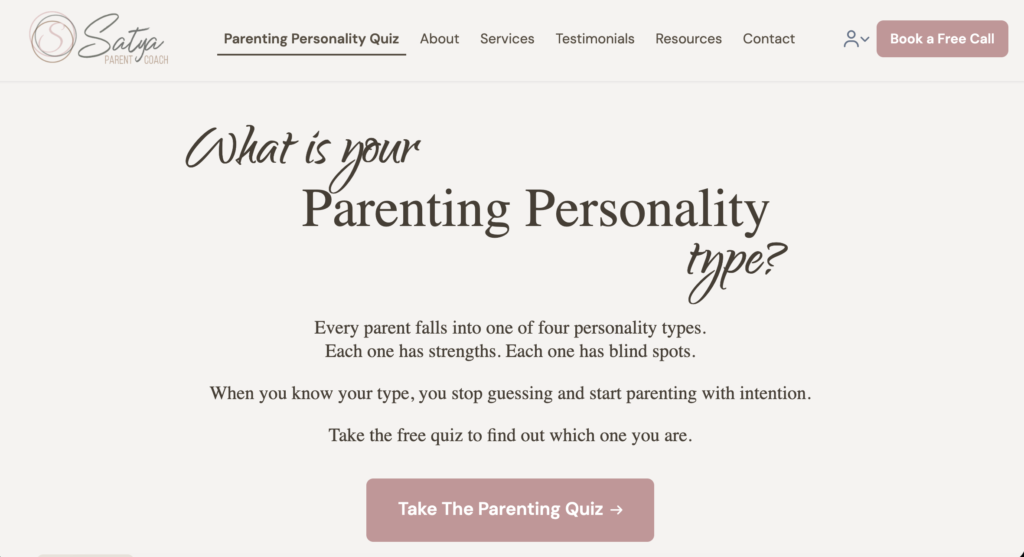
Someone finds an article through search, follows a recommendation, or visits the website after seeing something on social media. The quiz can live in the site navigation, on the homepage, inside a piece of content, or on a dedicated landing page.
The second is the social media link in bio.
This has become one of the most common places for a quiz to live. Someone sees a post that catches their interest, visits the creator’s profile, and clicks the link because they want to learn more.
At that point, they are interested, but they may not know which part of the business is for them. A quiz gives them a clear place to begin.
The third is directly through social content using DM automation.
Someone comments on a post or sends a keyword, and the quiz is delivered to them through a direct message. This creates an especially direct handoff because the interactive experience is closely connected to the content that originally caught their attention.
All three of these entry points serve the same purpose.
The public content creates interest. The interactive experience takes that interest and helps the individual find their path through the business.
Gretchen Rubin uses quizzes as a discovery system
Gretchen Rubin Media is one of the clearest examples I have seen of this strategy working across an entire body of content.
Gretchen has spent years developing ideas, frameworks, books, podcast episodes, articles, and tools around happiness and human nature. There is already a large and deeply considered body of work for people to explore.
The challenge is helping each person find the part that is most relevant to them.
That is where the quizzes come in.
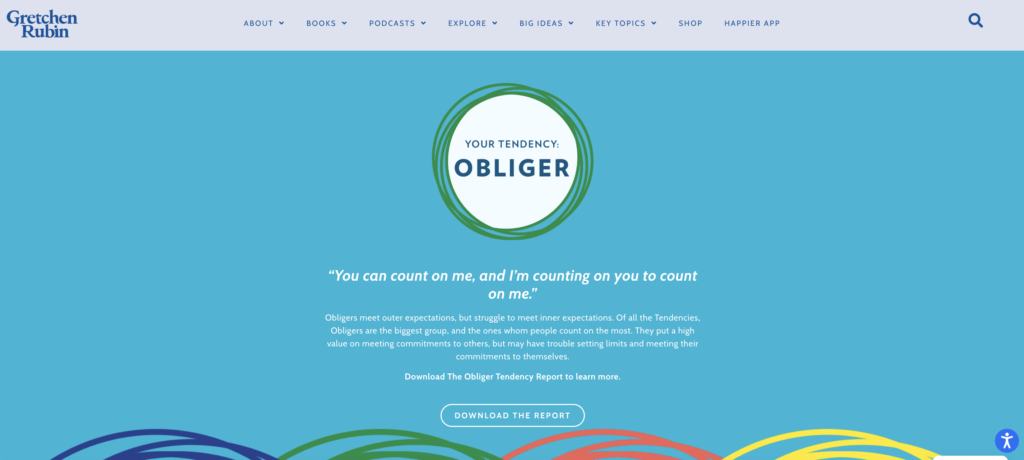
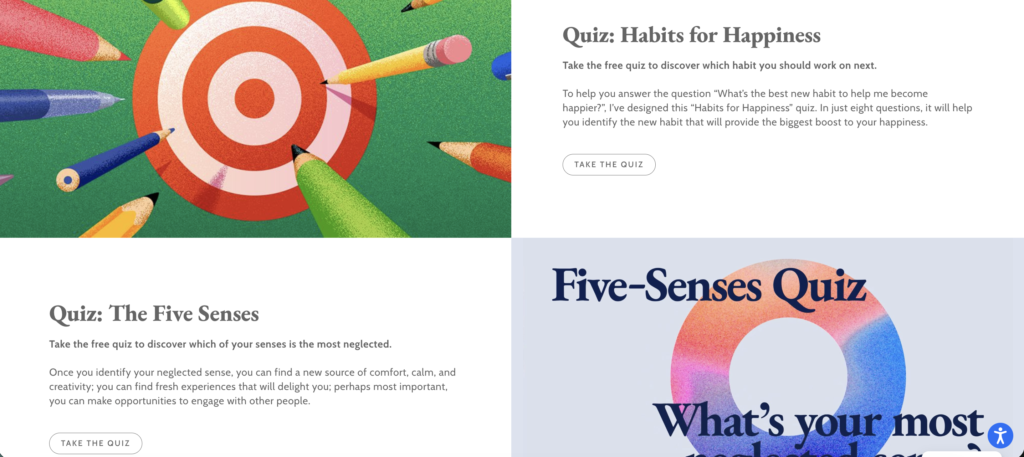
The Four Tendencies Quiz helps people identify how they respond to internal and external expectations. Other quizzes explore habits, happiness, and gift giving. Each quiz begins with something the person wants to understand about themselves and then connects that interest to a specific part of Gretchen’s work.
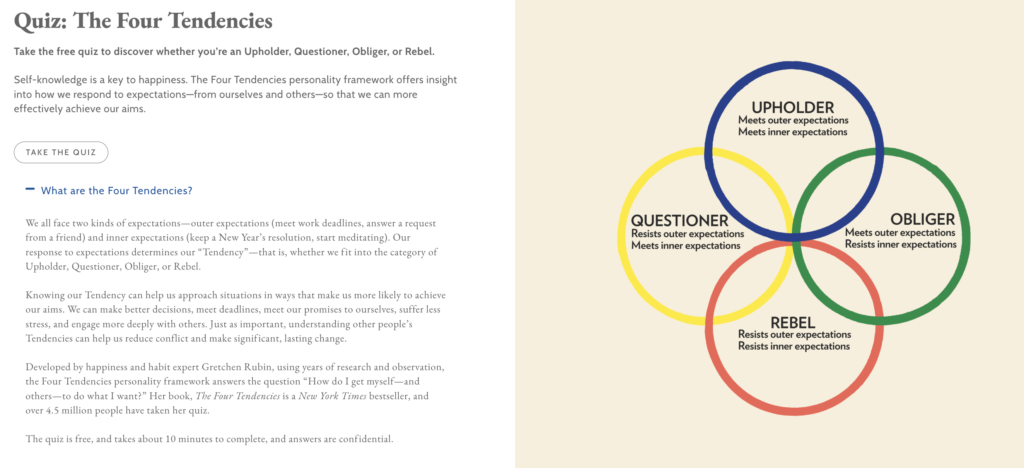
Anne Mercogliano, CEO of Gretchen Rubin Media, has described quizzes as one of the company’s most powerful discovery features. Newly launched quizzes have become meaningful search and email-list growth drivers, while also bringing people into Gretchen’s broader collection of ideas and content. Read the Interact case study.
That is why I think of these quizzes as a distribution system.
They do not only distribute one article or one offer. They help distribute Gretchen’s entire body of work by giving each person a personalized entry point into it.
The quiz does not replace the books, podcast, newsletter, or articles. It helps the right people discover them.
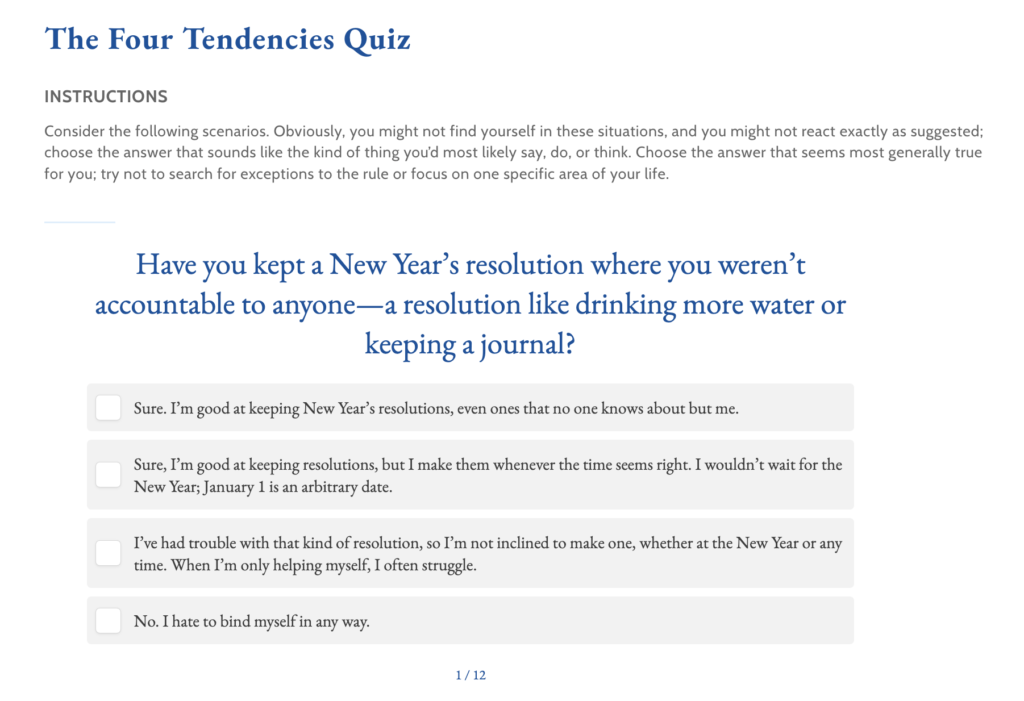
The result is where the distribution system becomes visible. Once someone understands their tendency, the business can recommend the most relevant explanations, podcast episodes, books, articles, or next steps.
It also creates new opportunities for distribution outside Gretchen’s existing audience. Her Gift Giving Quiz was featured by Axios, while a habits-focused quiz received coverage from Fortune. Those quizzes gave publications something timely and interactive to share while still connecting people back to Gretchen’s larger body of work.
This is an important distinction. The quiz is not being used as an isolated lead magnet sitting off to the side of the business.
It is functioning as an active layer across the content ecosystem.
Atlassian uses participation to stand out
Atlassian demonstrates a different version of the same idea.
When I interviewed Sarah Goff-Dupont, a content writer and storyteller at Atlassian, she explained how the company uses quizzes within its content strategy. One example was an article about leadership styles.
Leadership styles are not an underserved content topic. There are already an enormous number of articles explaining the major styles, how they work, and when they are effective.
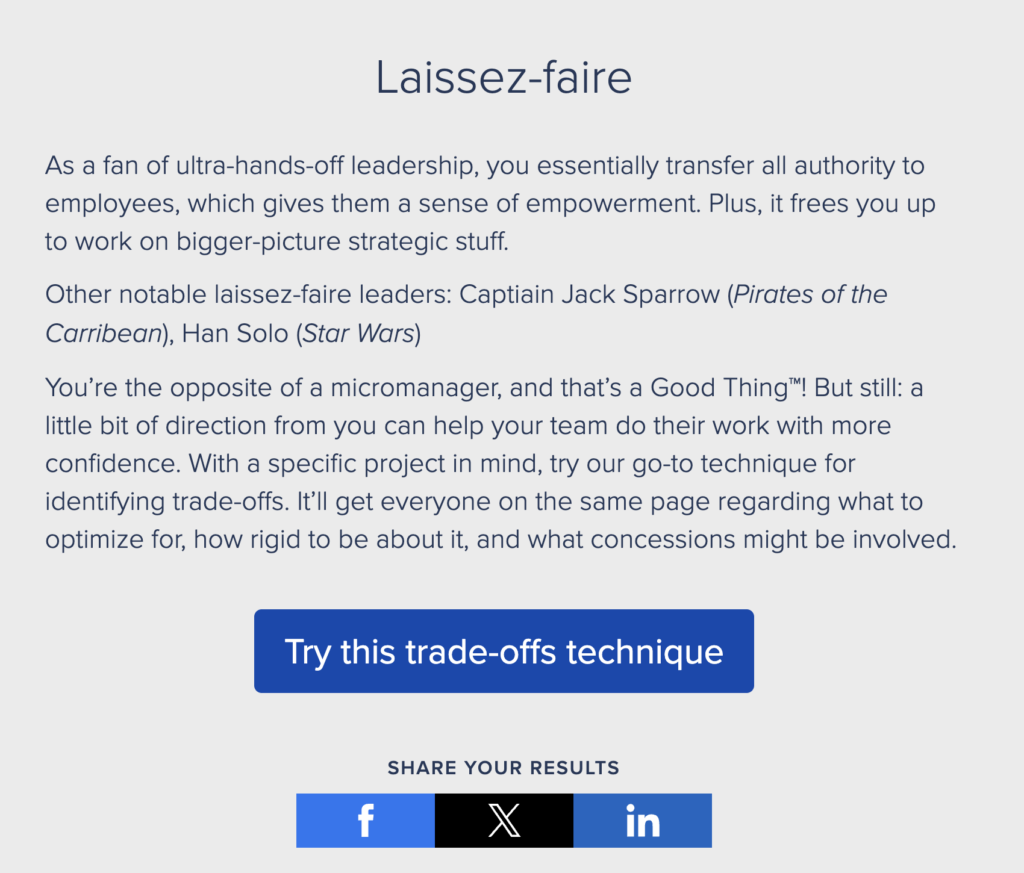
Atlassian could have published another well-written article on the topic. Instead, the team added a quiz that helps readers discover their own natural leadership style.
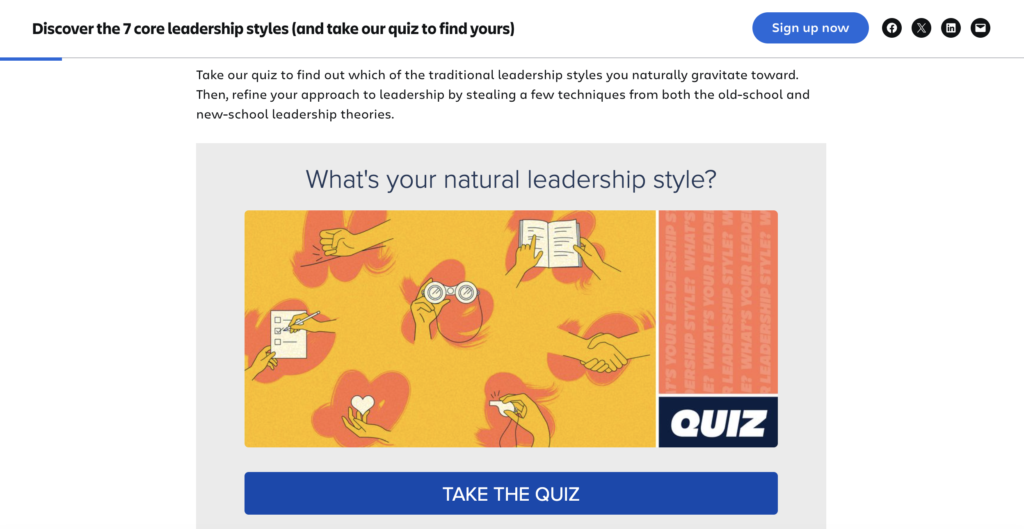
The article still provides the information someone might find through Google or an AI answer. The quiz adds something that the summary alone cannot provide: an individualized experience. As Sarah explained, AI can list leadership styles and provide basic descriptions. The quiz gives the reader a reason to participate and find out which description applies to them. Read the Interact case study.
That creates differentiation, but it also creates memorability.
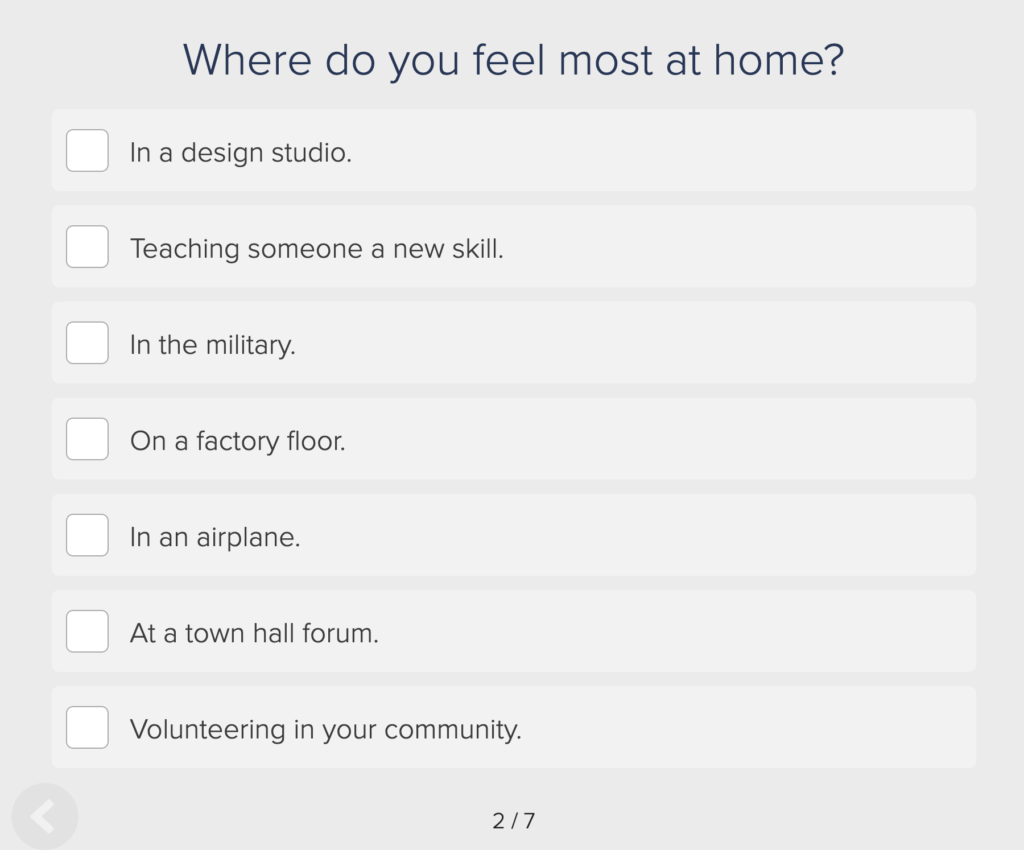
People may not remember which company published the fifth article they read about leadership styles. They are more likely to remember the company that helped them discover that they tend toward a democratic, coaching, or laissez-faire leadership style.
The quiz result can then lead the person into more detailed content related to that style. What began as a broad search topic becomes a personalized path through Atlassian’s content.
Atlassian has applied the same principle to other subjects. Its Meeting Woes experience helps people decide whether a meeting is actually necessary, while its Virtual Meeting IQ assessment gives people a personalized entry point into a larger piece of educational content.
The quiz is not separate from the content strategy. It gives the content a different shape.
This works best when something valuable already exists underneath it
There is an important limitation to this strategy.
A quiz is not usually something you can create at the very beginning, put online, and expect it to generate meaningful distribution by itself.
Gretchen Rubin’s quizzes work because they are built on years of original thinking and a deep understanding of her audience. The outcomes connect to real frameworks, and there is a substantial body of work waiting behind each result.
Atlassian’s quizzes work because its content team understands the questions its audience is asking. The company also has useful research, articles, tools, and products to recommend once someone completes the experience.
The quiz multiplies something that is already there.
You need to understand the major problems your audience is trying to solve. You need to recognize the different answers that might be right for different people. You also need useful places to send those people once you have helped them identify what they need.
Without those pieces, a quiz may still be entertaining, but it is unlikely to become a meaningful distribution system.
This is why I do not think of interactive content as a replacement for building an audience or developing useful ideas. It is a way to make those assets work harder once they exist.
Turning attention into something more valuable
The immediate business benefit of this personalization can be email-list growth. Someone takes the quiz, receives a result, and joins the list to continue learning about the topic.
But the larger benefit is the relationship that begins through that experience.
The business has learned something about the person. The person has received something specific in return. Instead of entering the audience as an anonymous subscriber, they enter with a clearer sense that this business understands what they are looking for.
That information can influence which emails they receive, which content is recommended to them, which product they see, or which next step they are invited to take.
It also helps the business make better use of everything it has already created.
An article that might have been buried several pages into a blog can become the perfect recommendation for a particular result. A podcast episode recorded two years ago can become newly relevant when it answers the exact question a quiz taker is asking today.
The quiz creates more ways into the existing work.
It can also give people a reason to share. A broad article may be useful, but a result that says something recognizable about a person is much easier to discuss with a friend, colleague, or team.
That is where personalization and distribution begin to reinforce each other.
The experience reaches more people because it is participatory and shareable. The business gets more value from that reach because every participant is being directed toward something relevant.
Make the moment of attention count
The point is not to add a quiz simply because people enjoy quizzes.
The point is to recognize that attention is fleeting. Once someone becomes interested in your work, there is a brief window in which you can help them understand what to do next.
A quiz, assessment, or interactive experience can turn that moment of broad interest into a personalized path.
It can help someone recognize themselves in your work. It can help them find the part of your business that is for them. It can help you distribute the content, products, and ideas you have already spent years creating.
We do not create the attention.
We help you make more of it while you have it.