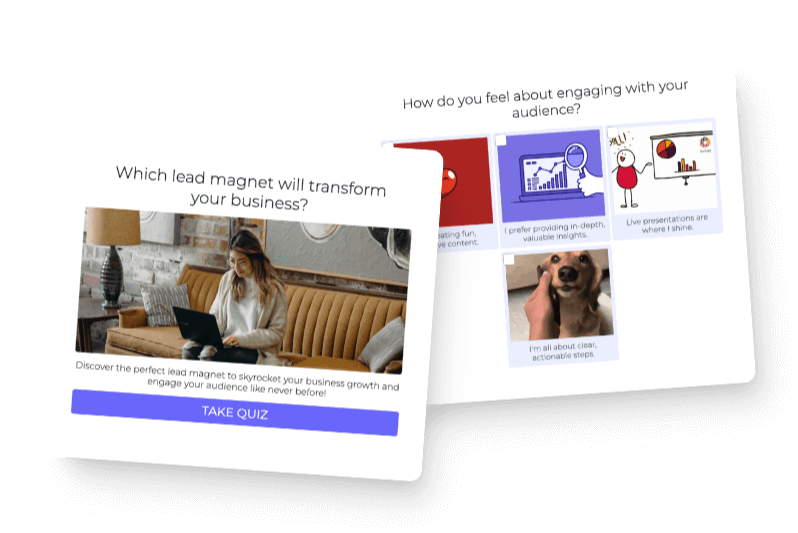

The answer depends on your purpose. If you want to help your audience solve one particular issue, a PDF can be the best choice. If the best way to help depends on who someone is and what they need individually, use a quiz.
Take setting a budget. Someone wants a template they can fill out so they can organize their money. A useful PDF can give them exactly that. Now consider “Which Intuitive Eating Style is Right for You?” The answer depends on the person, so a quiz is a better fit.
I would start with that distinction before comparing conversion rates. What does your audience want to get out of the lead magnet, and what do you need to know about them to deliver it?
Start with the help your audience wants
A lead magnet gives someone a reason to join your email list. That reason needs to be clear enough for them to recognize its value before they sign up. Choosing a format gets easier once you can describe the help you are offering.
| What the Person Wants | What Would Help Them | Format |
|---|---|---|
| Help setting a budget | A reusable template with a clear structure they can fill in. | |
| Help finding an intuitive eating style that fits them | Questions about their needs and preferences, followed by relevant guidance. | Quiz |
Both can be useful lead magnets. They serve different purposes, and that difference should shape the promise you make on the page where people sign up.
Use a PDF when people need a tool for a shared task
A budget template is a good example of a PDF that has a clear job. The person already knows what they want to do. They need a practical way to get started.
You can give them space to organize their income and expenses, instructions for using the template, and a version they can return to. The value is in making the task easier to complete. They can understand that value without answering questions about themselves first.
Different people will put different numbers into the template. That does not mean you need to create a quiz for each person’s circumstances. If the same underlying tool helps them do the task, the PDF is doing its job.
This is where I would be careful about the idea that a PDF is somehow less useful because it is static. A person may want something they can print, fill out, or keep beside them while they work. A well-designed worksheet can be exactly the right experience.
Keep the scope close to the problem you promised to solve. If someone signs up for a budget template, help them use the budget template. Adding a long guide on everything related to money can make it harder for them to find the thing they came for.
Use a quiz when the right guidance depends on the person
A quiz is useful when you need to understand someone before you can point them toward the right answer. The questions are part of how you help.
With a concept like “Which Intuitive Eating Style is Right for You?”, you would want to understand how the person approaches eating and what they want help with. You could ask about their current routine, what they have found helpful before, and where they tend to feel stuck.
Those answers should affect the guidance you give. If two people have different needs but receive essentially the same advice, the quiz has not made much use of what they shared.
The result should help the person recognize why a particular approach fits them. Explain what the result means, connect it to patterns reflected in their answers, and give them a useful next step. Keep the explanation understandable enough that they can do something with it.
Someone could read a PDF describing several approaches and decide which one applies. A quiz gives you a way to guide that decision using their answers. That is especially useful when choosing among the approaches is the very thing they want your help with.
The same principle applies to a product recommendation or a business assessment. If the right recommendation changes depending on the person’s situation, a quiz can help you understand that situation and respond to it.
Ask whether the answers would change your recommendation
Before building a quiz, ask yourself what you would recommend to different people in your audience. Then consider what you would need to ask to tell those people apart.
If their answers would change the recommendation in a meaningful way, you have a reason to use a quiz. If you would give everyone the same template regardless of their answers, start with the template.
This also helps you decide which questions belong in the quiz. A question should contribute to a useful result or help you serve the person afterward. You do not need to ask for extra information simply because the format allows it.
Personalization comes from responding to what someone needs. A quiz gives you a structure for doing that, but the quality of your guidance still matters. A PDF written for one well-defined need can also feel highly relevant to the person who has that need.
You can use a quiz and a PDF together
Sometimes the quiz helps someone choose a direction, and a PDF helps them follow through. For example, an educator could use a quiz to recommend an approach, then offer a short worksheet that helps the person explore or apply that recommendation.
In that setup, the quiz answers the question of what fits. The PDF gives the person something useful to work with afterward. Each part has a purpose.
You can carry the result into your quiz marketing funnel as well. Follow-up emails can help the person use the resource or take the next step that fits their result. The information they shared should continue to improve the help they receive.
Measure conversion against the purpose of the lead magnet
Choosing a format that fits the task gives you a sensible starting point. To find out which lead magnet converts better for your business, look at how your audience actually responds.
First, decide what you mean by conversion. If your goal is email subscribers, compare the share of people who arrive at each lead magnet’s landing page and become subscribers. Keep the starting point consistent.
A quiz completion rate tells you how many starters finished. A landing page opt-in rate tells you how many visitors subscribed. Comparing those percentages would not tell you whether a quiz or a PDF brought in more leads from the same amount of traffic.
If you test the two formats, keep the audience and the problem you are helping with consistent. Use comparable traffic sources and promotion. Otherwise, a difference in who saw the offer could explain the result.
Then look at what happens after the opt-in. Are people using the resource or acting on the recommendation? Do they engage with the follow-up? If the purpose is to attract potential customers, are the people joining your list a fit for what you sell?
A higher number of sign-ups is useful when those sign-ups support the goal you had in mind. Judge the lead magnet by whether it attracts the right people and helps them move forward.
For the budget example, I would make a useful PDF template. For the intuitive eating style example, I would make a quiz that helps each person find relevant guidance. Start with the help your audience wants, choose the format that delivers it, and measure whether it does.