
Sometimes the best way to recommend a product is to ask someone about their everyday life.
Your audience might not know how to talk about the product. They might be unfamiliar with the terminology or unsure which features matter. Or they might simply not care to get that deep into the details. They want something that works for them.
But they do know how to talk about what they do in a day, who they are, and how they show up in different situations.
A quiz can translate those familiar things into a product recommendation. The person tells you about their life, and you use your expertise to connect those answers to something that fits.
Consider the Wldflwrs used this approach in an engagement-ring quiz we featured on the Interact blog. The quiz asked about daily activities and hobbies to help recommend a ring style.
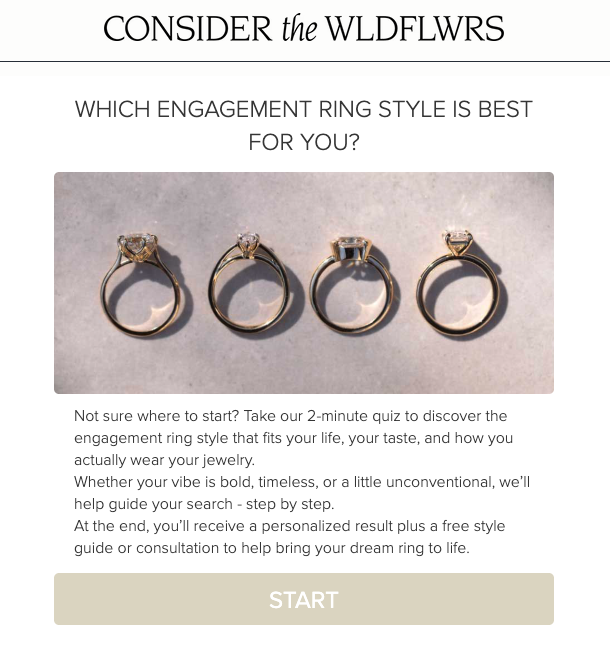
That makes sense because someone shopping for an engagement ring might not have an opinion about different setting structures. They may not even know what those terms mean. But they can tell you about their work, their activities, and what wearing a ring would look like in their day.
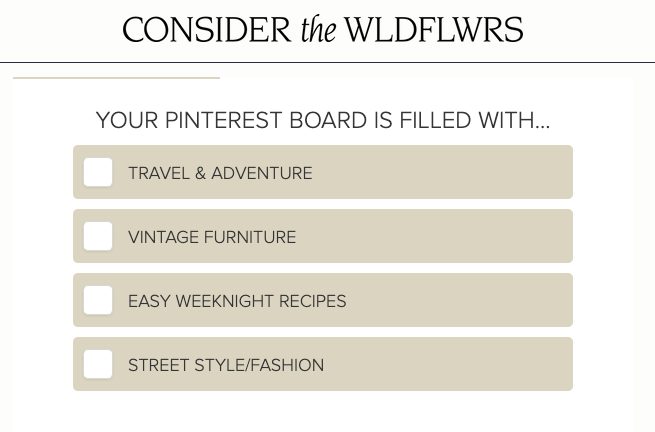
The brand’s guide to engagement-ring settings gives a concrete example of why those details matter. It recommends considering a low basket setting for people who are active or regularly wear gloves.
That’s the kind of connection a product expert understands. The customer knows they wear gloves at work. You know why that could matter when choosing a ring. A quiz gives you a way to connect those two pieces of information.
I think this can be really effective because you’re letting people participate in the recommendation through something they already understand.
They can answer a question about their day without first learning your entire product category. And as they move through the quiz, the questions can help them recognize what matters to their decision.
This applies to a lot of different products. Imagine you’re helping someone choose a bag. You could ask them to describe what they carry and how they get around. Do they need room for a laptop and lunch? Are they walking to the train? Do they need their hands free? What do they find themselves reaching for throughout the day?
Those answers give you something useful to work with. You can connect their routine to the size, organization, and carrying options that make sense for them.
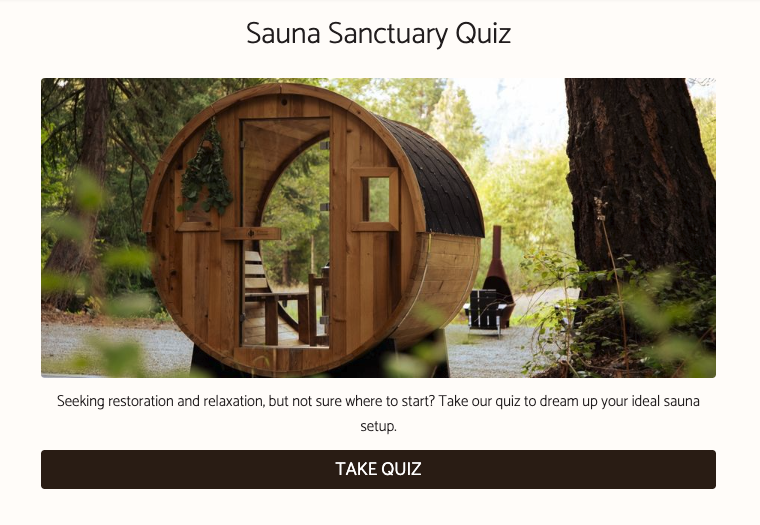
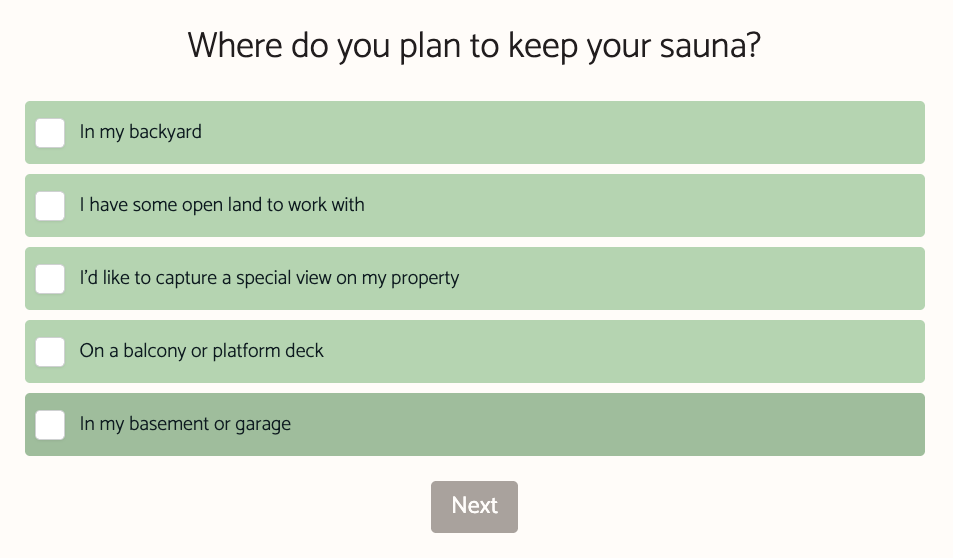
Redwood Outdoors’ Sauna Sanctuary Quiz offers another example. It asks where someone plans to put their sauna and how many people will use it. Those are questions someone can answer from their own life and home setup. The quiz then helps them narrow down sauna options that fit those needs.
There’s also a personal side to this. Depending on what you sell, you might want to understand how someone likes to express themselves or how they want to feel in a particular setting. With clothing or home decor, that could be central to finding the right recommendation.
The key is understanding how the answer helps you choose. If you ask about someone’s daily routine, know what that tells you about product fit. If you ask about their style, know how that preference relates to the options you offer.
That connection is where your expertise belongs. You’re taking something the person can comfortably describe and translating it into a decision they might have struggled to make on their own.
You can use the conversations you already have with customers to find those questions. Think about what you ask when someone needs help choosing. What detail makes you change your recommendation? What do they tell you that helps you understand why one option would suit them better?
Those are useful starting points for a quiz.
Some audiences will want to talk directly about the products, too. If your customers know the category well and enjoy discussing the details, those questions can be helpful. The approach should fit how your audience thinks about the decision.
Once you recommend something, explain the connection in language that feels familiar to them.
For a bag recommendation, that might sound like: “You have room for your laptop and the things you carry through the day, with an easy-to-reach pocket for the items you need on your commute.”
Now the features mean something. The person can picture the product fitting into their life.
Before writing your product quiz, think about someone asking you for help choosing. What would you want to understand about their everyday life to give them a useful recommendation? Start with questions they can answer, then bring your product knowledge to the result.