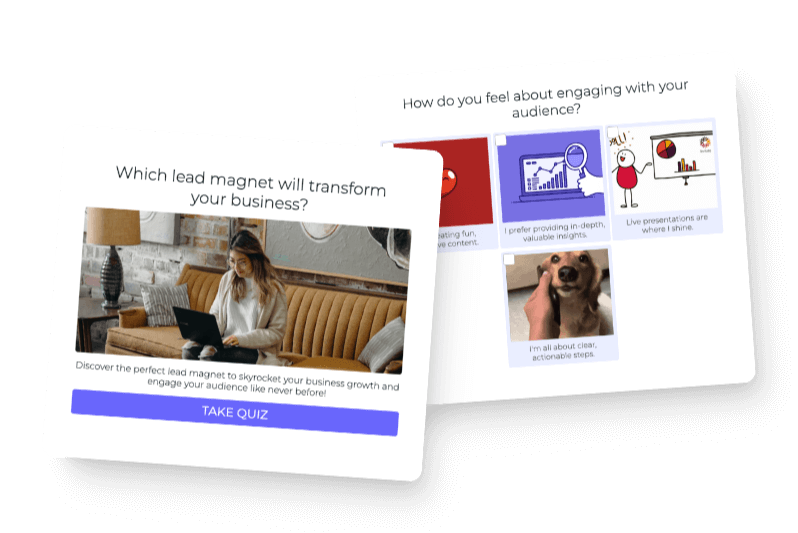

Before you launch your quiz, check the basics yourself. Then send it to a few friends you trust and ask them to go through it with fresh eyes.
Sometimes that’s the only way you’ll notice something is off. You’ve spent time writing the questions, thinking through the outcomes, and setting everything up. You know what you meant. Someone seeing it for the first time can help you understand whether that meaning comes across.
Start by taking the quiz from beginning to end. Look at the experience someone will have when they find it on your website, including on their phone.
First, check the title and description. Do they clearly explain what someone will get out of taking your quiz? Someone should understand the question your quiz will help them answer, and each result should deliver on that promise.

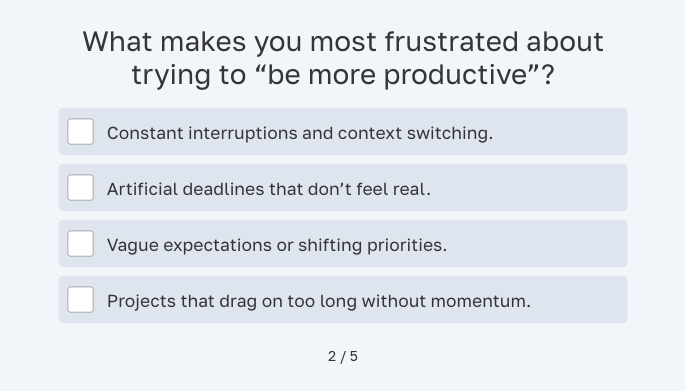
Next, read through the questions and answer choices. Each question should be easy to understand and ask about one main idea at a time. Answer choices should be brief, distinct, and sound like something your audience would actually say.
Pay attention to whether someone can find an answer that fits their situation. Two choices might seem different to you but mean almost the same thing to someone taking the quiz. Or a question might leave them unsure whether to answer based on what they currently do or what they wish they did.
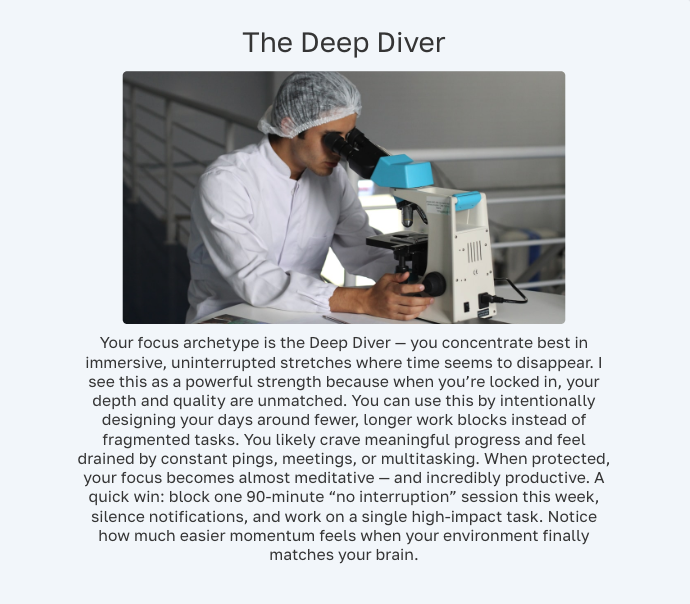
Then look at the results. Each result should explain what someone got, why it fits, and what they can do next. The advice or recommendation should make sense for the person receiving it.
Someone should be able to recognize their situation in the explanation without needing you to walk them through why they got that result. If you’re recommending a product or service, check that it fits the needs and constraints you asked about.
Check the logic connecting answers to results, too. Try different combinations of answers and make sure the results fit the situations you’re testing. Confirm that every outcome can be reached.
If you’re giving scores across several categories, check that each category has a meaningful explanation and that the overall result makes sense.
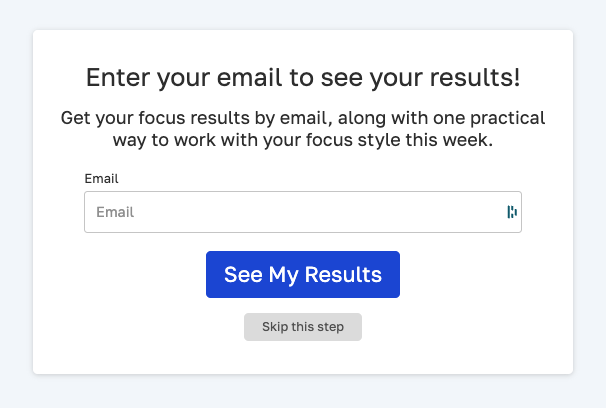
If you’re using the quiz for lead generation, make sure the opt-in form copy matches the context of the quiz. Clearly explain what value someone gets if they choose to opt in, and make sure that promise matches what you deliver.
For a quiz about focus, that could sound like:
Get your focus results by email, along with one practical way to work with your focus style this week.
That tells someone what they’ll receive and connects it to the reason they took the quiz. If that’s your promise, make sure the email includes their result and that practical next step.
Finally, check that the full experience works. Make sure images display clearly, text is readable, and buttons lead to the right places. Take the quiz on your phone as well as your computer.
If you’re collecting email addresses or promising a result email, go through that process with a test address. Confirm that the email arrives and matches the result you received.
Once those basics are in place, send the quiz to a few trusted friends.
Let them take it without explaining each question or telling them what result you expect. Give them room to experience it the way someone encountering your quiz would.
You could ask:
Would you go through this quiz and tell me where anything feels confusing or off? I’d also love to know whether your result makes sense and feels useful.
That gives them something concrete to look for while leaving room for things you hadn’t thought to ask about.
A friend might point out that an answer choice doesn’t fit the question. They might interpret a phrase differently than you intended. Or they might understand the result but still feel unsure what to do next.
Those details are easy to miss when you already know the quiz inside and out.
If some of your friends also fit the audience you’re creating the quiz for, they can give especially useful feedback about whether the questions and results reflect their experience. Other friends can still help you spot unclear wording, awkward transitions, or something that doesn’t work.
When someone says a result feels off, ask which part. It could be the result they received, a sentence that makes an assumption about them, or advice that doesn’t fit their situation. Understanding what bothered them will help you decide what to change.
Make the adjustments, then go through the affected questions and results again. If you changed how answers connect to outcomes, check those connections too.
A few people you trust can help you catch the gap between what you intended and what someone actually experiences. Give them a chance to show you that before you share the quiz more widely.