
Someone taking your quiz might see themselves in more than one outcome. There are a few ways to account for that, and the right approach depends on what you want them to understand.
Do you want them to explore the other possible results? See which outcomes they match most closely? Or understand what level they’re at in several different areas?
Those are three different purposes, and each has a useful approach.
One option is to create a hub on your website that links to a page for every quiz outcome. Then, from someone’s result, give them a link to explore the other outcomes.
This works well when someone is curious about what the other options are. They still receive their own result and the explanation that goes with it, but they can look around and learn more.
For example, imagine a design quiz that helps someone understand their preferred style. They might recognize themselves in their result while also liking elements of another style. A hub lets them explore those differences and decide what resonates with them.
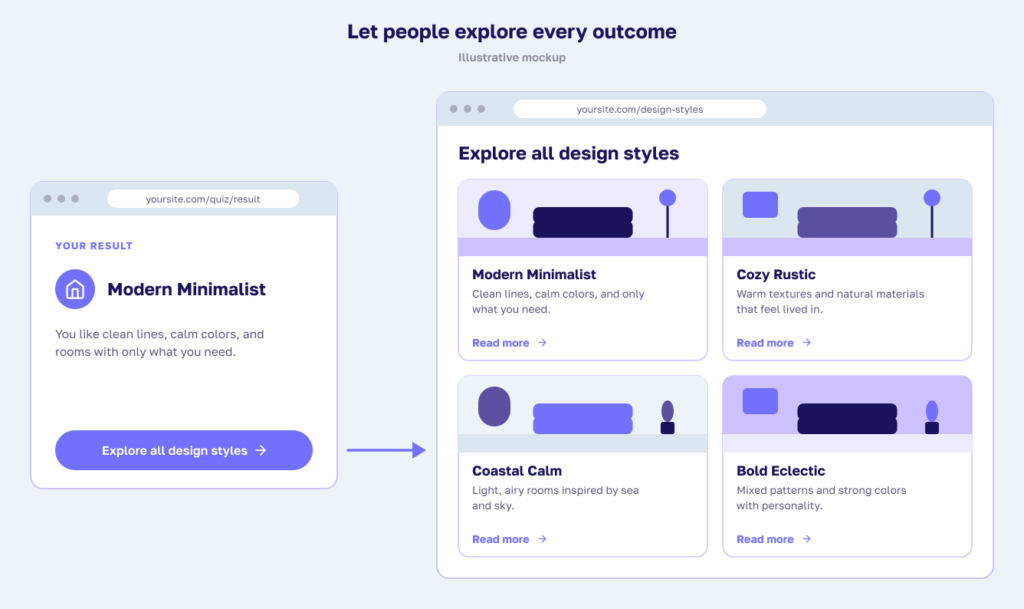
Those outcome pages can also become valuable content on your website. For a personality quiz, you’re essentially describing the different personas within your audience. You’re explaining what they care about, what their experience looks like, where they get stuck, and what might help them.
That’s a useful way to demonstrate how well you understand your audience. Someone should be able to land on one of those pages and find something helpful, even if they haven’t taken your quiz yet.
I also see those pages as an opportunity for SEO and GEO: helping people discover your content through search engines and AI answers. Give each page a clear subject, useful explanations, and links to related pages. Google’s guidance for its AI search features supports that foundation of helpful content, accessible text, and internal links. Google’s guidance on AI search features.
The second option is to use Interact’s Show Multiple Results feature.
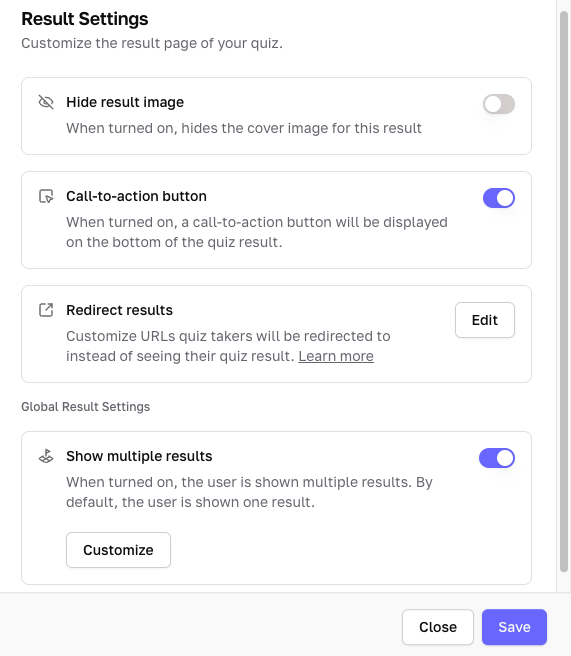
For a Personality quiz, this displays a breakdown of someone’s top matches. You choose the maximum number of results to show, and the person can open each result to read its full explanation.
This is the option to use when you want someone to see, “You’re most like this one, second most like this one, and third most like this one.”
Going back to the design example, someone could see their strongest style match alongside other styles reflected in their answers. That gives them a way to understand the combination.
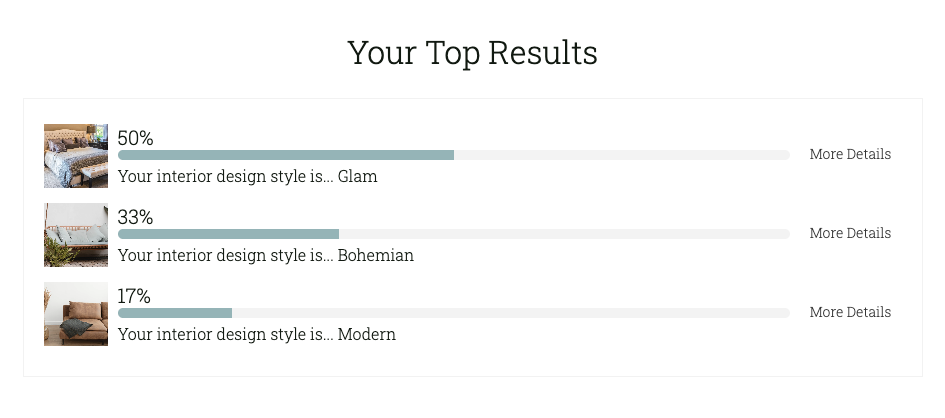
Each result still needs a useful explanation. Help the person understand what that style means, how it might show up in their choices, and what they can do with that information. The breakdown gives them more context, and your writing makes that context useful.
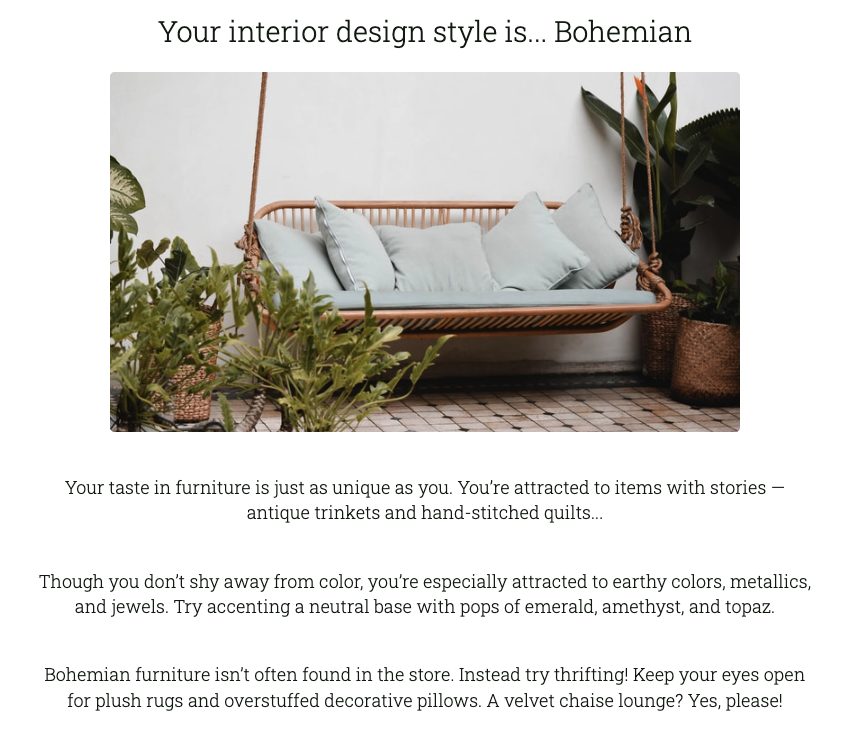
The third option is to use an Interact Categories quiz. This gives someone a result within each area you’re measuring, along with an overall result.
Categories are useful when you want to show people what level they’re at across different parts of a subject.
For example, a business owner might have a clear marketing strategy, inconsistent sales processes, and operations that still depend heavily on their time. Those areas deserve different explanations and recommendations.
A categories quiz can show them where they’re doing well and where they need more support. Someone might be advanced in one area, developing in another, and just getting started in a third.
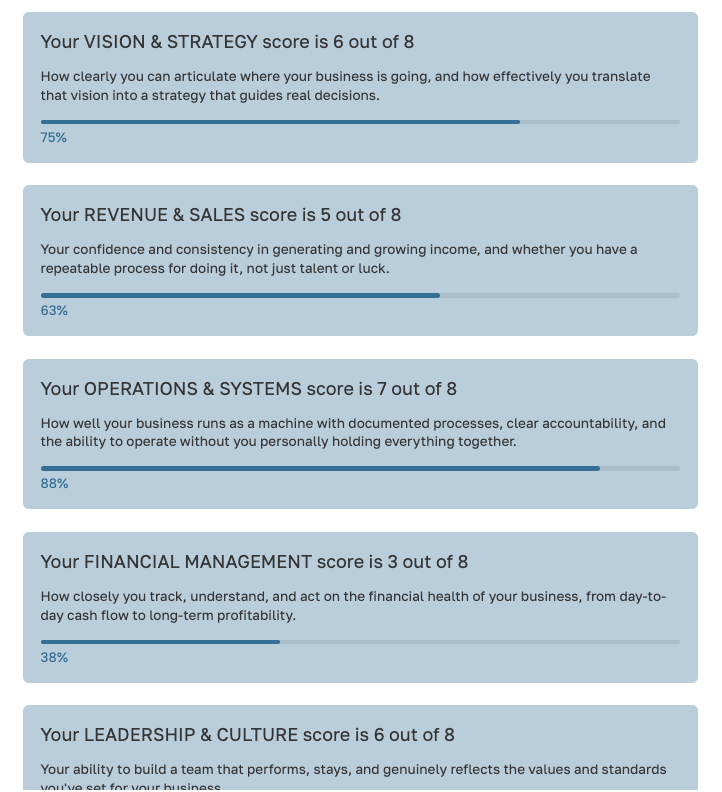
That helps you give more specific guidance. You can explain what their level means within each category and what would help them move forward from there.
So the choice comes back to what the person needs:
- If they want to explore the other possible outcomes, link to a hub with a page for each one.
- If they want to see their strongest matches in order, use Show Multiple Results.
- If they want to understand their level across different areas, use a Categories quiz.
Whichever approach you choose, give people enough explanation to understand what they’re looking at and a useful next step. Seeing more than one result should help them understand themselves more clearly.