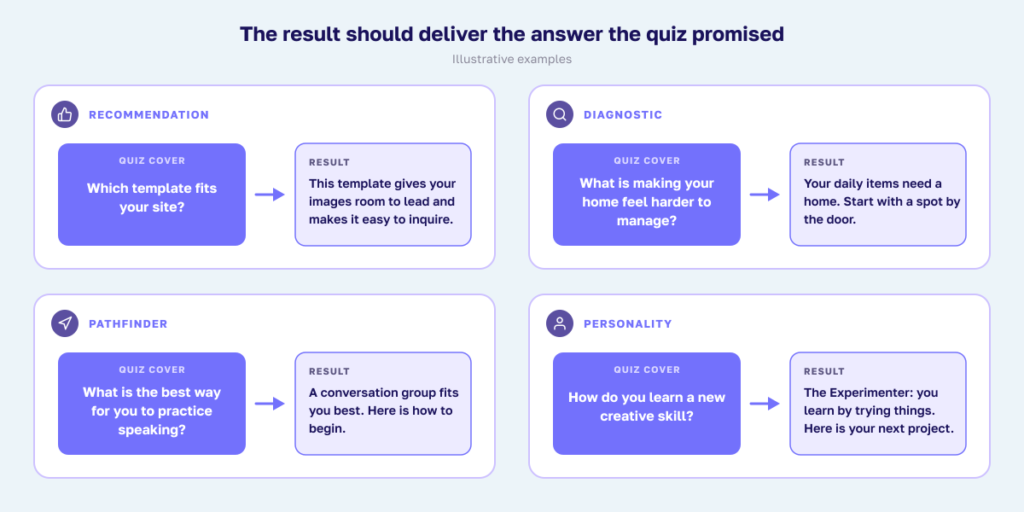
Sometimes people know they have a problem and they’re looking for a solution. Sometimes they don’t know that they have a problem, but they feel some type of way. Sometimes they know they have a problem and they know the solution, but they’re looking for the method.
There are different things people might be dealing with that would make them want to take a quiz. Those reasons map to different quiz types. A recommendation quiz helps someone choose. A diagnostic quiz helps someone make sense of what is happening. A pathfinder quiz helps someone find an approach. A personality quiz helps someone understand themselves and what fits them.
These are four useful ways to frame a lead generation quiz. Start with what the person wants to figure out, then use the quiz type that gives you a clear way to answer.
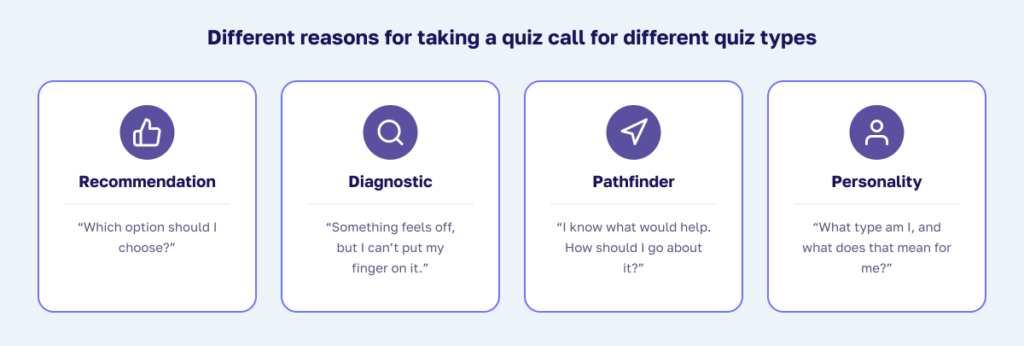
The four quiz types at a glance
The same audience may come to you with several different questions. This map helps you choose the promise of one quiz.
| Quiz type | Why someone takes it | What the result should give them |
|---|---|---|
| Recommendation | “I know what I need help with. Which option should I choose?” | A relevant solution and why it fits. |
| Diagnostic | “Something feels off, but I can’t put my finger on it.” | A useful explanation and a starting point. |
| Pathfinder | “I know what would help. How should I go about it?” | A method that fits their situation. |
| Personality | “What type am I, and what does that mean for me?” | Self-understanding connected to useful guidance. |
These types can overlap. A personality quiz can recommend a method, and a diagnostic quiz can suggest a solution after explaining the problem. The distinction is the main question that makes someone want to start.
1. Recommendation quizzes: help me choose a solution
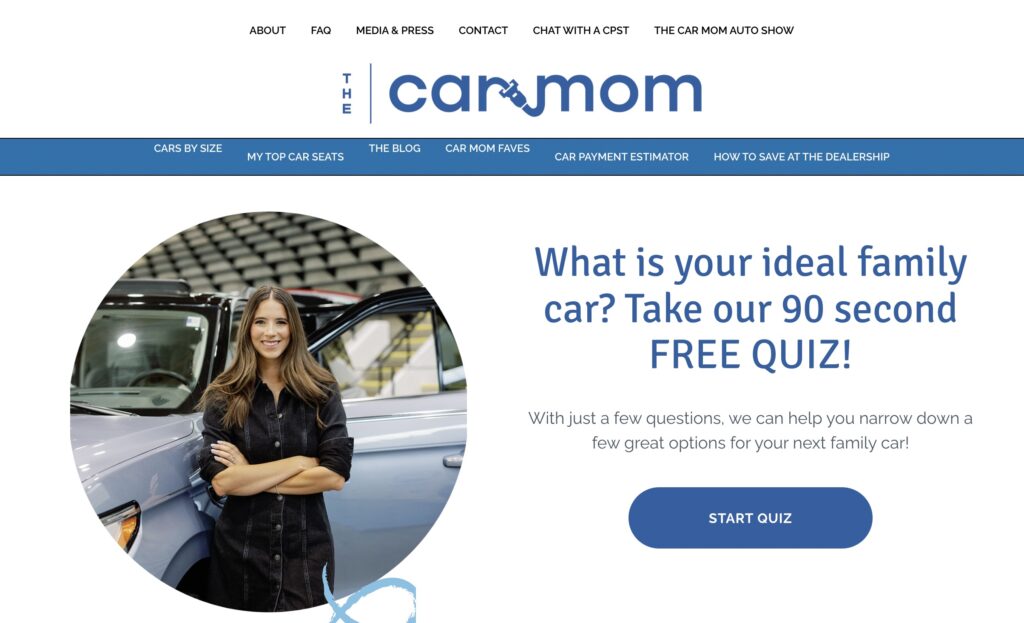
A recommendation quiz works when someone knows what they need help with and wants you to narrow the options. They might need a family car, a website template, or a course. The question is which one makes sense for them.
The Car Mom gives a clear example. Her website invites visitors to find their ideal family car and says the quiz will help narrow down a few options. That promise meets someone who already knows they are looking for a car and wants help choosing.
For your version, ask about the differences that change the recommendation. A fictional website-template shop might ask what the site needs to do, what content the customer has, and how they want the brand to look. Those answers help distinguish a portfolio site from a site focused on booking services or selling products.
The outcome should explain the match. “This template gives your project images room to lead and makes it easy for visitors to inquire” is more useful than a product name on its own, assuming the answers established those needs.
A recommendation quiz can also guide people through several offers in your business. If you have a community, a course, and coaching, the questions can help identify which kind of support would be useful. Frame the quiz around what the person wants for themselves, then introduce the relevant offer.
Choose this type when the audience’s recurring question is essentially, “Which one is right for me?” Give them enough guidance to feel ready for a next step.
2. Diagnostic quizzes: what is happening?
Sometimes a person arrives with a feeling before they arrive with a clearly named problem. They might say, “My home feels like too much,” or “I’m busy all day, but I don’t feel like I’m getting anywhere.” They recognize the experience. They may not know what is creating the friction.
A diagnostic quiz can help them put words to that experience. Here, think of diagnosing a practical issue in a home or a workflow: looking at what happens and identifying a useful place to begin.
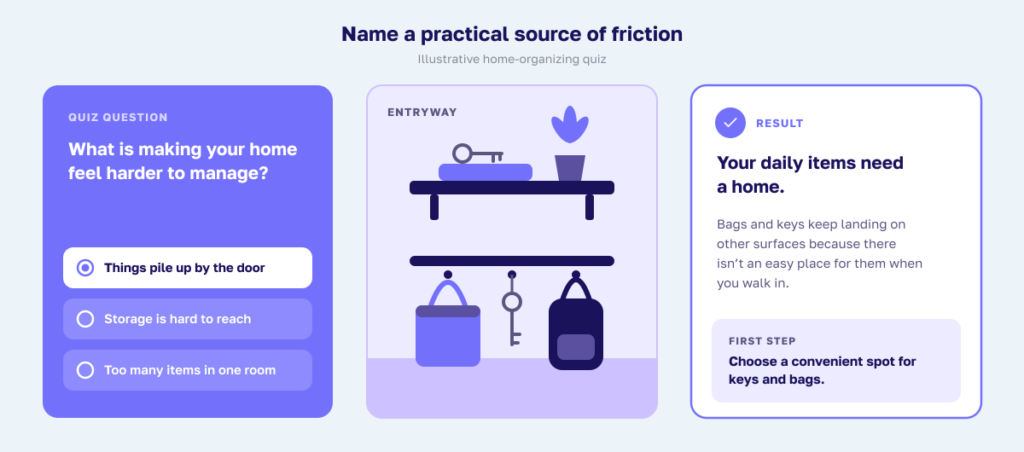
Imagine a home organizer creating the hypothetical quiz “What is making your home feel harder to manage?” Someone can recognize that question without already knowing whether they need different storage, fewer items in a particular space, or a simpler routine.
The organizer could ask where things tend to pile up, what happens when the person tries to put them away, and which spaces are hardest to use. The answers might point toward an entryway without a place for daily items or storage that is too difficult to reach.
If the answers point to an entryway problem, an outcome might explain, “Your daily items need a home. Bags and keys keep landing on other surfaces because there isn’t an easy place for them when you walk in.” A first step could be choosing a convenient spot for those items. The result names a practical issue and gives the person something to try.
The questions matter here because the person may not use your professional terminology. Let them answer from their experience. “What ends up on the kitchen counter?” may tell an organizer more than asking someone to rate the effectiveness of their household systems.
Choose this quiz type when your audience needs help understanding a situation before they can choose a solution. Allow for answers that show things are working well, too. Feeling some type of way does not automatically mean something is wrong.
3. Pathfinder quizzes: help me choose the method
This person knows the problem and has a sense of the solution. What they need is the method. They may know that marketing would help them attract clients, but wonder which approach to use. Or they may know they want to learn a skill and need help deciding how to learn it.
A pathfinder quiz makes that next decision more personal. The promise is an approach that fits the person’s circumstances, strengths, and preferences.
Greg Faxon’s Interact case study describes how his “What Type Of Coach Are You?” quiz connects coaches with marketing strategies based on their personality and strengths. It is an example of a personality-style quiz serving a practical purpose: helping someone find a way forward.
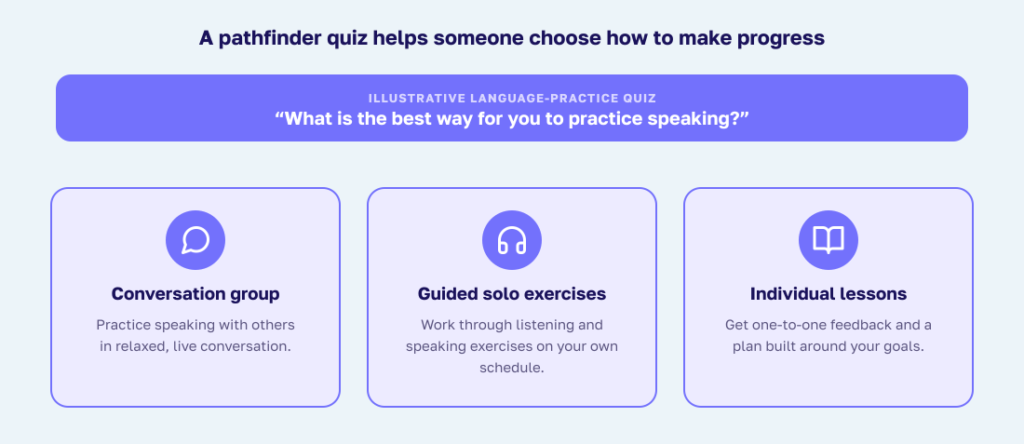
For a hypothetical language teacher, the method question could be “What is the best way for you to practice speaking?” The person already wants to speak more comfortably and knows practice matters. They need help choosing between a conversation group, guided exercises they can use independently, or individual lessons.
Questions could establish what makes speaking difficult, how much structure helps, and when the person can realistically practice. The result should explain why the recommended method fits those answers and how to begin.
Keep the methods meaningfully different. A conversation group and an individual lesson provide different experiences. If every outcome gives the same advice with a new label, the quiz has not helped someone choose a method.
This framing can overlap with a recommendation quiz. The useful emphasis is how someone will make progress. Explain the approach first, then show the course, community, service, or resource that helps them follow it.
4. Personality quizzes: help me understand myself
Sometimes self-discovery is the reason someone wants to take a quiz. They are curious about their style, strengths, preferences, or the way they tend to approach things. They do not have to believe they have a problem for that question to matter.
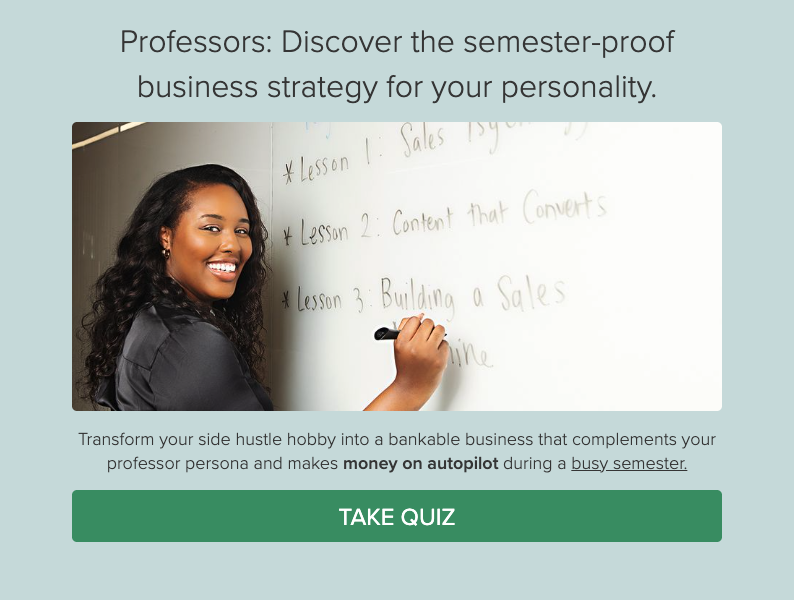
Dr. Toyin Alli’s Academic Entrepreneur Personality Quiz asks which on-screen professor persona matches someone’s teaching and business style. The invitation connects a familiar personality framing to a specific audience and context.
For your own quiz, think about what someone could do with that understanding. A fictional creative teacher might help people recognize whether they tend to learn by experimenting, following a demonstration, or discussing ideas. The result could explain the pattern and suggest a way to approach their next project.
A personality label gives the result a name. The explanation gives it meaning. Tell the person what the pattern may look like in the context of your quiz, why it fits the answers, and what they might find useful.
This type can also be the doorway into a method recommendation. Someone might take the quiz because they want to know their creative style, then use the result to choose how to practice. The self-discovery and the guidance can work together.
Choose this type when the personal insight is a meaningful part of the promise. Keep the interpretation connected to what you actually asked, and avoid turning one preference into a sweeping claim about someone’s whole personality.
Choose the quiz type by the answer people need
Listen to how people describe what they want from you. Are they asking you to choose a solution, explain a feeling or frustration, suggest a method, or help them understand themselves? That is what should guide the framing.
These are not fixed stages everyone moves through in order. Someone may need a diagnostic quiz about one subject and a recommendation quiz about another. Even within one audience, different people may be looking for different kinds of help.
Write the promise and a sample outcome together. If the promise is “Find the method that fits you,” the outcome needs to give a method. If the promise is “Understand why this feels difficult,” the outcome needs to offer an explanation before moving to the next step.
This article uses quiz types to describe those promises. For the matching, scoring, and question-routing options used to build them, see our quiz formats guide. A quiz’s public framing and the logic behind it are separate decisions.
The quiz type gives your audience a reason to start. The questions help you understand them. The result needs to deliver the answer they were looking for. Keep those pieces connected as you build and refine your quiz.