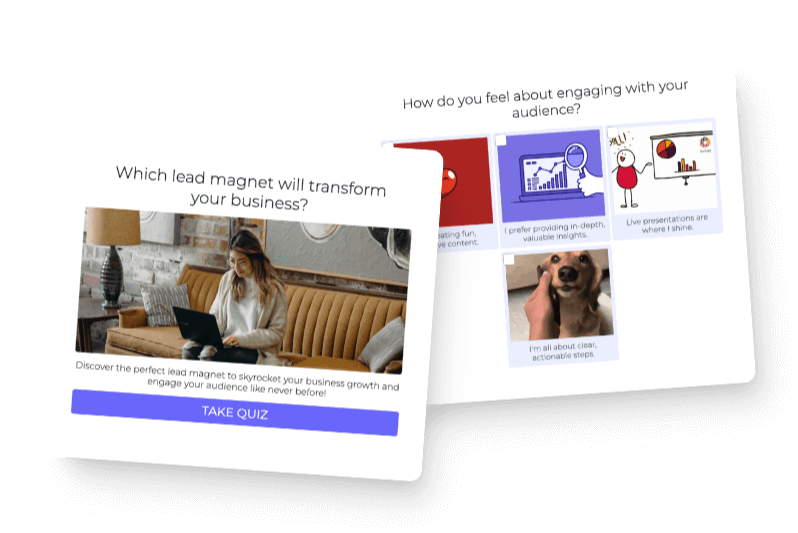

The biggest mistake I see with B2B quizzes is jumping straight to the conclusion that the quiz should be a lead qualification assessment.
You can use a quiz for lead qualification. There are situations where that makes sense. But if you’re using a quiz at the top of the funnel, you have to give someone a reason to want to take it. Helping your sales team determine whether they’re a qualified lead isn’t that reason.
I’ve seen that approach flop so many times. The business starts with everything it wants to know about a potential customer, turns those things into questions, and then wonders why people aren’t interested in answering them. From the business’s perspective, the questions are useful. From the person’s perspective, what are they getting out of this?
What I’ve seen work is taking the same approach you would with a consumer-facing quiz, then dialing it to the specific audience you want to reach. Who is this person? What do they want to understand about themselves? What would help them in their work?
Atlassian’s leadership style quiz is a good example. When I interviewed Sarah Goff-Dupont, who created it, she talked about building a quiz for someone who wants to understand their leadership style.
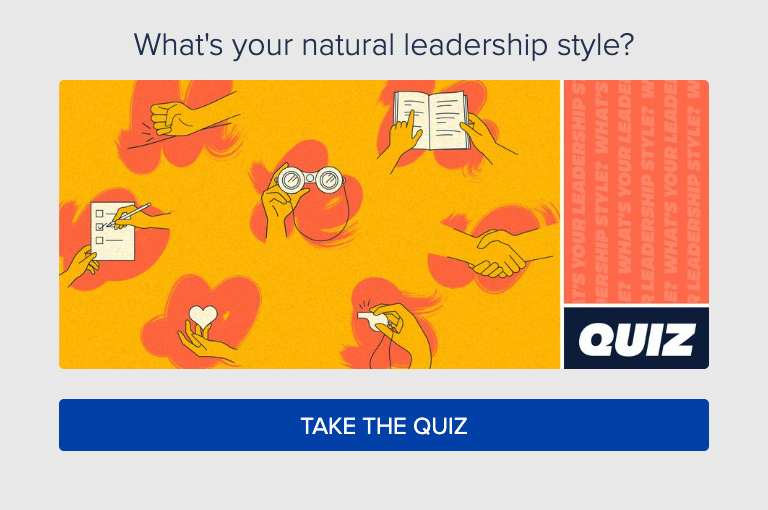
That’s a question a person has. They want to understand how they lead, how they relate to other people, and what that means for them. The quiz gives them a way to explore that question.
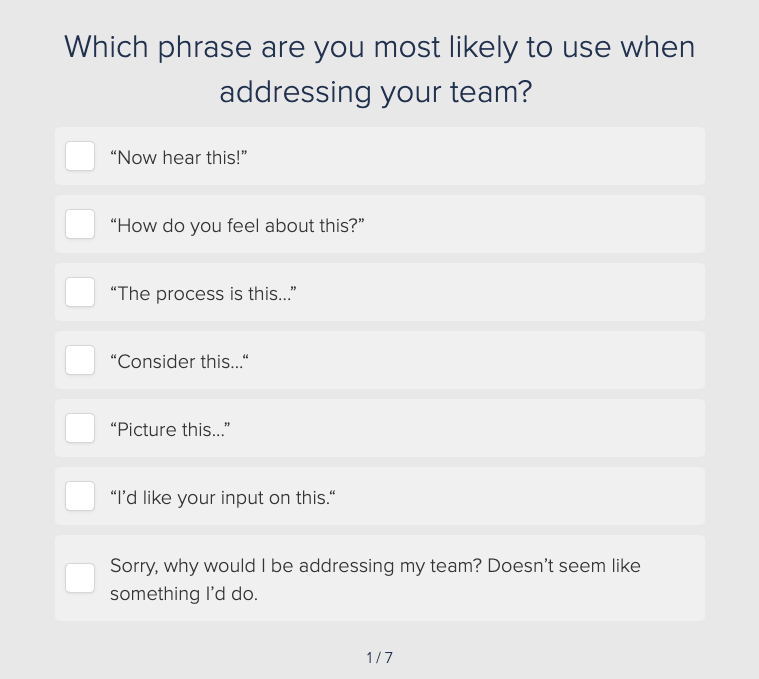
The professional context matters. The tone, language, and framing fit Atlassian’s brand and the people it wants to reach. But the underlying interest is something you could recognize in plenty of other settings. Lots of people want to understand their leadership style. Atlassian took that interest and made it relevant to its audience.
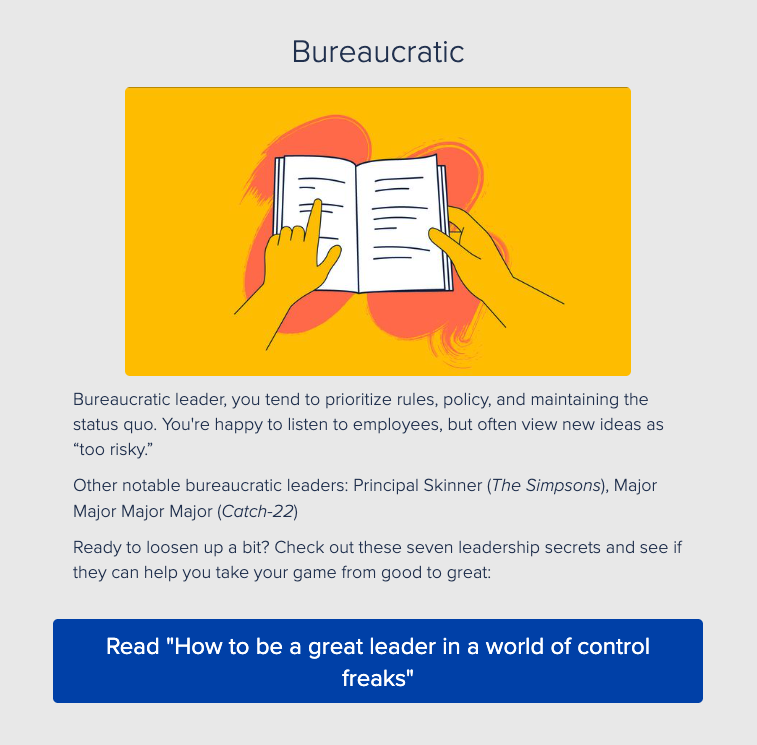
That’s the part I think people miss when they’re creating B2B quizzes. The quiz is still for a person. The people making purchasing decisions at businesses are people. The people influencing those decisions are people too. They have things they’re curious about, things they want to get better at, and questions they would appreciate some help answering.
So when you define the audience for your quiz, go further than the company size, industry, and job title. Those things can help you identify who you want to reach, but you also need to understand why that person would care about the quiz.
A manager might want to understand how they come across to their team. A business owner might want to know which part of their marketing deserves more attention. Someone responsible for training might want help identifying where their own skills need development. These are illustrative starting points; the right question depends on the people your business actually serves.
You’re looking for the overlap between something your audience wants to understand and something your business has the expertise to help them with.
Once you have that, the quiz questions should feel relevant to the person’s experience. If you were creating a leadership quiz, for example, you could ask what they tend to do when their team disagrees about a decision. That gives them a recognizable situation to think about, and their answer can help shape useful guidance.
Compare that with asking about their purchasing timeline before you’ve helped them understand anything. A purchasing timeline might matter in a sales conversation. It doesn’t automatically belong in a quiz about leadership style. Every question needs to earn its place in the experience you promised.
The results need to follow through on that promise. If someone took a quiz to understand their leadership style, explain their leadership style. Help them recognize what it looks like in practice, where it serves them well, and what they could pay attention to.
For a hypothetical leadership quiz, one person might benefit from making more room for their team’s input. Another might benefit from bringing a discussion to a decision sooner. The useful advice changes with the person. That’s what makes the result worth reading.
From there, you can offer a relevant next step. It might be an article that goes deeper into their result, an exercise they can try, or an invitation to get more help. The connection should make sense based on what they just learned.
There’s still room for lead qualification when someone is exploring whether your solution fits their needs. At that point, questions about their situation can help both of you figure out whether working together makes sense. But you have to pay attention to where they are in the relationship and what they came to you for.
Before you start building your B2B quiz, picture one of the people you want to reach and ask: what would this person actually want to find out? Build the quiz around giving them a useful answer.