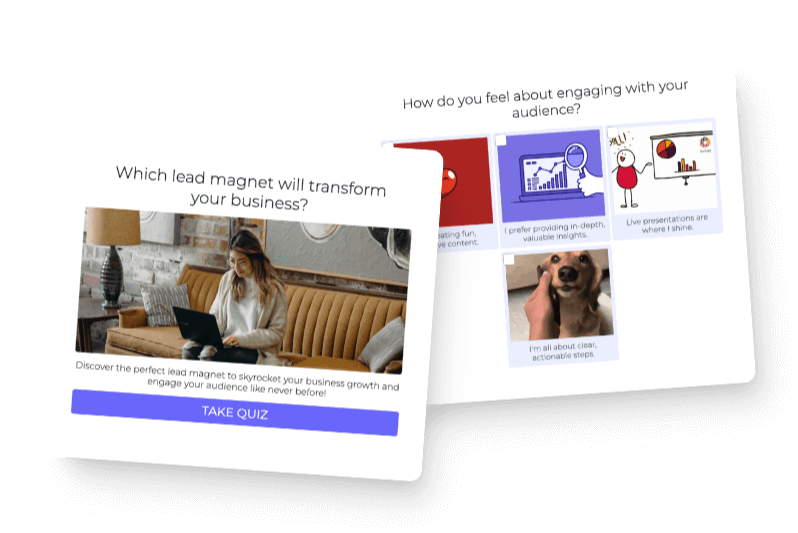

If you sell website templates, one of the most useful quizzes you can create is a quiz that helps people choose which template to buy.
Somebody comes to your shop, looks through your designs, and likes several of them. But they’re not sure which one is right for their business. A quiz can help them figure that out by understanding their style and what they want to get out of their website, then recommending templates that fit.
That’s the use case I would focus on for web designers today.
It’s a tough go in 2026. From what I’m seeing, individual web designers are having a harder time getting traffic, and people are turning to AI for a lot of things they previously would have hired someone to do. There has been a huge turnover in the industry. The template sellers with a library of designs are where I see the clearest opportunity for quizzes now.
They have products for people to choose from. And choosing between those products is exactly where a quiz can help.
A website template quiz is a cross between a style quiz and a product recommendation quiz. The templates are built in different styles, so part of the decision is figuring out what feels right to the person. But templates are also products. The result needs to connect that style with something they can actually use for their website.
You’re helping someone answer two connected questions: “What should my website look and feel like?” and “Which template will help me create that?”
TONIC Site Shop and Elizabeth McCravy are two examples I would look at.
TONIC Site Shop’s quiz offers shoppers three template recommendations matched to their style, brand, and goals. The invitation is straightforward: if you’re not sure which website template to choose, take the quiz to find your match.
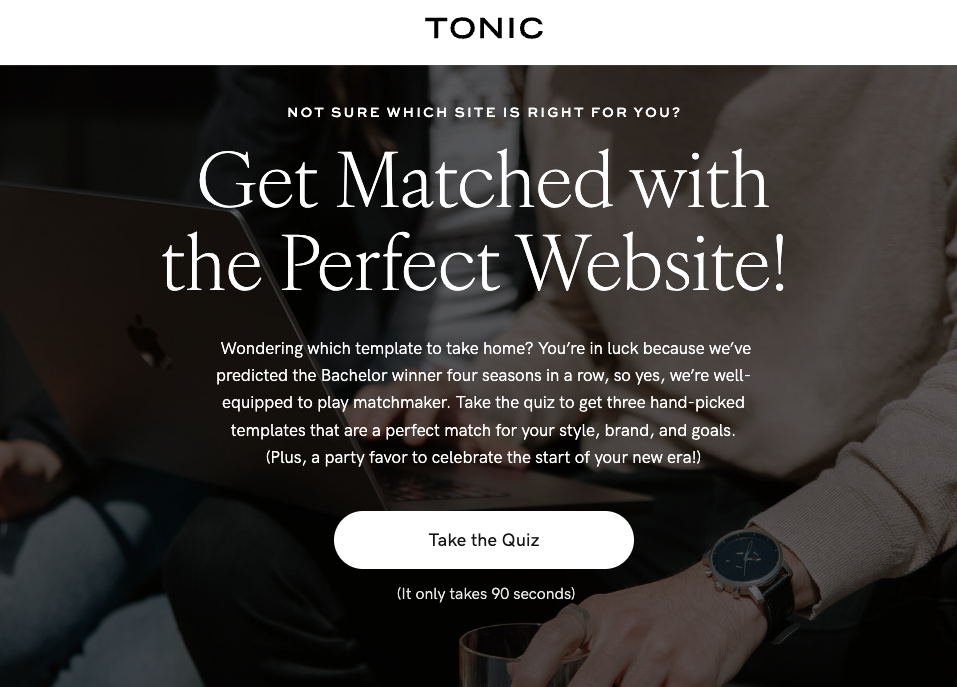
What I like about this approach is that the quiz has a clear job. Someone looking through a template shop may appreciate the designs without knowing how to choose between them. Giving that person a smaller selection creates a useful place to start.
The recommendation also connects how they want to show up with what they want their website to accomplish. Both matter. A design can feel right visually, but the person still needs to understand how it fits their business.
Elizabeth McCravy’s Website Personality Quiz follows a similar approach. Her results include a website personality profile and three to four template recommendations matched to the business’s needs.
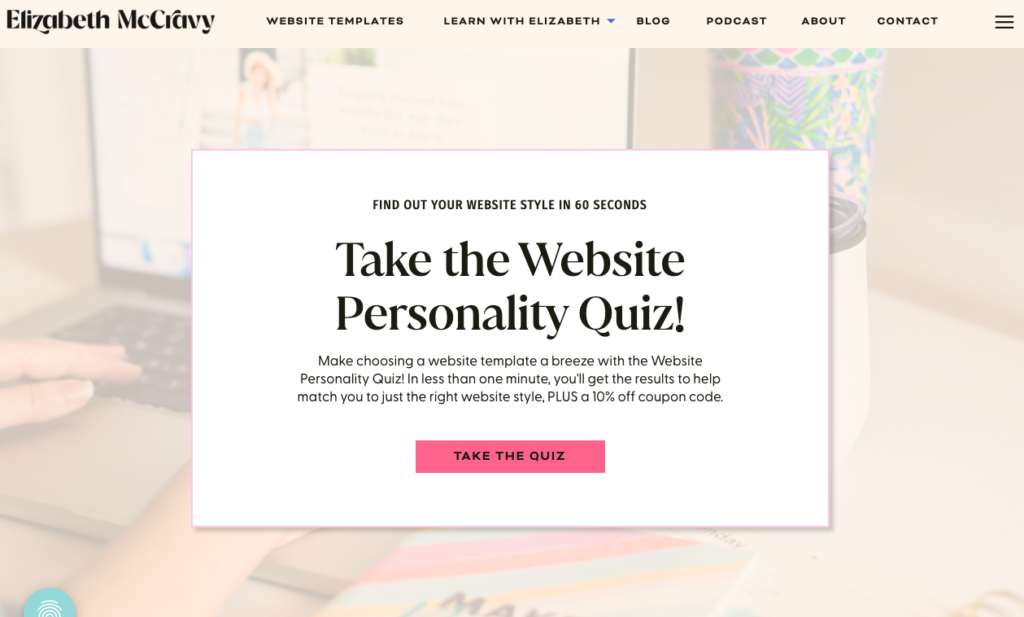
This is a good example of how the personality piece and the product recommendation work together. The personality profile gives someone language for their style. The template recommendations give them somewhere to go with that information.
That connection matters. If somebody is trying to choose a website template, learning about their style is helpful because it brings them closer to choosing. The result should make that connection easy to understand.
Both examples give people a shortlist. You don’t necessarily have to tell someone there is only one template they could possibly use. You can narrow the options to a few that fit and explain what makes them worth considering.
If I were creating this kind of quiz, I would start by looking at the templates in the shop. What makes each one different? Who would you recommend it to? What would you want to understand about someone before suggesting it?
Those differences give you the basis for your questions.
Keep the questions simple and straightforward. You might ask someone to choose between a few visual styles, tell you what their business offers, and explain what they want visitors to do on their website. These are illustrative questions to consider for your own shop. The exact questions should come from the differences between your templates.
You don’t need to ask people to understand design terminology. Showing a few visual directions can help someone express a preference they might struggle to put into words. Then you can connect that preference with the practical purpose of the website.
For example, someone who wants to showcase photography may need a different starting point from someone whose main goal is getting people to book a consultation. Your quiz should help you understand the differences that would actually change your recommendation.
When you write the results, explain why the suggested templates fit. Connect the look and feel with what the person wants to accomplish, then give them a clear way to explore the designs.
Put the quiz where people are making that decision. Embed it on your website and link to it from your template shop, especially near the point where someone might be thinking, “I like these, but I don’t know which one to choose.”
You’ve already put your design expertise into the templates. The quiz is another way to share that expertise: helping someone understand which of your designs makes sense for them, and why.