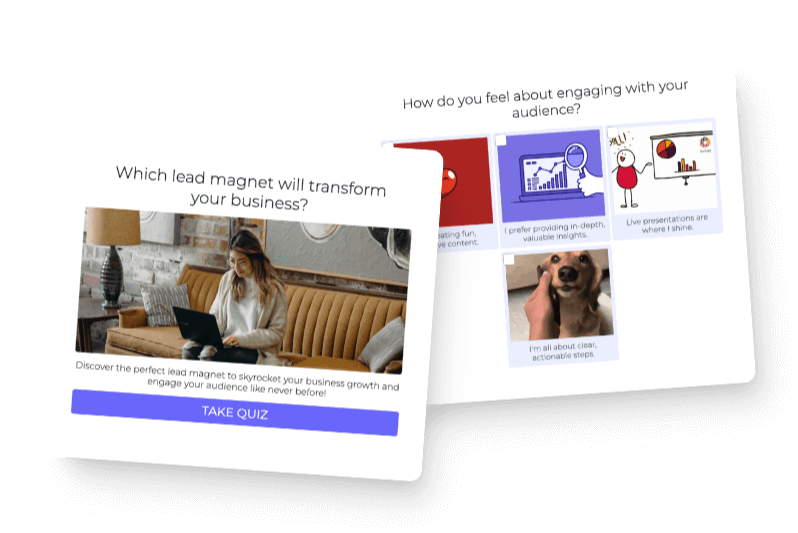

People come to your business because they want something. They might want to write website copy that sounds like them, find work they enjoy, or choose a product that fits their life. A quiz can help by learning enough about that person to give them the guidance that’s most relevant to what they want.
That last part is where I would focus. When you know a subject well, you can see all the different ways you could help someone. But the person arriving at your website still has to figure out which parts apply to them. A quiz can do some of that work with them.
Imagine a business owner looking through your marketing content. You’ve written about websites, email, social media, and selling. There’s useful information in all of it, but they have a particular business and a particular thing they’re trying to improve.
One person might already have an engaged audience and need a way to help those people choose an offer. Another might be attracting inquiries from people who don’t understand what they do. Both want more customers, but they need different guidance. A quiz can ask about those differences and give each person a useful place to begin.
That’s what makes personalization helpful. The person’s answers change what you recommend, what you explain, and what you ask them to do next.
Kayla Hollatz’s brand voice quiz is a useful historical example. In our case study, updated in 2019, Kayla described how the quiz helped entrepreneurs identify their brand voice style, which was a first step toward working with her as a copywriter. She also created personalized email sequences that continued the experience after the quiz. Read the original Kayla Hollatz case study.
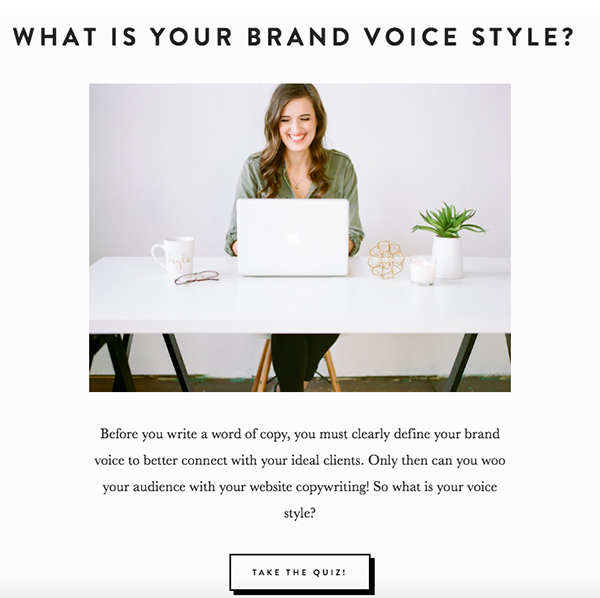
What I take from that example is how closely the quiz connected to something her audience wanted help with. Finding your voice gives you a way into the bigger task of writing about your business. The quiz could introduce that work in a way that felt specific to the person taking it.
You can apply the same thinking to your own expertise. Start with what someone is trying to accomplish, then think about the differences between people that would change your advice.
For an illustrative example, say you’re helping people choose a website template. Someone with a large collection of products needs a different way to organize their site than someone selling one service. Their preferred visual style matters, but so does what visitors need to find and do on the website. Asking about both lets you explain why a particular template fits.
The result should make that connection clear. Explain what you recommend, why it makes sense for their situation, and how they can use it to move toward what they want. A person should leave with enough understanding to take a useful next step.
That also means being selective. If someone needs help choosing a template for one service, you can focus on presenting that service clearly and making it easy to inquire. You don’t need to walk them through everything you know about organizing an online store. Keeping the result relevant helps them see what to do with it.
The same idea carries into your follow-up. If someone signs up for emails after getting a result, continue helping with the thing they came for. Send an example they can learn from, an exercise they can try, or an explanation of how your offer addresses their situation. Each message can build on what they already understand.
When you’re deciding what belongs in your quiz, picture one person coming to you for help. What would you need to understand before making a recommendation? Which parts of what you know would be most useful to them right now?
Use those questions to decide what to ask and what to include in the result. You’re helping someone find a path through your expertise that leads toward something they already want.