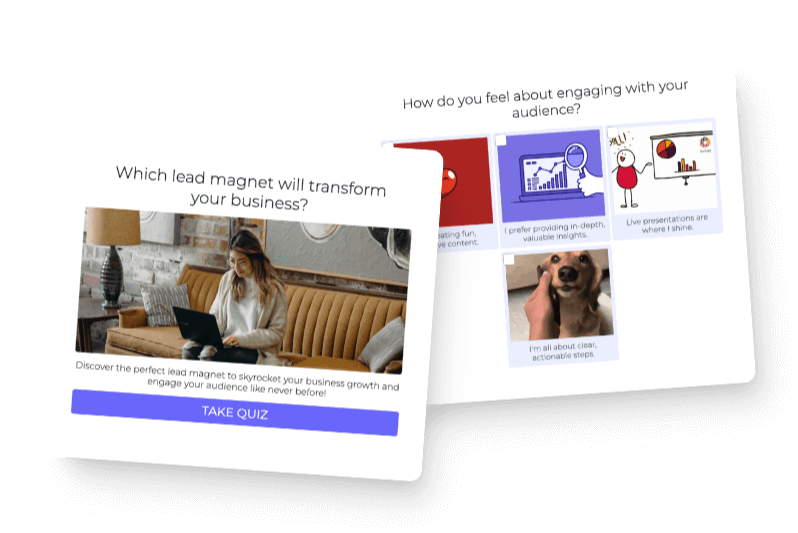

The biggest thing is that the quiz outcomes cover a whole range of things. It’s overcomplicated, and we know from our user experience interviews that people want to just focus on one thing in their outcomes instead of seeing a bunch of disparate information.
That is where I would start when reviewing an AI quiz draft. Read one outcome all the way through and notice how many different things it asks the person to think about. Does it give them a clear answer, or do they have to decide which parts of the result matter?
Someone came to your quiz with a question. Keep the outcome focused on answering it. The explanation, examples, and next step should help them understand and use that answer.
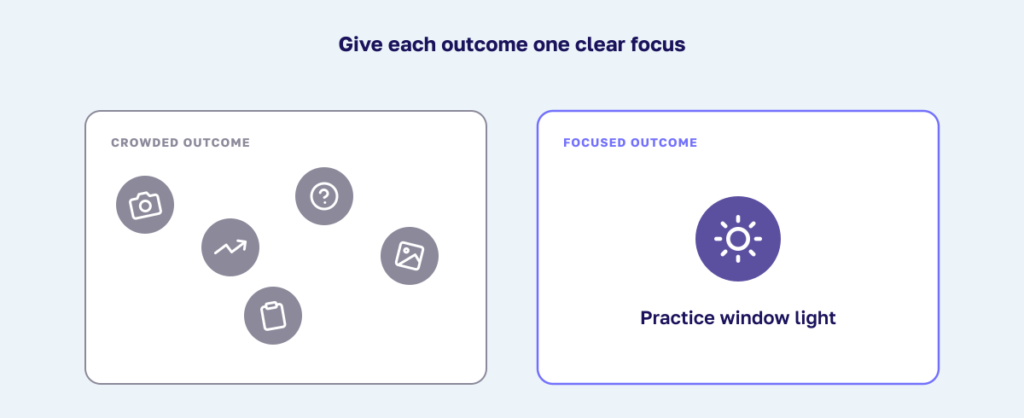
Start with what the person came to find out
Write down the question your quiz promises to answer. Then look at each outcome and name the one thing it helps the person understand or do. This gives you something specific to use when deciding what belongs in the result.
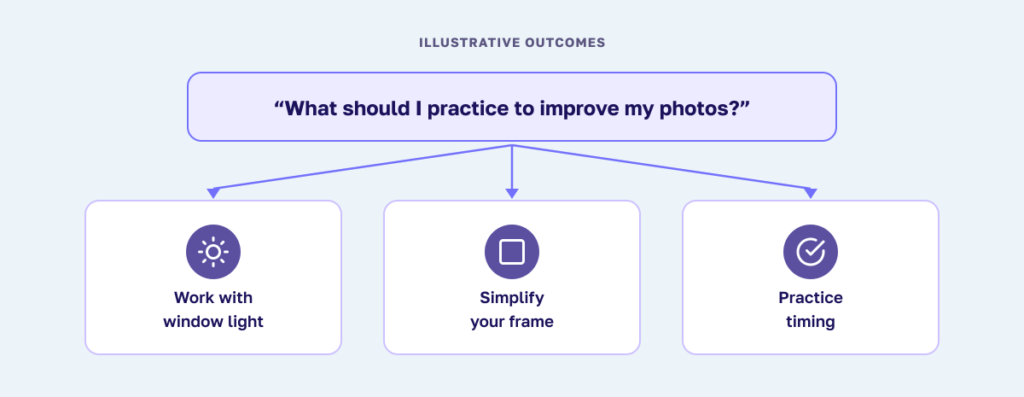
For example, imagine a photography teacher with a quiz called “What should I practice to improve my photos?” The audience wants a useful starting point for practice. An outcome should recommend a skill to work on and explain why that practice fits the person’s situation.
The teacher might have several outcomes: work with window light, simplify your frame, or practice timing. Each one answers the same overall question with a different recommendation. Those are hypothetical examples, and the teacher would need to define and test how the quiz chooses between them.
Having several possible outcomes is compatible with keeping each outcome focused. The person receiving “Work with window light” can get a full explanation of that recommendation. They do not also need a camera shopping guide, a social media plan, and an analysis of their creative personality.
Find the places where the outcome changes the subject
Read an AI draft section by section. Name what each section is about in a few words. This can reveal how far the outcome has expanded beyond the question the person asked.
An overcomplicated version of the photography result might look like this. This is an invented example, not an actual AI output:
“You are an Intuitive Visual Storyteller. Practice using window light to improve your indoor photos. You should also find a signature editing style, consider upgrading your camera, choose a photography niche, and post consistently to build your personal brand.”
There is a useful practice recommendation inside that paragraph. Around it are several other decisions: how to edit, what to buy, what to photograph, and how to market a business. The person has to separate the answer they wanted from advice about things they may never have asked about.
For this quiz, keep the lighting recommendation and the explanation that supports it. Set aside the other topics. They might belong in different lessons or quizzes, but they do not need to appear in this result just because the business can help with them.
A short paragraph can still contain too many unrelated ideas. Review what the outcome asks someone to focus on before deciding how much to shorten it.
Build the explanation around the same recommendation
A focused outcome still needs to be useful. Explain what the person got, why it fits their situation, and what they can do next. All three parts should develop the same answer.
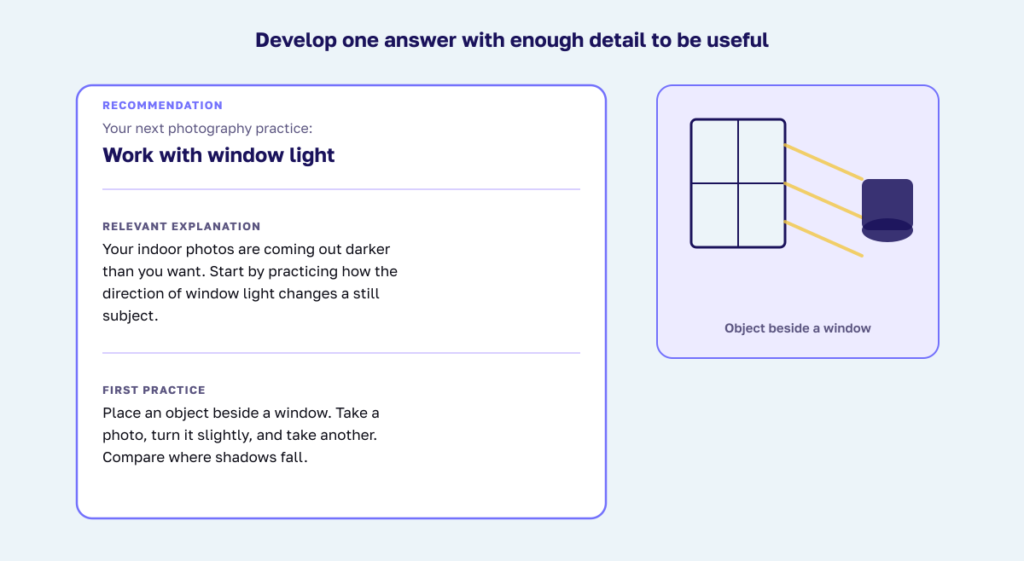
Here is a possible result for the fictional photography quiz. It assumes the answers established that the person wants help with dark indoor photos of still subjects and that the teacher selected lighting practice as a suitable next step:
Your next photography practice: Work with window light
Your indoor photos are coming out darker than you want, and you want to make the details in your subject easier to see. Start by practicing how the direction of window light changes a still subject.
Place an everyday object beside a window. Take a photo, turn the object slightly, and take another. Compare where the light falls and where shadows appear. Notice which position shows the detail you want.
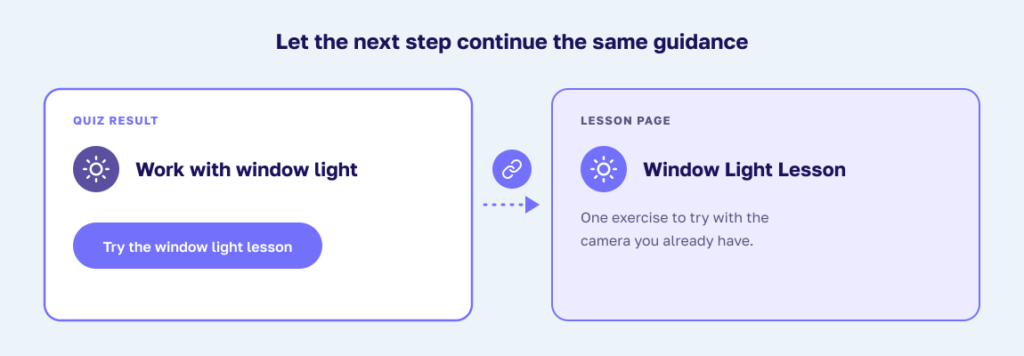
Use the window light lesson to work through this practice. It gives you one exercise to try with the camera you already have.
Button: Try the window light lesson
The explanation and exercise both support the recommendation. The link continues that same work. The person gets enough context to understand the answer and a way to begin using it.
Keep details that make the guidance accurate and relevant. If a recommendation only applies in certain circumstances, explain those circumstances. Focus should help someone use the advice correctly.
Give AI a clear editing task
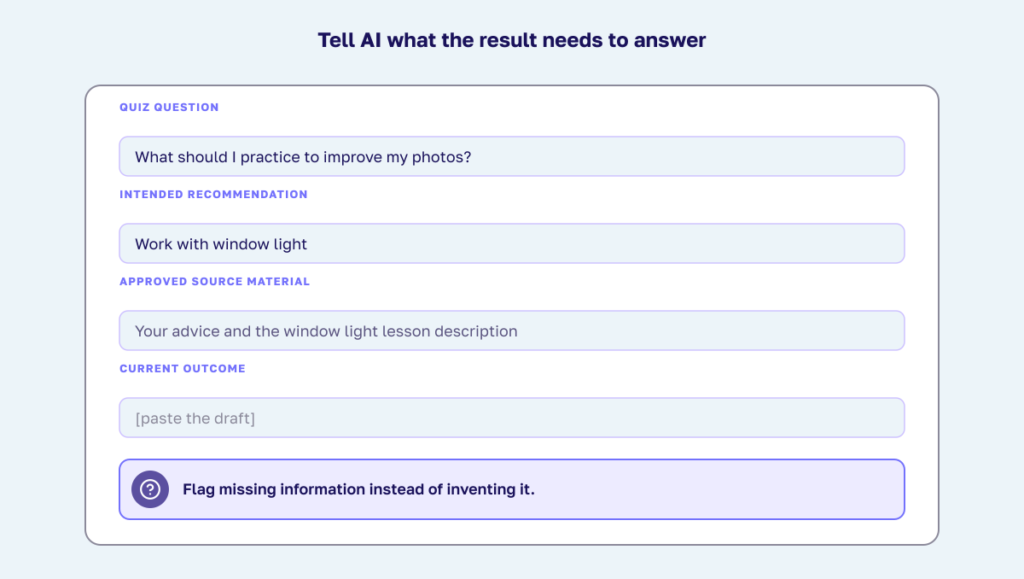
When you ask AI to revise an outcome, include the quiz’s promise and the intended recommendation. Give it the source material it should use, such as your explanation, lesson description, or existing result copy. That context helps you review whether the revision stays within your advice.
Try this editing prompt with one outcome at a time:
Review this quiz outcome for focus.
Quiz question: [the question the quiz promises to answer]
Intended recommendation: [the one thing this outcome should help with]
Approved source material: [your advice and relevant resource description]
Current outcome: [paste the draft]
List the different subjects the draft covers. Identify which parts explain the intended recommendation and which introduce a separate topic or decision. If the intended recommendation is unclear, ask me one question before rewriting.
Rewrite the outcome so its title, explanation, and next step all support the intended recommendation. Keep the details and qualifications needed to make the advice useful and accurate. Use only the information I supplied. Flag missing information instead of inventing it. Do not add personality traits, scores, products, or advice that my material does not support.
Return the revised outcome and a short list of what you removed or changed. Flag any decision that needs my judgment.
Read the revision against your source material. Check whether AI removed something necessary, added a claim, or made the recommendation sound more certain than your advice allows. You still decide which distinctions matter and what the person needs to hear.
Check the questions and next step after editing
Once the outcome is focused, go back through the quiz. Check whether its questions gather the information needed to make that recommendation. A question that existed only to support a section you removed is worth reviewing.
For the photography example, questions about the pictures someone wants to improve and where they get stuck can help the teacher choose a practice. A question about growing an Instagram business would need a separate, deliberate purpose. Do not keep it simply because it appeared in the first draft.
Before removing questions or changing answer choices, check how they affect the quiz logic and any lead segmentation you use. Test the revised paths against situations you know from helping your audience. The outcome still needs to fit the information gathered.
Keep the next step connected, too. In the example, the window light lesson follows naturally from the practice recommendation. A broad catalog of unrelated lessons would ask the person to make another choice immediately after receiving their answer.
In Interact, each result can have its own call to action button and destination. Use that destination to continue the guidance the outcome just gave. Check both the button wording and the page it opens so the connection is clear.
Ask people what they took away
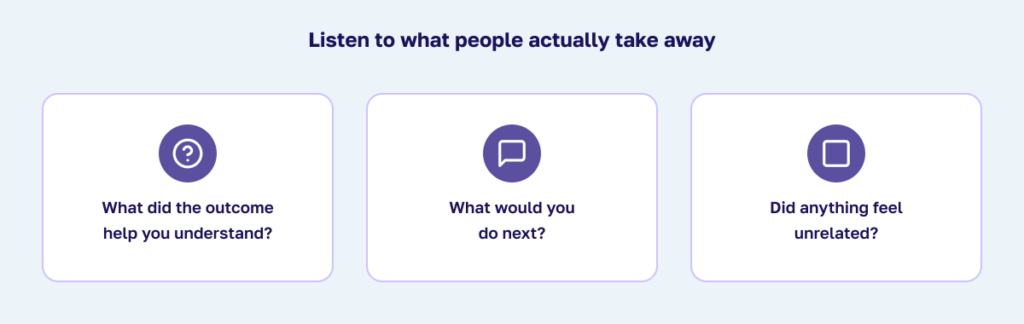
Our user experience interviews are what brought this issue into focus: people want to concentrate on one thing in their outcomes. You can explore that with your own audience by listening to how people describe the result after taking your quiz.
Ask what the outcome helped them understand, what they would do next, and whether anything felt unrelated to what they came to find out. Let them explain it in their own words before you explain what you intended.
If someone finishes and still has to choose between several unrelated recommendations, revisit the outcome. If they understand the recommendation but cannot see why it fits, strengthen the explanation. Those are different editing tasks, and hearing the person describe the experience helps you choose which one to do.
Start with one outcome and read it as someone looking for help with the quiz’s promised question. Keep the answer clear, give it a useful explanation, and make the next step follow from it. Then apply that same review to the rest of the quiz.