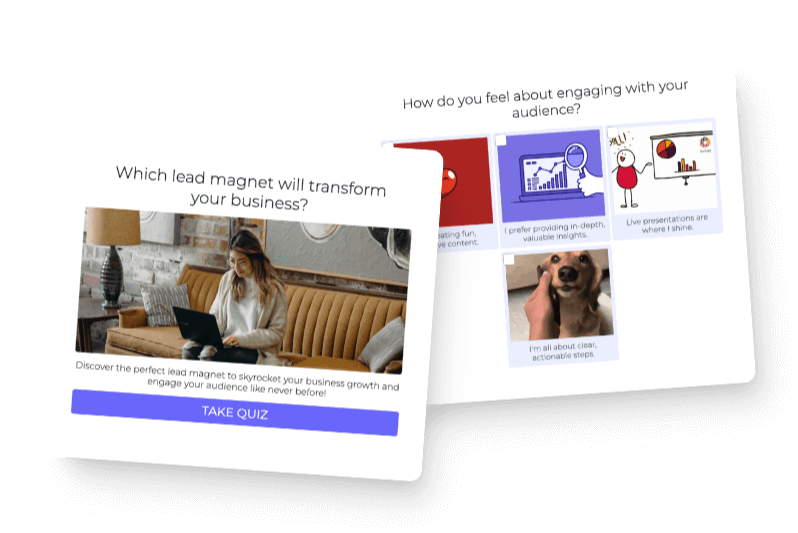

People sometimes take a quiz more than once because they get curious about what would happen if they answered differently.
They get their result, think back to the questions, and start wondering: “If I answer the questions this way, what happens? If I answer this way, what happens?”
That curiosity speaks to the engagement power of quizzes. Someone has already finished the experience, and they’re interested enough to go through it again. They want to explore what else is there.
The first time through, someone might choose the answers that feel most like them and see what they get. But along the way, another answer catches their attention. Maybe two choices both feel true. Maybe they can picture themselves answering differently in another situation. When they reach their result, they still want to know where that other path would have taken them.
Imagine taking a quiz about your ideal vacation. You answer based on wanting to relax and get a recommendation for a quiet beach trip. That sounds nice. But you also remember the questions about exploring cities and trying new things, and now you’re curious about what you would get if you leaned into that side of yourself.
You go back through and try it. Now you’re looking at another possibility and thinking about whether that sounds like you, too.
The quiz has given you something to participate in. You make choices, get a response, and can explore how different choices affect that response. There’s a little bit of discovery each time.
As a quiz creator, that’s interesting because the person is spending more time with the subject you help people understand. They’re considering the distinctions you’ve made and reading more of your explanations. A topic that might have been a quick read becomes something they’re actively thinking about.
This is also why I like having some mystery in the answer choices. If someone can look at every answer and immediately see exactly which result it leads to, there’s less to wonder about.
You still want the questions and answers to be clear. The curiosity comes from wanting to see how those answers come together into a result. Someone should understand what they’re choosing while still being interested in what you’ll tell them afterward.
The results need to make that exploration worthwhile. Each one should offer a distinct explanation that helps someone understand a different possibility. When someone goes back through, you want there to be something meaningful for them to discover.
For example, a quiz about how you approach creative work could explain different ways people get started, develop ideas, or work through a challenge. Someone might recognize themselves in their first result and still be curious about another approach. Reading that second result gives them more to consider.
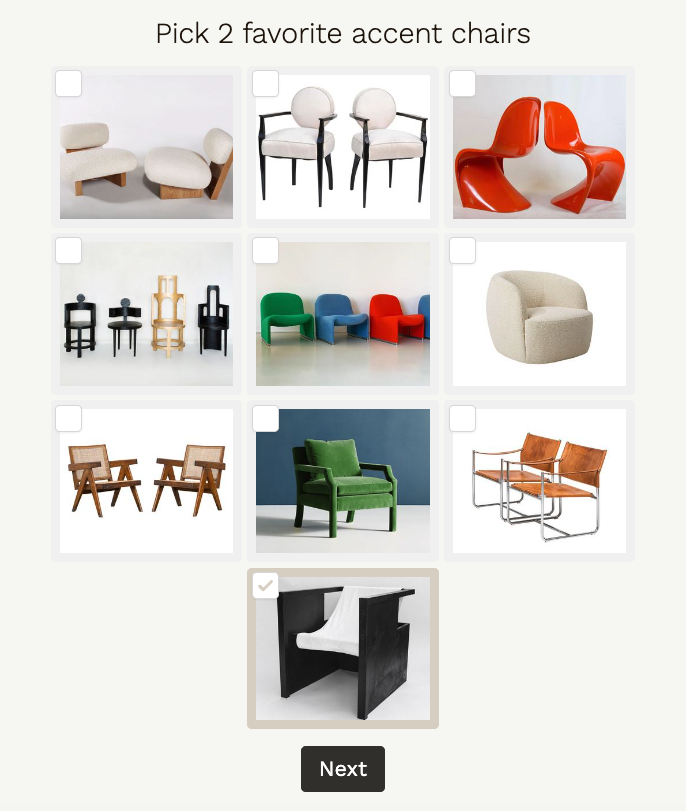
Cristina Cleveland’s Interior Design Style Quiz is a good example of a topic that could encourage this kind of exploration. Her quiz page lists style profiles including Pottery Studio, Museum Bookstore, and Pop Arcade. Someone could feel drawn to more than one of those styles and wonder what a different set of visual choices would reveal. That gives the curiosity something concrete to work with: another way their home could look and feel.

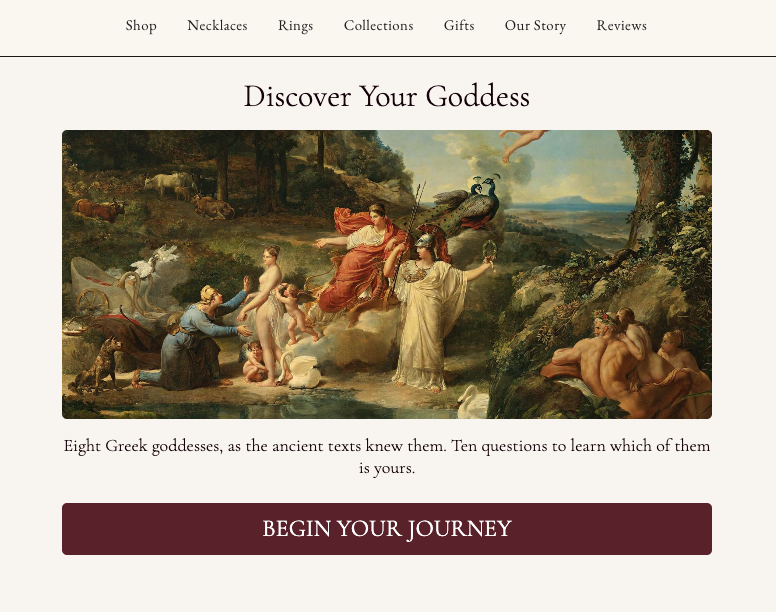
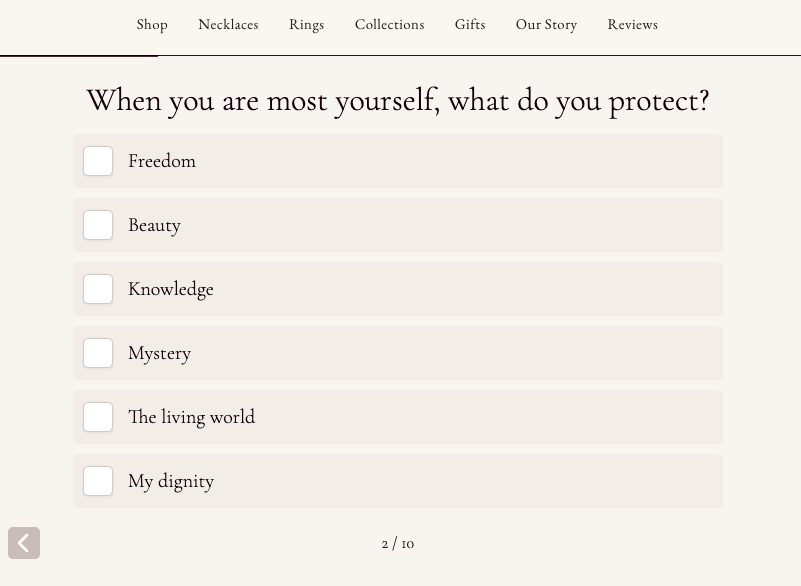
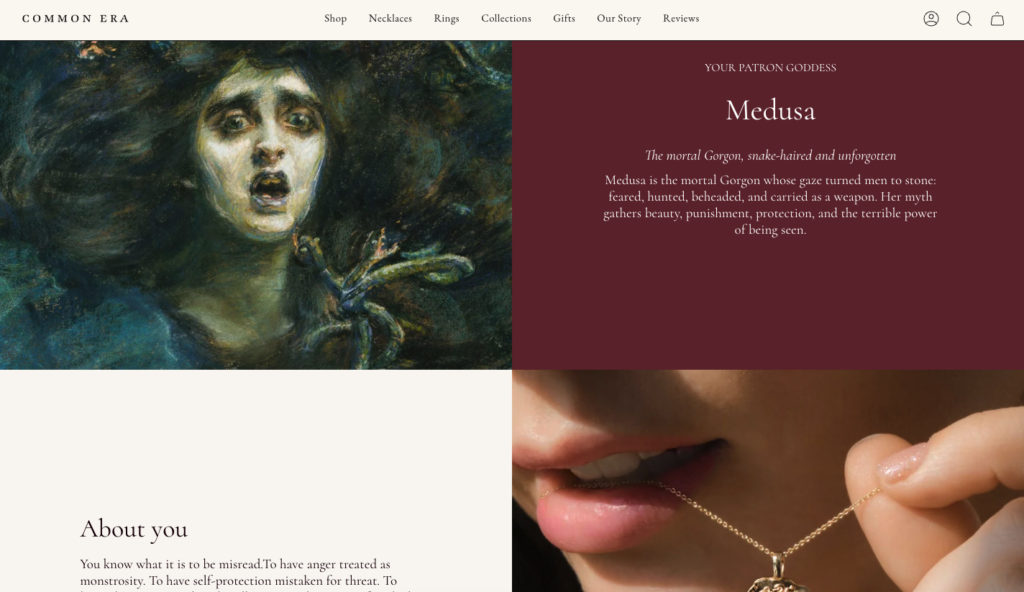
Common Era’s goddess quiz is another example to consider. It connects self-discovery with jewelry inspired by Greek goddesses. Someone might enjoy their match and still be curious about which other goddess they could get by answering differently. The appeal is exploring a different side of themselves, with related jewelry to look at afterward.
One strategy I’ve seen people use is to create custom outcome pages on their own website. Each outcome gets its own landing page, and the quiz sends someone to the page for the result they receive. In Interact, you can set this up by redirecting each quiz result to its corresponding URL.
On those landing pages, they list all the possible results and link to the other outcome pages. Someone can read their own result, see what the other possibilities are, and click through to explore them.
Then every outcome page also includes a link to retake the quiz, pointing back to the page where the quiz lives.
That creates a loop. Someone takes the quiz, reads their result, explores another outcome, and gets curious about what answers might lead them there. They can go back through the quiz and try a different set of choices to see what happens.
Reading the other outcomes gives them more to be interested in. Retaking the quiz lets them explore how their answers connect to those outcomes. You’re giving that curiosity somewhere to go.
This can also give people more exposure to your voice and expertise. Each outcome page is another opportunity to explain something about your audience in a way that feels thoughtful and recognizable. Someone might come for one answer and end up exploring several different ideas you can help them understand.
If you use this approach, give someone their full result first. Then make the invitation to explore easy to find. A section labeled “Explore the other results” and a clear “Retake the quiz” link can give people a straightforward way to continue.
When you’re reviewing your quiz, think about the experience beyond the first result. Are the outcomes different enough that you’d want to read another one? Would trying a different set of answers reveal something interesting? Can someone easily move between exploring the results and taking the quiz again?
Start by giving someone a satisfying answer to the question that brought them to your quiz. That experience can create the next question they want answered: “What else might I discover?”