
When you’re working with AI to write a quiz, and you’re trying to get it to have the knowledge about your business as well as your tone and your style of speaking, what I have found to be most effective is that you want to go incrementally.
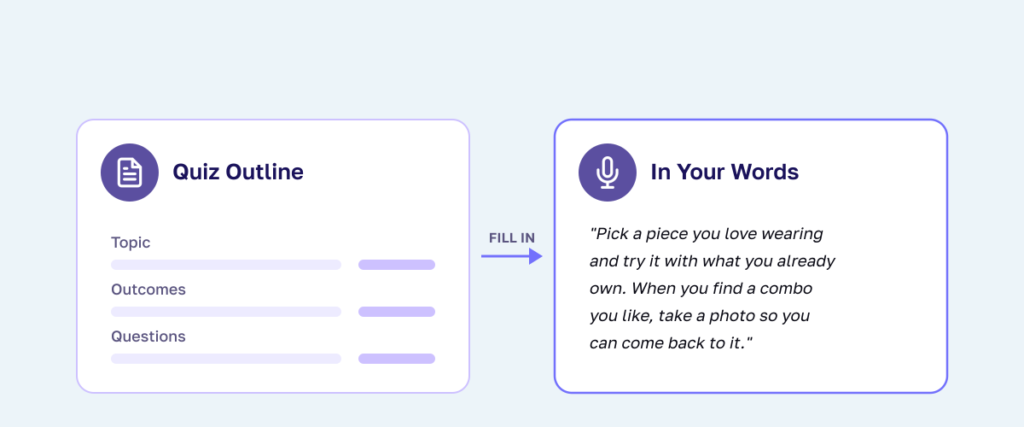
I haven’t found it very effective to say, “Here’s a whole download of everything,” and expect the finished quiz to sound like me. Maybe that is specific to quizzes, maybe it is more general. I’m not sure. But when you’re working on a quiz, you can start with the framework: topic, outcomes, questions. Then start to hone and refine each element.
The AI helps you lay out the work. You bring in the knowledge and wording as you work through it. Sometimes that means you end up writing or talking out almost the entire quiz yourself. That is the best way I have found to use AI for this.
Start by talking through the quiz concept
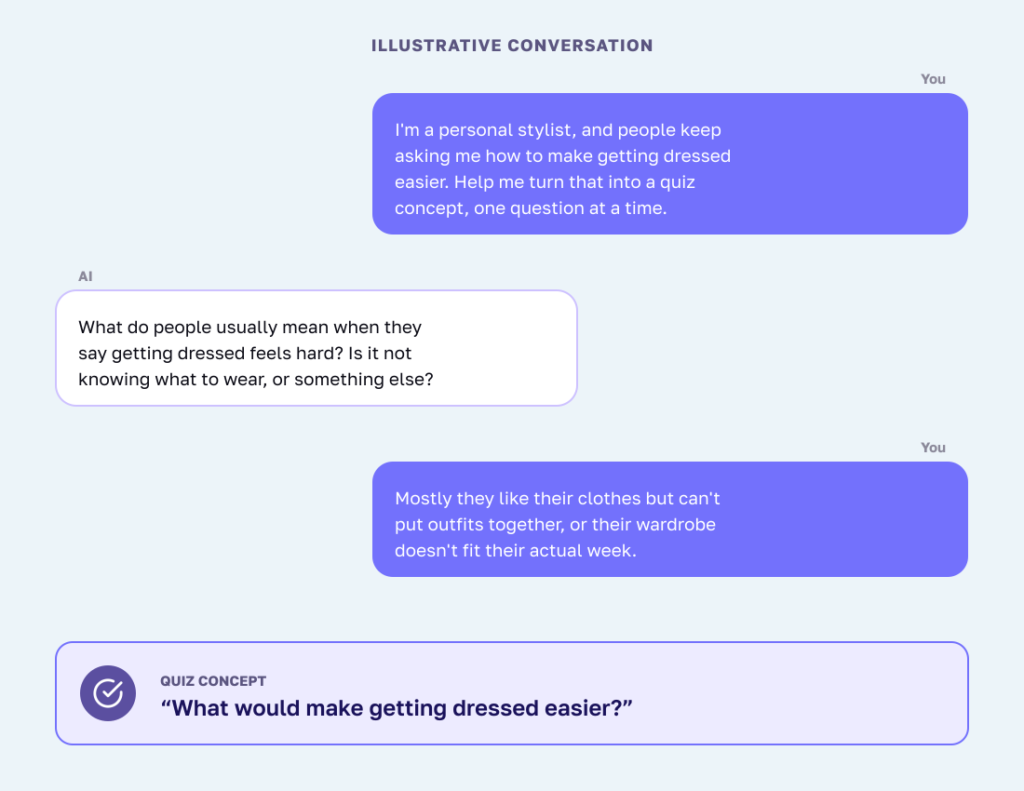
The concept is the biggest question that people always ask you. That is where the best quiz ideas come from in my experience. Start there with your AI conversation, and work on making that question clear.
Give the AI enough context for this first decision: who you help, what people ask you, and what they are trying to figure out. You can add relevant examples as the conversation develops. Work toward a concept that you recognize from the conversations you already have with your audience.
Imagine a personal stylist whose customers keep saying that getting dressed feels harder than it should. For this hypothetical business, the quiz concept could be “What would make getting dressed easier?” That is the question the rest of the quiz needs to help answer.
An opening prompt could be: “I’m a personal stylist, and people keep asking me how to make getting dressed easier. Help me turn that into a quiz concept. Ask me one question at a time about what they mean when they ask for help.”
You can also begin with Interact AI, which accepts your website or content as context for generating a quiz. Treat that draft as something to react to. Check the concept first, then work through the outcomes and questions in your own words.
Explain the answers you give people
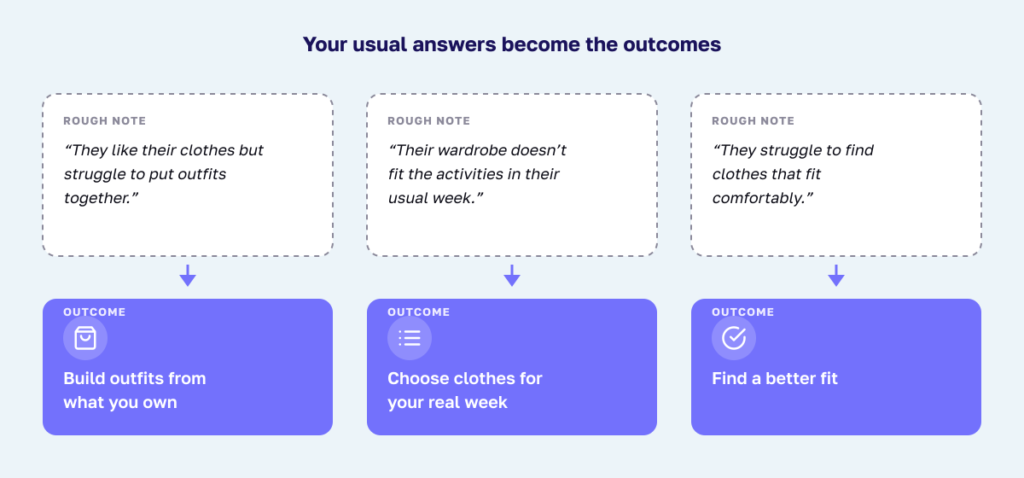
Once you have the concept, the next question is: “What are the answers that I give people to that question they ask me?” Those answers become the outcomes of the quiz.
Talk through the different situations you hear and what you would say to each person. Include the distinctions that change your advice. This is where your knowledge of your business becomes specific enough to shape the quiz.
For the fictional stylist, those distinctions might look like this:
| What the Stylist Explains | Possible Outcome |
|---|---|
| They like their clothes but struggle to put outfits together. | Build outfits from what you own |
| Their wardrobe does not fit the activities in their usual week. | Choose clothes for your real week |
| They struggle to find clothes that fit comfortably. | Find a better fit |
These are illustrative starting points. The stylist would still need to explain what to recommend when more than one situation applies. AI can help organize the answers, but you decide what advice fits and which distinctions matter.
Work through one outcome at a time. Explain what it means, why someone would receive it, and what you would suggest next. Bring in the relevant lesson, product, or service details when you reach that part of the conversation.
Work out what you need to ask
Then ask: “What questions do I need to ask?” Think about how you would learn enough to give one of those answers in a conversation with a customer.
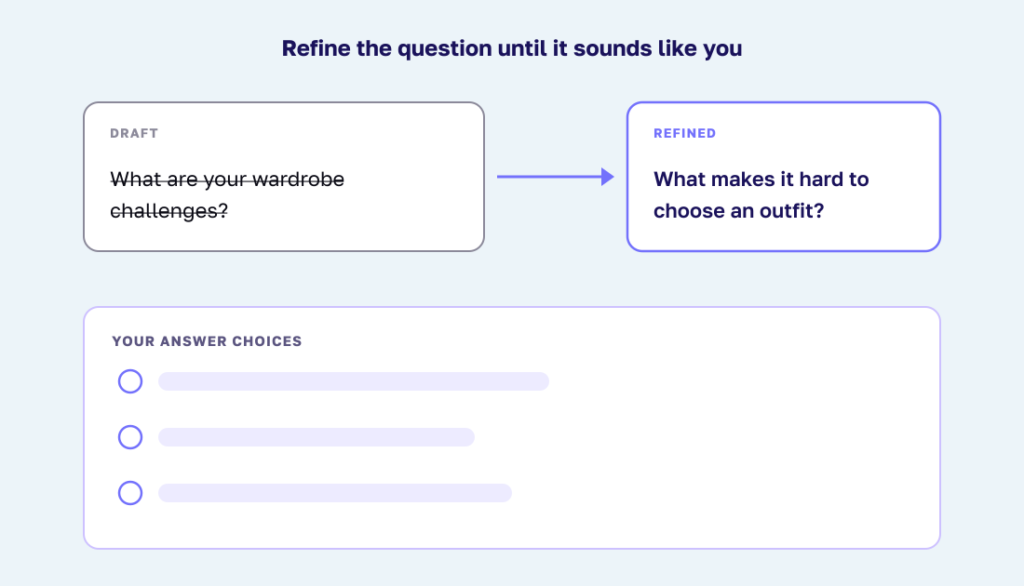
The stylist might need to know what makes choosing an outfit difficult, what the person’s week looks like, and what happens when they try on their clothes. Each question has a purpose in understanding which kind of help would be useful.
You can ask AI to propose questions from the outcome notes, then respond to each one. Tell it when an answer choice misses something your customers say, or when you would ask the question differently. Speak the better version if that is easier than typing it.
Keep the intended meaning of the questions and answer choices clear as you edit. Changes in wording can change what someone selects, so check that the questions still gather the information needed to guide them to a suitable outcome.
Use a voice note to show how an outcome should sound
Even once the framework is there, keep honing it. You might have six outcomes and ten questions because that is how your quiz happens to be set up. Those are example numbers. Having all the pieces written does not mean they sound like you yet.
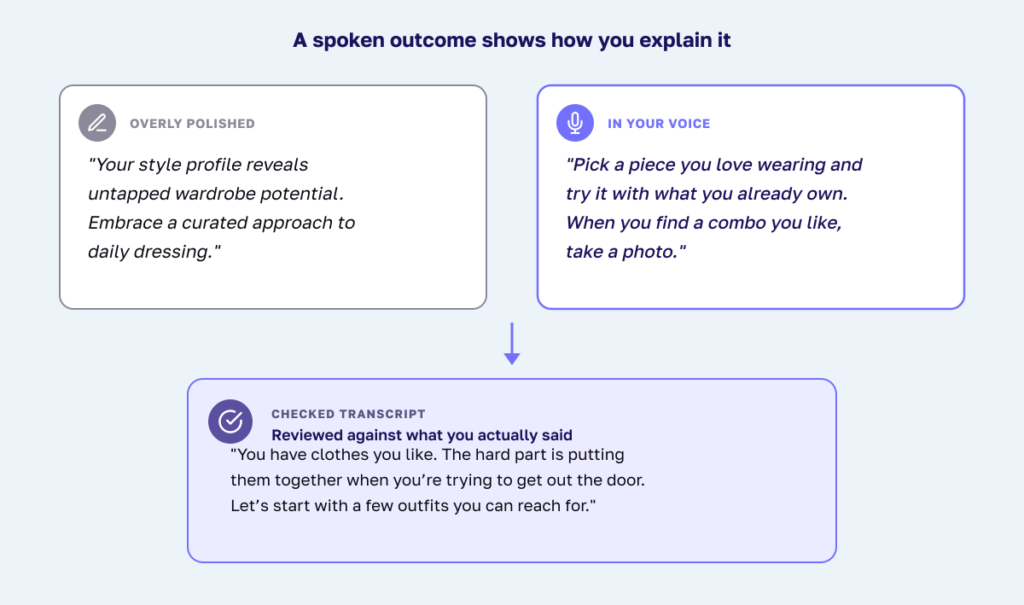
You might read an outcome and think, “It’s too wordy. It’s not how I talk.” At that point, record yourself saying that outcome the way you want it to sound. Then give the AI the transcript and say, “Here’s how I want this to sound.” Check the transcript first so it reflects what you actually said.
For the fictional stylist, an overly polished draft might say, “Your style profile reveals untapped wardrobe potential. Embrace a curated approach to daily dressing.” This is invented sample copy, not an actual AI output.
The stylist could talk through the “Build outfits from what you own” outcome like this. The example assumes the quiz established that the person likes their clothes but struggles to combine them:
“You have clothes you like. The hard part is putting them together when you’re trying to get out the door. Let’s start with a few outfits you can reach for. Pick a piece you love wearing and try it with what you already own. When you find a combination you like, take a photo so you can come back to it. That’s where I’d start with you.”
That gives the AI an example of your actual sentences, their order, and how you explain the recommendation. You have supplied the voice and the substance together.
Apply the example to the other outcomes carefully
Use that spoken outcome as a reference when refining the rest. Give the AI the approved advice for the next outcome along with the example of how you speak. That lets you work on the wording without losing what makes each result different.
A follow-up prompt could be: “This transcript is how I want the first outcome to sound. Keep my wording, correcting only transcription errors and punctuation. Now use it as a style reference for the next outcome below. Preserve that outcome’s own advice and recommendation. Do not add claims, change the meaning, or copy advice that only belongs to the first result. Show me the revision so I can review it.”
Read the revised outcome aloud. If something still sounds wrong, say it again in your own words. You can do this for every outcome, every question, and every answer choice. Keep the versions you approve so a later revision does not quietly replace wording you have already settled.
A description of your brand voice can be useful context. A sentence you have actually said gives you something more concrete to work from. Check whether the final version is something you would say to a person asking for your help.
You may end up saying almost everything yourself
There is something about the way people talk and the sequencing of the words that makes the writing distinctly sound like them. It is hard to fully explain. In conversations about this, people tell me they can feel when a quiz sounds like AI, and that they prefer the one that feels written by a person.
That is why I keep coming back to the final wording. Even if you have provided your brand voice, or used Interact AI to start from your content, go through the quiz and fill it back in with how you would phrase things, ask questions, and explain the outcomes.
You might end up writing or talking out the entire thing. If I’m being fully honest, that is the best way I have found to use AI to write a quiz: have it help lay out the framework so you can be the person who says what belongs in it.
Once the copy sounds right, check the complete experience in Interact. Read it from the cover through the outcome, test different answer paths, and confirm the recommendation and next step agree. If you are building a product recommendation quiz from a sales page, the Help Center recipe covers the builder setup.
Start with the topic, outcomes, and questions. Refine each element with your knowledge and your words. The AI helps you organize the work, and the person taking the quiz gets to hear from you.