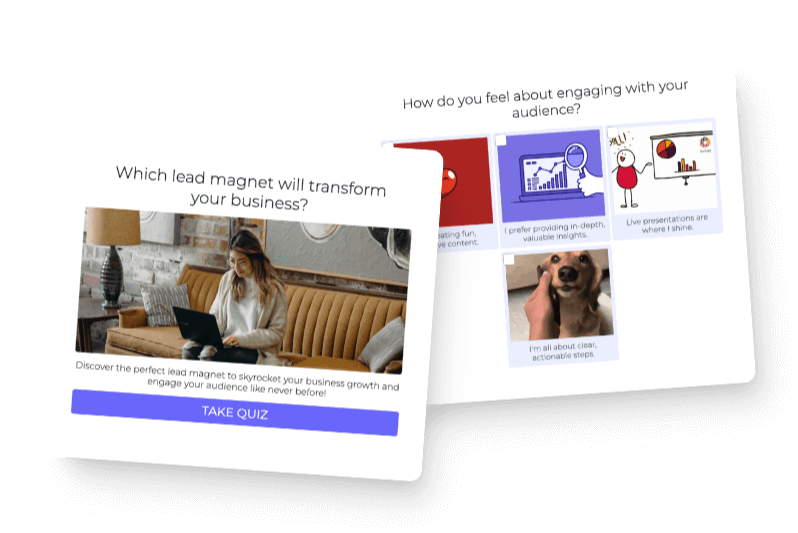

Alyssa Zander had already been sharing her codependency quiz for more than two years before she turned it into an interactive experience. Originally, it was a PDF that allowed people to read through the questions, keep track of their answers, and use the scoring information she had provided to understand what those answers might mean.
The PDF had already proven that people were interested in the subject and found the questions useful. Alyssa was not trying to replace something that had failed. She wanted to build on something that was working and make the experience easier for people to move through.
“I really wanted it to be more interactive,” she told me. “I wanted it to be easier for people to navigate.”
Turning the PDF into an interactive quiz did not fundamentally change what Alyssa was teaching. The questions came from the same ideas, and the results reflected the same understanding of codependency.
What changed was how directly the experience could respond to the person taking it. Instead of keeping track of their answers and then referring back to a scoring guide, people could move through the questions one at a time and receive an explanation based on their responses.
The PDF gave people valuable information. The interactive version made that information easier to explore and apply to their own lives.
People often feel a problem before they can name it
Someone may notice that they have difficulty setting boundaries or that they feel responsible for everyone else’s emotions. They may repeatedly lose sight of themselves inside their relationships without knowing that codependency is the idea connecting those experiences.
As Alyssa explained, people can experience codependency without being fully aware of it. They are living through the pattern before they know what to call it.
This creates a challenge for anyone who creates educational content. The people who most need the content may not yet know exactly what they need.
They are unlikely to search for an answer using terminology they have never encountered. They may also resist an explanation that defines their experience before they have had a chance to recognize it for themselves.
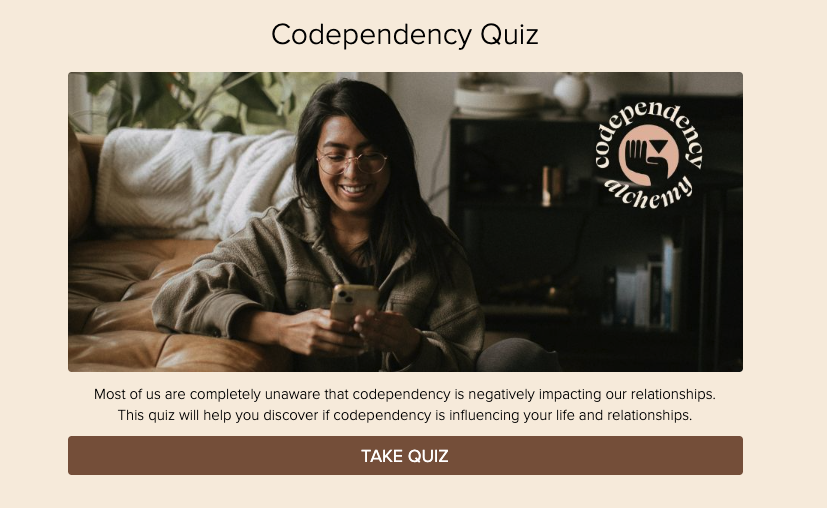
Alyssa’s quiz creates a different kind of entry point because it begins with questions rather than a label. It asks people to reflect on experiences they already recognize from their own lives.
A person can move through those questions without first deciding that they identify with codependency. They are not being told who they are. They are being invited to notice what they already do, feel, and experience.
Alyssa described the quiz as a way to “invite them into exploring something that maybe they wouldn’t have explored otherwise.”
The word invite captures what makes the approach work. The quiz is not forcing a conclusion onto someone. It creates enough structure for the person to begin reaching that conclusion on their own.
Recognition is different from information
There is no shortage of information about codependency. Alyssa could publish a list of common characteristics, create a guide to setting boundaries, or record a video explaining how codependency tends to appear in relationships.
She does create those kinds of resources, and they are valuable. However, they do a different job from the quiz.
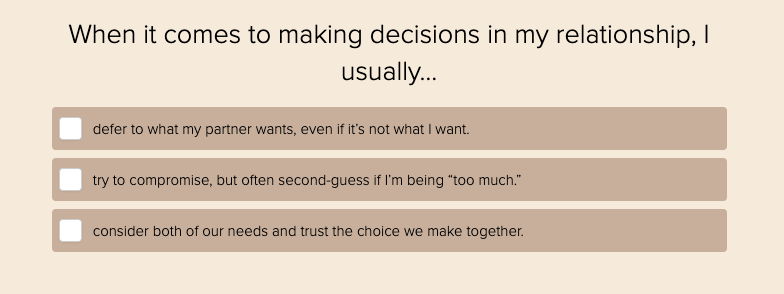
A guide can explain a concept thoroughly, but it may still leave the reader with another question: What does this mean for me?
That is often the hardest part of consuming educational content. People may understand what they have read and still struggle to apply it to their own circumstances.
They are left trying to determine which parts are relevant, which pattern best describes them, and what they should pay attention to first. An interactive experience helps close that gap by giving someone a way to locate themselves within a larger body of information.
This idea extends far beyond relationship education.
A financial advisor can explain several approaches to money, but an assessment can help someone recognize their own habits and fears around spending. A career coach can write about burnout, but a quiz can help someone identify the particular kind of exhaustion they are experiencing.
A skincare company can explain every ingredient in its products, but a product recommender can help someone understand which products fit their skin and routine. A consultant can describe common business challenges, but an assessment can help a founder see which challenge is creating the greatest constraint in their company.
The information matters in each of these examples, but information alone does not always create clarity. People also need a way to understand how that information relates to their particular situation.
The most useful content does not only answer, “What is true?” It also helps someone answer, “Which part of this is true for me?”
A softer way into a difficult subject
Codependency can be a heavy topic to confront directly. Opening a guide about the signs of a codependent relationship requires a certain level of readiness because the subject itself may feel personal and consequential.
A quiz can create a softer entry point without treating the topic as less serious. The person does not have to decide that they are ready to deeply study codependency. They only have to be curious enough to answer the first question.
Once they have answered that question, they can answer the next one. The experience unfolds gradually, giving them time to notice what resonates without feeling as though they have already accepted a label.
Alyssa sees the quiz as a natural first step into her work, while her guide offers people an opportunity to explore the topic in greater depth. The two formats are not competing with each other. They meet people at different moments.
Someone who is ready to sit down, reflect, and work through a subject may appreciate the depth of a guide. Someone who is encountering the idea for the first time may find it easier to begin by answering a few questions on their phone.
The interactive experience gives people an immediate way to participate. Once they begin to recognize themselves in the questions, they may be more interested in opening the guide and learning more.
In that sense, the quiz can make the PDF more valuable. It helps people understand why the deeper resource is relevant to them before asking them to spend more time with it.
The value does not have to be held behind a form
Alyssa also made an interesting decision when she turned her PDF into an interactive quiz. She chose not to require people to enter an email address before seeing their result.
The standard lead generation approach would be to let someone answer all the questions and then ask them to exchange their contact information for the outcome. Alyssa wanted to see what would happen if she gave people the information first.
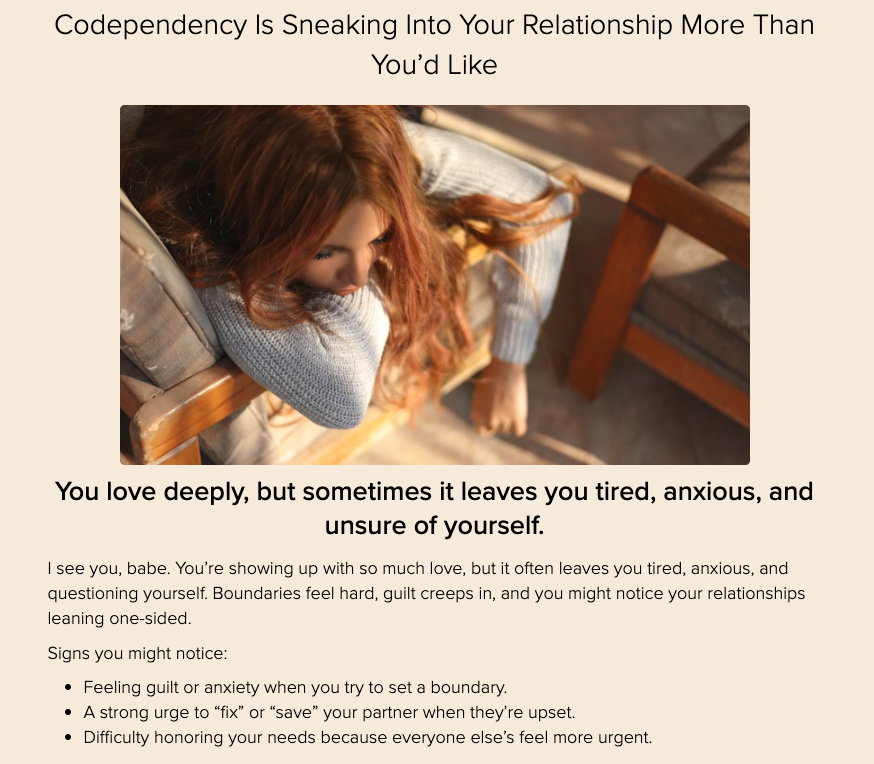
Instead of placing the result behind an opt-in form, she included another lead magnet within the quiz. People could receive the insight they had come for and then decide whether they wanted to continue into a deeper resource.
The approach has worked remarkably well. When we spoke, Alyssa’s quiz had a 91.5 percent completion rate, and she said it continued to bring new leads into her business.
She also believed the experience was creating another layer of trust. People did not have to give her something before she had helped them.
The lead became a byproduct of the value rather than the price of receiving it.
This does not mean every quiz should remove its email form. There are many situations in which asking for an email address is a reasonable exchange.
Alyssa’s experience simply raises a useful question about the order in which value and conversion happen. At what point in the experience has someone received enough help to trust you?
When the first meaningful insight only arrives after the opt-in, you are asking the person to trust you before you have helped them. When the value arrives first, the relationship begins from a different place.
The quiz became the beginning of a conversation
Alyssa did not begin by building a highly automated funnel around the quiz. When people responded to one of her Instagram stories or asked for the link, she would send it manually.
She often included a little about her own story, explaining why she had created the quiz and how codependency had affected her relationships. Sometimes she sent voice notes.
Those early interactions were not efficient, but they were valuable. The quiz gave people a reason to reach out, and Alyssa’s response gave them a reason to feel seen.
Instead of treating the quiz as a mechanism for moving anonymous people into a database, she used it as the beginning of a relationship.
As her audience grew, the number of messages eventually became too large to manage manually. She now uses DM automation to distribute the quiz when someone comments a keyword or sends her a message.
However, automation was something she added after the volume demanded it. She did not begin by automating a conversation she had never personally experienced.
That sequence helped her understand why people wanted the quiz, how they described their struggles, and what kind of response made them feel supported. The manual process taught her what the automation needed to preserve.
Even now, she still returns to personal interaction whenever she can. She responds to comments, occasionally sends voice notes, and thanks people for trusting her with parts of their experience.
The automation helps Alyssa manage the scale, but it does not replace the relationship that made the quiz meaningful.
This is a useful reminder that an interactive experience does not have to be the end of a funnel. It can be the opening question in a conversation.
Someone takes the quiz because they are trying to understand something about themselves. Their answers reveal a pattern that may have been difficult to put into words.
The result gives them language, and that language makes it easier to ask for help, explore another resource, or continue the conversation. The quiz gives the relationship somewhere to begin.
The answers become a source of content
Adding an interactive version of the quiz also gave Alyssa something the PDF could not provide on its own: visibility into how people were answering.
She can see which questions people most frequently answer yes to and which patterns appear repeatedly. That gives her a clearer picture of the experiences her audience is trying to understand.
This does not diminish the value of the original PDF. The PDF helped Alyssa develop the questions and confirm that the subject resonated with people.
The interactive quiz added another layer. It allowed her to deliver the resource in a more guided format while also learning from the answers people gave.
Those patterns now help Alyssa decide what to create next.
When a large percentage of people respond to a particular question in the same way, she knows the underlying issue deserves more attention. She can create a video about it, discuss it on her podcast, expand on it in a guide, or provide deeper support inside her membership.
The quiz becomes part of a continuous listening loop. Alyssa asks questions, and her audience answers them.
Those answers reveal what people are experiencing, and Alyssa creates content that responds to those experiences. That content brings more people into the quiz, where she learns even more.
This is a different way to think about audience research. Instead of relying only on search data, comments, or intuition, a creator can learn from the choices people make while they are actively trying to understand themselves.
The quiz is not only a way to distribute content or generate leads. It is also a way to listen.
The most useful content gives people language
There is a great deal of pressure in content marketing to constantly teach people something new. Creators are expected to produce new ideas, frameworks, advice, and explanations.
However, people do not always need another idea added to the information they are already trying to process. Sometimes they need help recognizing something that has been present all along.
They need to recognize the pattern in their relationships or understand why they continue to feel stuck. They may need to recognize what they want, what they need, or why the advice they have already consumed has not worked for them.
Alyssa’s quiz succeeds because it helps people put language around an experience they may already be having. It does not begin by asking them to understand the entire concept of codependency.
It starts with familiar situations, recognizable feelings, and questions they can answer from their own lives. From there, the larger concept becomes easier to see.
That is the larger opportunity in interactive content.
A quiz, assessment, or recommender can take something broad and make it personal. It can help someone move from learning about a subject to seeing where they belong within it.
The most useful content does not always deliver the realization from the outside. Sometimes it asks the right questions and gives someone enough space to recognize the answer for themselves.