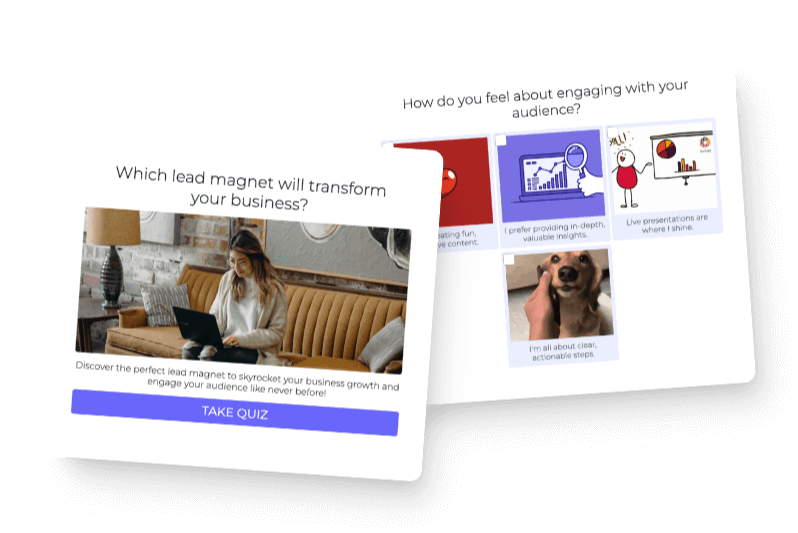

The way you show someone you’ve been there is in what questions you ask them, and when you ask questions that are highly relevant and demonstrate a clear understanding of the other person’s life situation, that is how you show “I’ve been there” without talking about yourself.
When I spoke to Julie Bjelland, psychotherapist and founder of Sensitive Empowerment, she described hearing that exact kind of recognition from people taking her quizzes, people telling her, “I feel like you were reading my mind. I feel like you just explained me.”
We talked about how she creates that experience, where her questions come from, and how the quiz becomes an introduction to the rest of her work.
Build your questions from the patterns you keep hearing
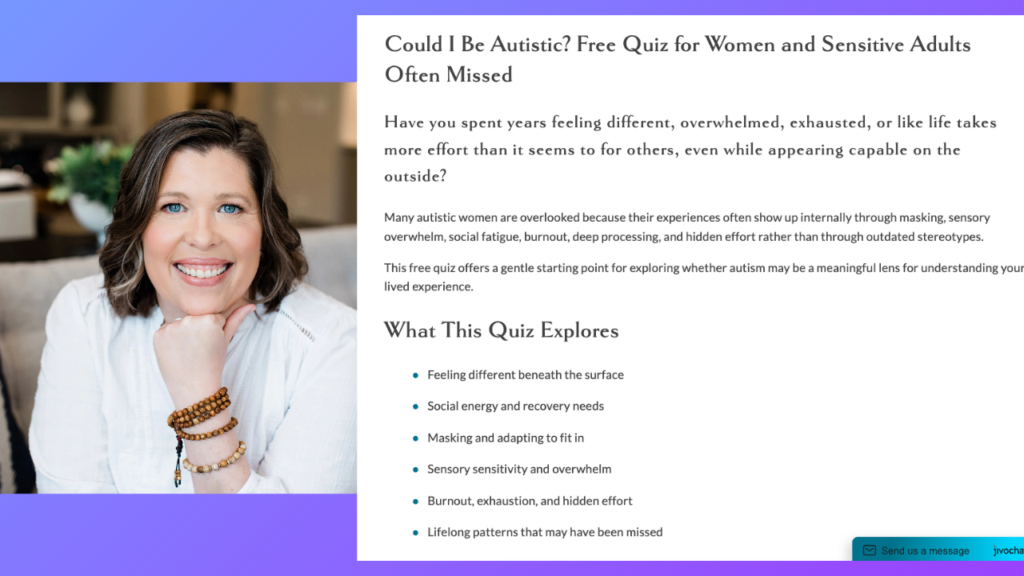
Julie’s quizzes started with what she was noticing in her work, first with a sensitivity quiz, then later with an autism quiz and a broader discovery quiz. Her goal was to help people begin understanding their experiences and find education they could continue exploring.
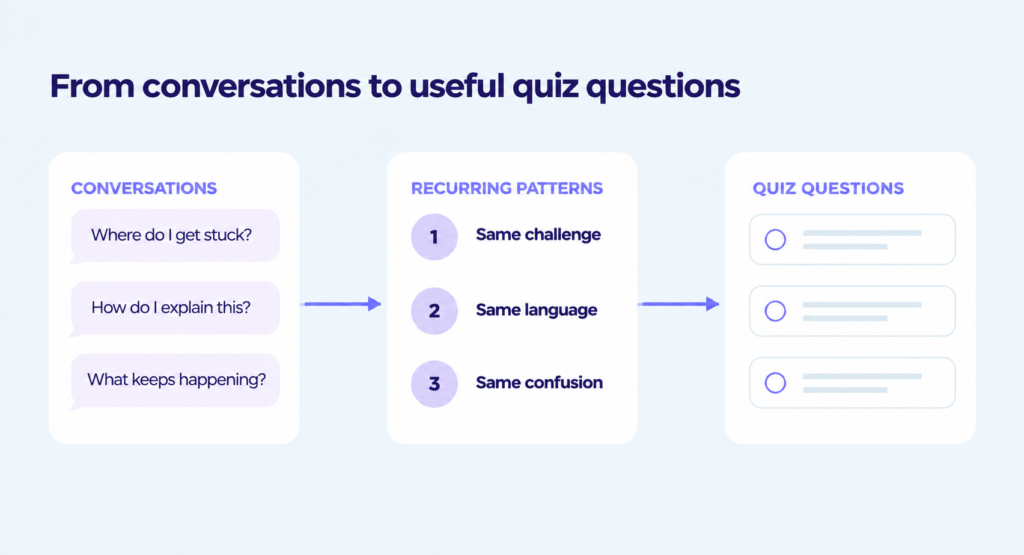
In her client work, she kept hearing similar challenges and finding recurring ways to help, and she wanted to make that information available to more people. Those patterns became the starting point for her questions.
When I asked how she identified them, she brought it back to knowing your audience: Where are they challenged? What are they searching for? What language do they use when they describe what’s happening?
Those details give you the material for a quiz, because you start hearing the same situation described by different people, noticing where they get stuck, what they have trouble explaining, and what helps them understand it.
Julie also described continuing to learn through one-on-one sessions and conversations in her private community, so that understanding keeps developing as she hears more about people’s lives.
That’s what I would pay attention to in your own work, when several people describe a similar experience, there may be a useful quiz question in there.
Help someone recognize their own experience
When I asked Julie what makes someone want to keep learning after taking a quiz, she talked about feeling understood, especially for people in her audience who had spent a long time feeling misunderstood.
Then they encountered questions that described things they recognized in themselves, and that was the moment that made them curious about the person asking.
Julie put it this way:
“I think it has a lot to do with feeling seen.”
That’s the connection I’m talking about when I say the questions can show “I’ve been there,” because someone can tell that you understand the situation when you know which details to ask about. You’ve given them a way to recognize and explain something they experience.
Julie also made an interesting distinction between people who already have a question in mind and people who are still trying to understand what they’re experiencing.
At the time of our conversation, she described an autism quiz for people already exploring that subject, alongside a broader discovery quiz for people who might not initially seek out an autism quiz.
Those are different starting points, one person has a specific question, while another recognizes an experience but may not yet have language for it.
For your own quiz, think about where the person is starting: What do they already know? What are they wondering about? What would make them recognize that this quiz is relevant to them?
Julie’s current autism quiz page describes it as an educational reflection tool and distinguishes it from a diagnosis or clinical assessment, so the recognition we’re discussing here is the beginning of further exploration.
Keep changing the wording when people misunderstand it
Julie said she edited her quizzes over time as she learned more about the people taking them, and sometimes someone would make a comment that showed her they hadn’t understood a question the way she intended.
That gave her a reason to reword it.
I think this is a useful part of the process because you can know your subject well and still ask a question that doesn’t land. You know what you mean, but the person taking the quiz only has the words on the screen.
If they interpret those words differently, you want to understand what happened: Was a phrase unfamiliar? Did the question leave too much open to interpretation? Did the answer choices miss the way they would describe their situation?
Julie came back to this later in our conversation when she talked about listening for repeated feedback, because if you hear something more than once, it’s worth paying attention and considering how the wording could evolve.
That’s how the quiz gets closer to the people it is meant to help, and someone’s explanation of why a question confused them may contain the words you needed in the first place.
Write the way you would speak to one person
Julie also talked about the importance of using your own language, because people had told her they’d heard others discuss similar subjects, but something about the way she explained them made things click.
She connected that directly to creating a quiz: use the words the way you would normally use them when talking with someone.
Your knowledge comes through in what you notice and how you explain it, including the order of the questions, the details in the answer choices, and the way you describe what someone can do next.
Later, Julie shared a question she uses when helping people who feel nervous about putting their work out into the world:
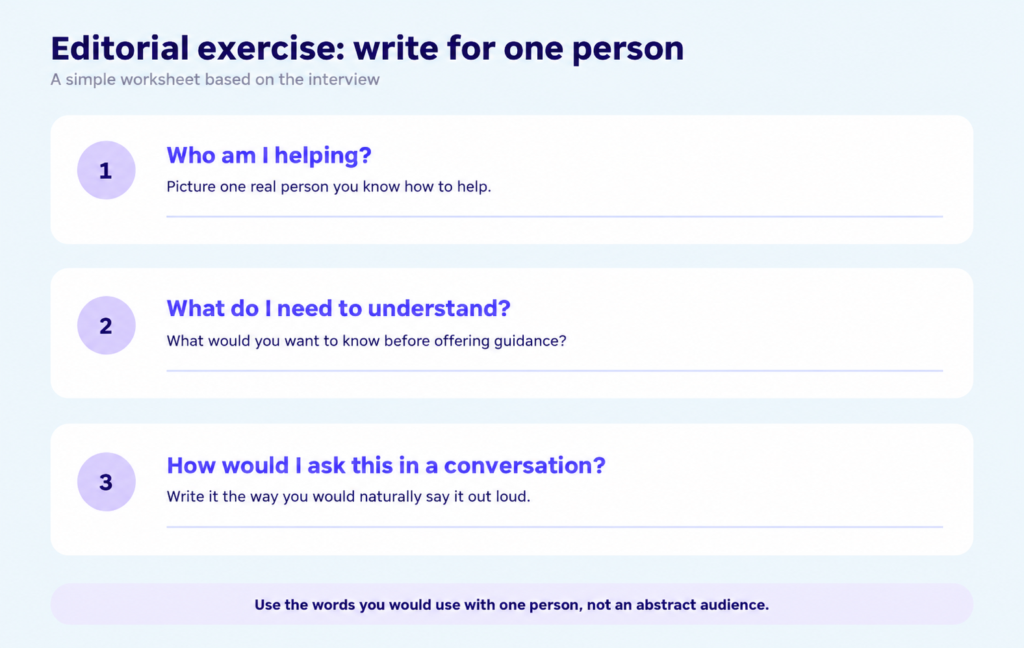
“Can you think of one person that you could help?”
I like that for writing quizzes, too, because trying to write for an entire audience can make the wording feel formal and distant, while thinking about one person gives you something more concrete.
Imagine someone you know how to help sitting across from you. What would you ask them first? What would you want to understand before offering advice? How would you phrase the follow-up?
You can bring that way of speaking into the quiz.
Pair understanding with practical help
I asked Julie about something that can be difficult when you’re sharing your own experience: How do you acknowledge that you have challenges while still showing that you have useful knowledge to offer?
She explained that she pairs those things, talking about challenges and then sharing practical ideas for working with them, while also making the goal realistic.
Julie told me about someone who was surprised that she still experienced challenges herself, because that person had come to believe the goal was to reach a point where everything would be perfect.
She didn’t want to set that expectation, and the way she described it, useful support can make a challenge more manageable without promising that someone will never struggle again.
That matters for quiz outcomes, because after someone has recognized their situation in the questions, you want to give them a next step that makes sense for where they are.
You’ve shown that you understand something they’re dealing with, and now you can explain what could help, keeping the promise connected to what you can actually provide.
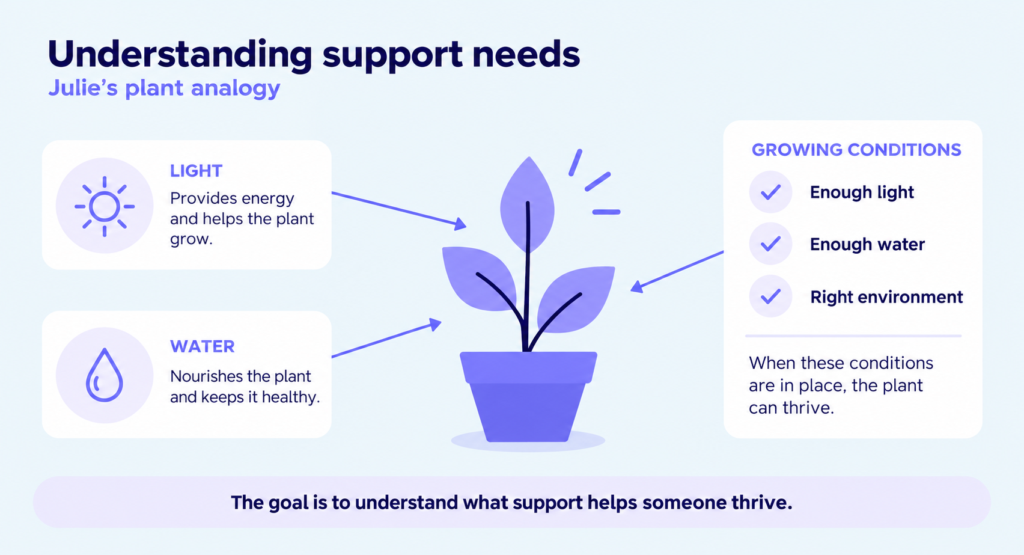
Julie used a plant analogy during our conversation: When a plant isn’t doing well, we look at what it needs to thrive.
She used that image to explain how she thinks about supporting people, and that perspective runs through the way she described her work, understanding the person and considering what would support them.
For a quiz creator, that can shape both the questions and the guidance, because you’re learning about someone’s experience so you can offer something useful.
Give people somewhere to continue learning
Julie sees the quiz as an entry point, and she described talking on podcasts or appearing in a social media live, then giving people a free quiz as a next step.
Someone hears her explain an experience they recognize and wants to explore it further, and when they choose to join her email list through the quiz, she can continue sharing education and resources.
She also described offering different levels of support, including free resources, books, courses, and consultations, so people have several ways to keep learning depending on what they need.
Someone can spend time with the free material, explore a course, or seek more individual support when it fits their situation. Julie mentioned people who had listened to her podcast for years before booking a consultation, which was her experience of a relationship developing over time.
The quiz is one part of that relationship, giving someone an early opportunity to experience how she thinks, what she pays attention to, and how she communicates.
Toward the end of our conversation, she described it as matchmaking.
If someone doesn’t relate to what she’s saying in the quiz, they may decide her other resources aren’t what they’re looking for, and if they do recognize themselves, they have a reason to keep exploring.
That’s a useful way to think about your own quiz: ask questions that show you understand the person’s situation, give them something helpful to take away, and make it clear where they can continue if they want more.
You can explore Julie’s quizzes, education, and other resources on her website.