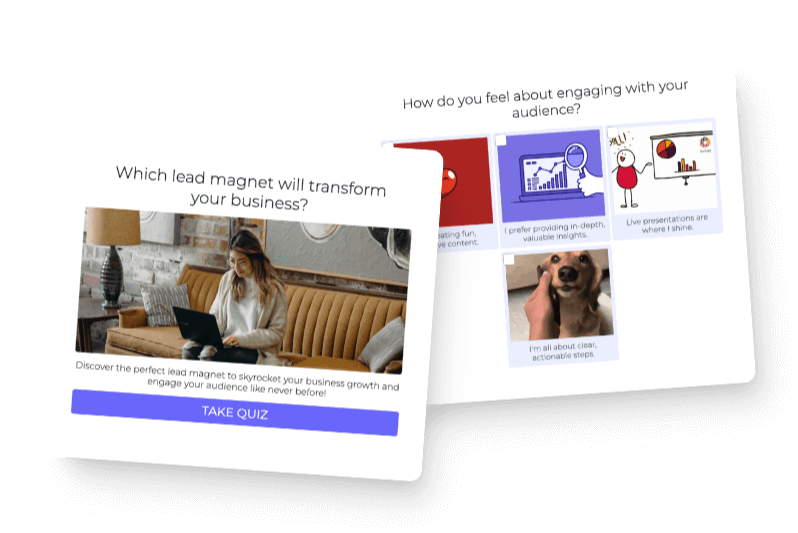

On Instagram, you get one link. That link usually leads to a hub of offers: a course, a podcast, a book, coaching. A quiz works well as one of those offers because it can ask a few questions first and route people toward what’s actually relevant to them, instead of leaving them to sort through everything on their own.
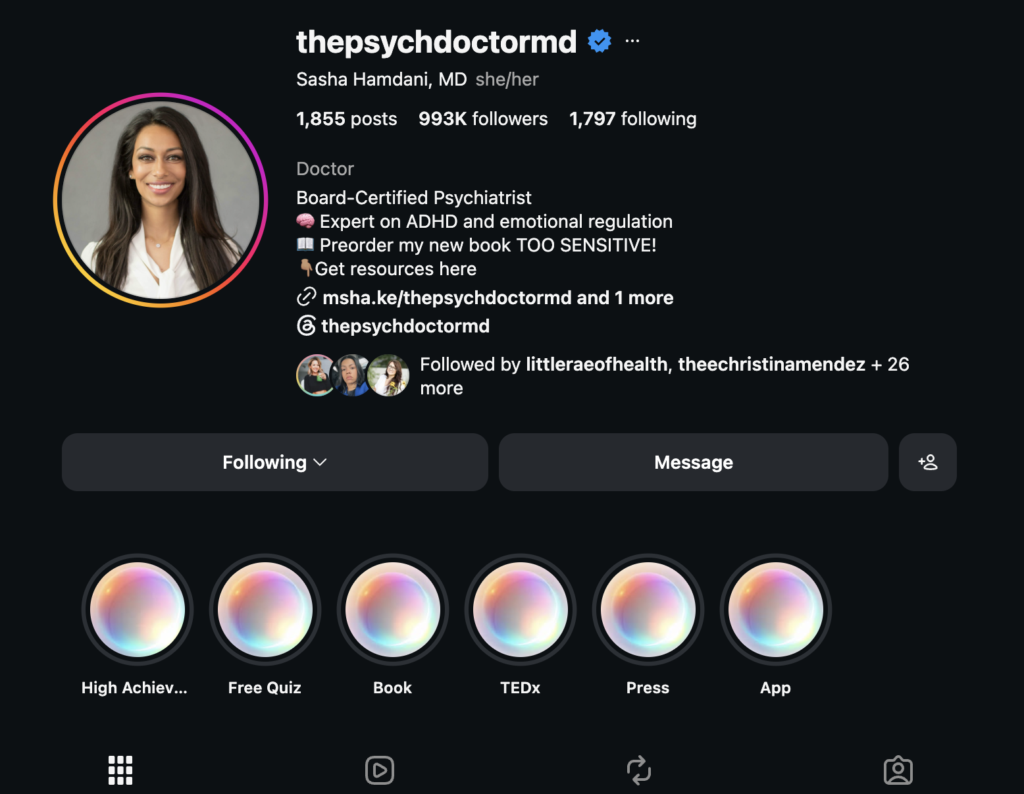
Dr. Sasha Hamdani, a board-certified psychiatrist and ADHD specialist with 993,000 followers shows what this looks like in practice. She uses a quiz as the personalized guide sitting behind her link in bio.
Getting Found
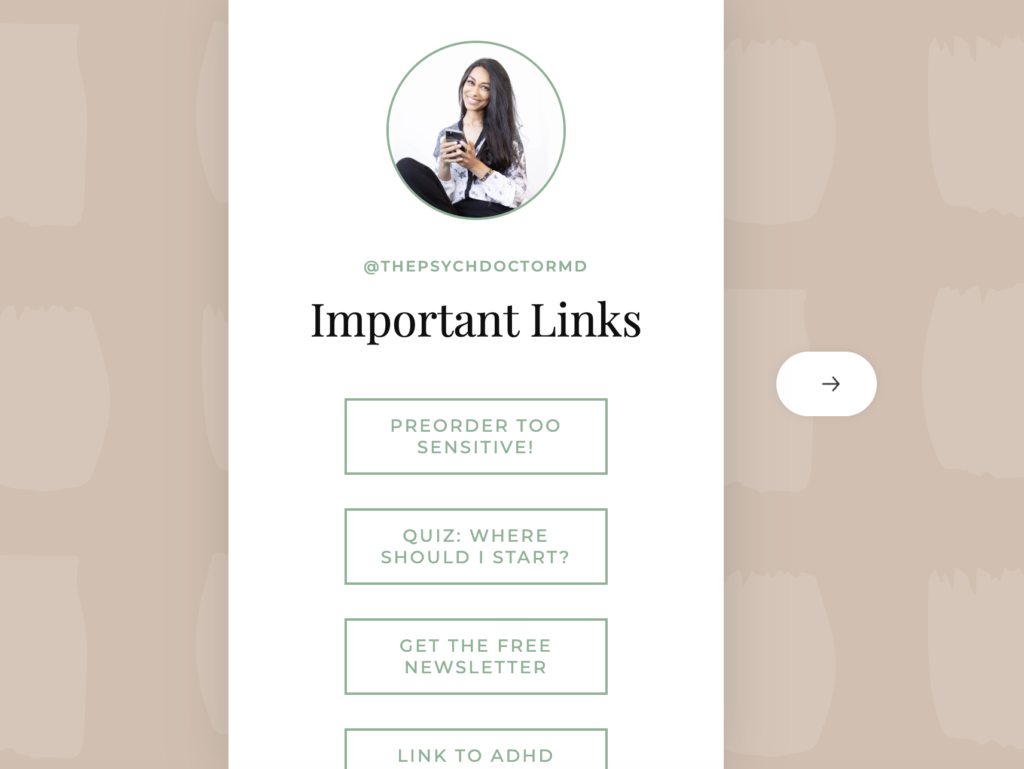
The most common approach is adding a quiz as one of the links inside your link bio, sitting alongside everything else you offer. Dr. Hamdani does this with her “What is Your Biggest ADHD Challenge?” quiz.
Dr. Hamdani even takes it a step further. She keeps a dedicated Highlight labeled “Free Quiz” on her profile, giving it a permanent one-tap entry point beyond the link in her bio. Her link hub labels the quiz “QUIZ: WHERE SHOULD I START?” which removes any ambiguity about what it does or why someone would click it.
What the Quiz Promises Before You Start
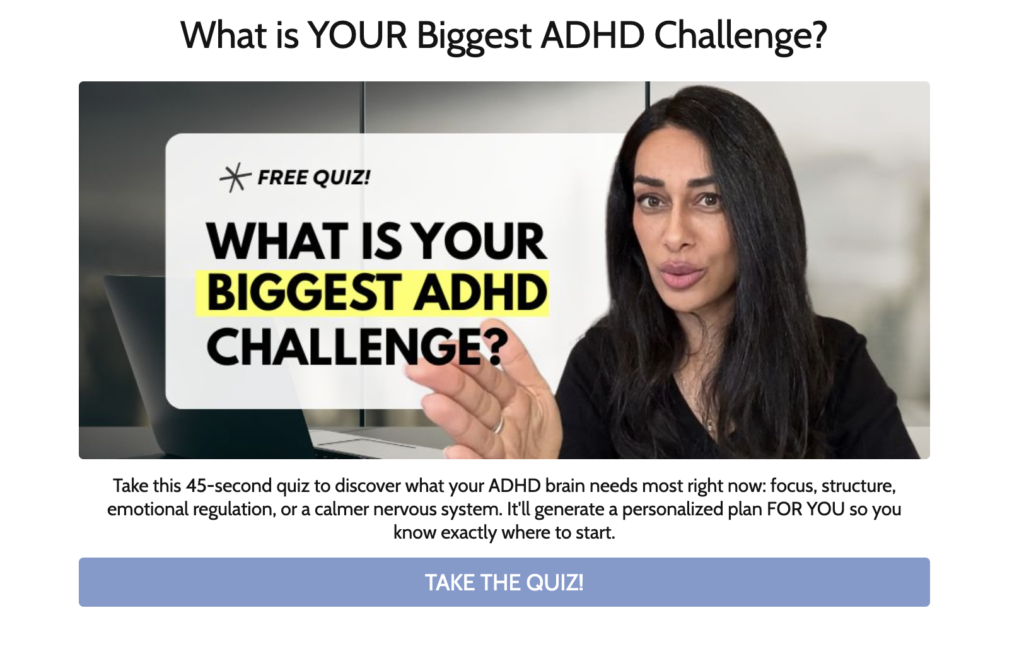
Before asking a single question, her quiztell you exactly what you’re signing up for. Her quiz says it takes 45 seconds and promises a personalized plan at the end. She’s giviving you a reason to finish before you’ve started.
That’s the template: say how long it takes, and tell people what they’ll walk away with.
The Questions
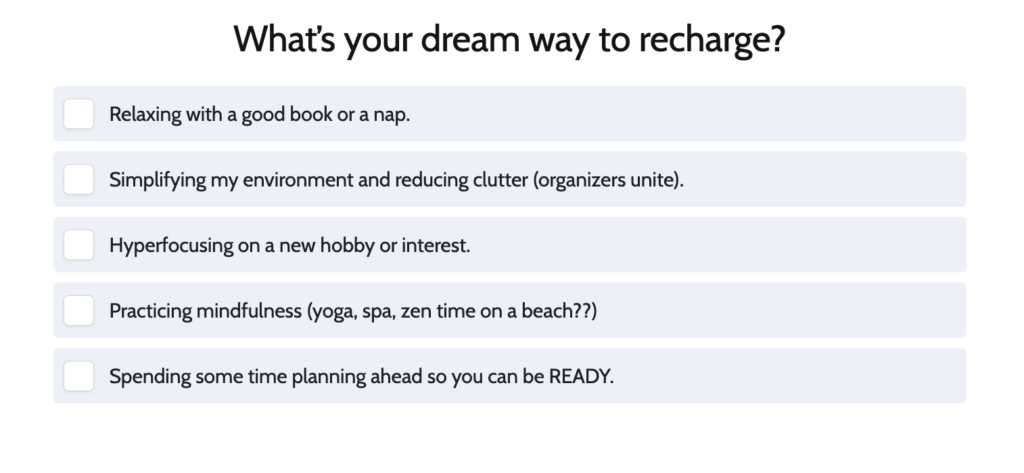
The quiz asks one question at a time, written in plain language rather than clinical terms. There’s no right answer to aim for. The questions are just getting people to describe their own experience in their own words, which is what makes the result feel personal when it arrives.
Her quiz didn’t invent new psychology. It just translates an existing framework (ADHD subtypes) into the language her audience actually uses about themselves.
The Email Gate
Dr. Hamdani’s quiz asks for an email right after the last question, at the moment curiosity about the result is highest. That timing matters. Asking for an email before someone has invested any thought in the questions converts far worse than asking after they’ve already finished.
The Result
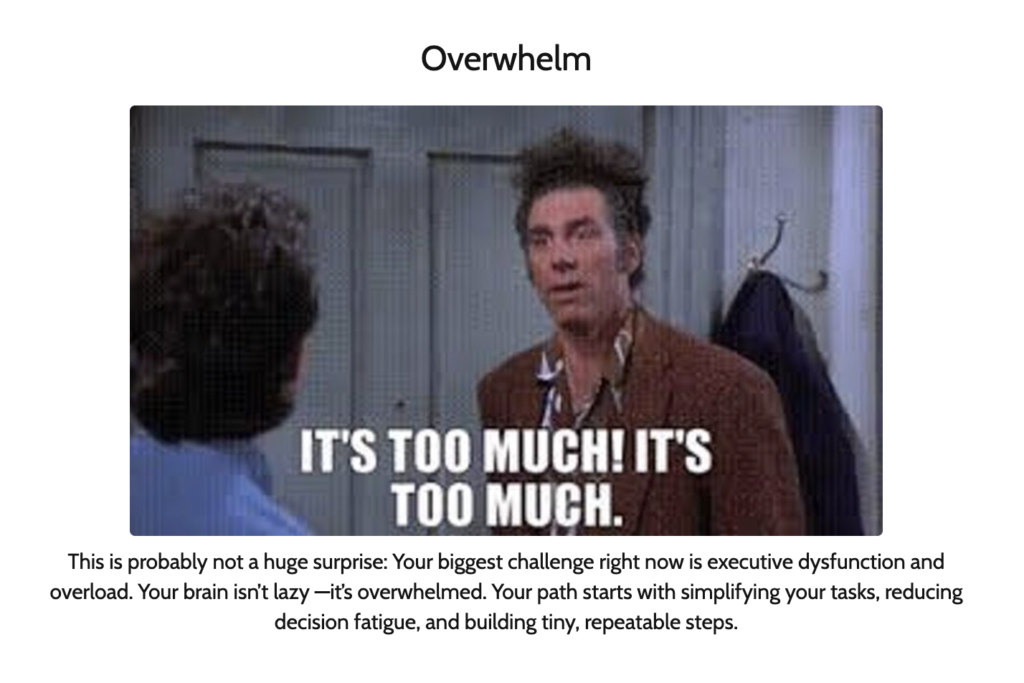
This is where the quiz earns the word “personalized.” Dr. Hamdani’s result page takes a different approach. The “Overwhelm” result leads with a Seinfeld meme captioned “IT’S TOO MUCH. IT’S TOO MUCH.” before getting to the actual explanation. The humor defuses any shame about the result before the clinical detail kicks in. Different tone, same underlying move: make the reader feel understood before you try to explain anything.
Where It Goes Next
A quiz that routes people to a generic homepage after the result is a missed opportunity. The strongest version connects the language from the result directly to whatever comes next, a course, a coaching offer, an app, so the next step feels like a continuation rather than a pitch.
That chain from Instagram bio link, to quiz, to result, to specific next step is what makes a quiz function as a real personalized guide rather than just a fun diversion.
Building Your Own
Make the quiz easy to find on your Instagram. Tell people upfront how long it takes and what they’ll get. Write questions in your own voice rather than a clinical one. Ask for an email after the last question, not before the first. Write a result that makes someone feel understood before it tries to sell them anything.
Get those five things right, and a quiz stops being just another link in your bio. It becomes the most personal thing a new follower encounters when they find you.