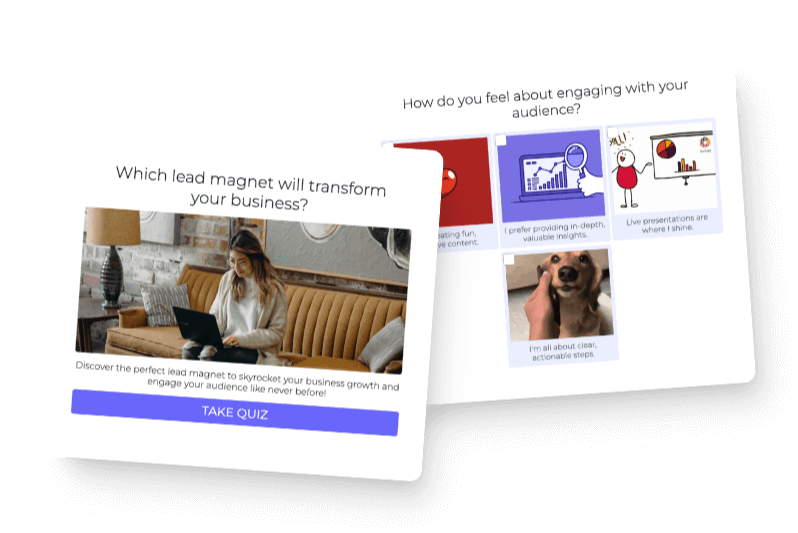

Quizzes are one of the most effective ways to convert your podcast listeners into email leads. Many podcasters choose Interact Quizzes because of how seamlessly they integrate with email software like Flodesk, Kit, ActiveCampaign, and Klaviyo. In this tutorial I will share with you the strategy behind how to create a quiz for your podcast to generate leads. I’ll share real examples from real podcasters who choose to use Interact quizzes to drive leads into their businesses.
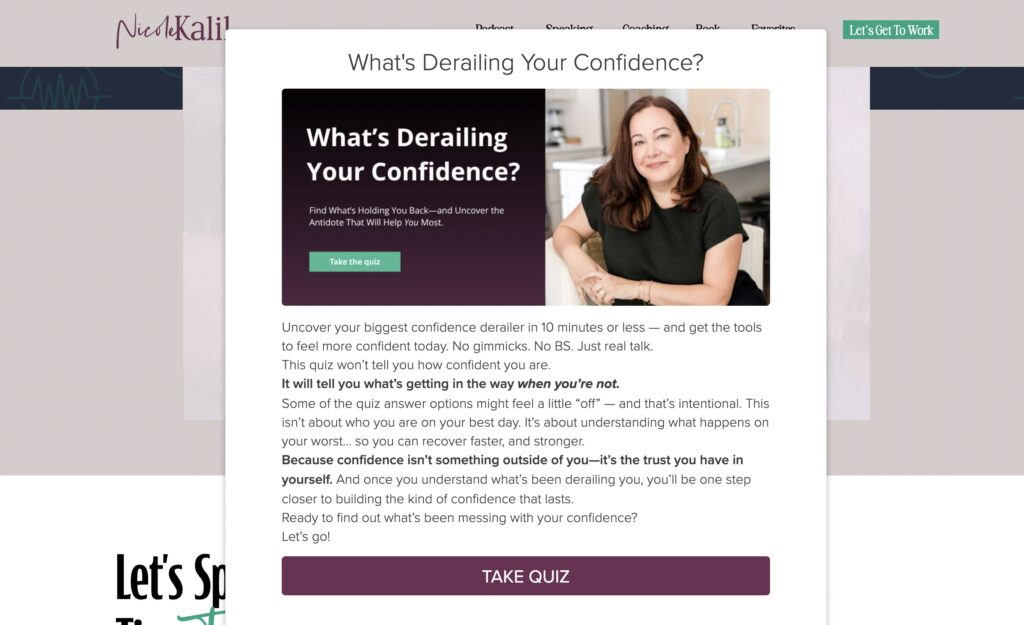
An effective podcast listener conversion quiz is one that appeals to the audience of the podcast both at a broad level and also specifically based on the brand of the podcast. What I mean by a broad level is that human nature doesn’t change and neither do the things people want. People want to be happy, well liked by their peers, and comfortable. These core human desires have never altered throughout the course of history. Those are examples of what a broad appeal means. The branded appeal is the particular angle your podcast audience connects with as it relates back to one of those core human desires.
Nicole Kalil’s quiz, What’s Derailing Your Confidence? ties back to multiple of these basic human wants. But then it also is specific to how she talks about confidence, which is through the lens of derailment. She points to specific aspects that derail your confidence, and that’s a perfect example of making a branded quiz that ties back to core human desires.
The positioning of your quiz is 90% of what matters
I will tell you this definitively after working on 1000’s of quizzes. 90% of what actually makes a difference is how you position your quiz. If the question being answered by your quiz is important enough to your audience, they will go through your quiz even if it’s not great. If the question your quiz is answering does not matter to your audience, you could have the greatest quiz in the world, with the most perfect copywriting and imagery, and no one would take it.
It is impossible to stress this enough. If people do not care to get an answer to the question your quiz is helping them get an answer to, they will not engage, they will not take your quiz, they will not opt in to become email subscribers and leads.
Put yourself in the shoes of your audience
Nicole’s quiz is a great example of this. When we were talking about setting up her quiz, she knew exactly what her audience was thinking, feeling, and going through in their lives. This informed the conversation we had about what the quiz concept should be. The reason why she knew these things was because she has had lots of conversations with her audience members, both on air for the podcast, and off air in real life.
If you can step into the shoes of your audience and visualize their world, you can then see if the quiz title you are presenting actually appeals ot the day-to-day of your audience. You have to remember that they are doing a million things, they are deeply distracted, as we all are, most of the time. They won’t stop and take your quiz just willy-nilly. They will only take it if they are convinced it will help them.
Once someone begins taking your quiz, your work has just begun and your questions each have to act as their own hook
Just because someone clicks the “Take Quiz” button does not mean they are committed to taking your quiz. Even though Interact quizzes have an average completion rate of 65% that does not mean you can phone it in when it comes to asking questions.
The basic principles of asking questions to maximize your completion and opt-in rate are as follows (and this is specific to audiences coming from podcasts).
- Every question has to ask about a different aspect of the quiz taker’s life. I interviewed Ye Li, head of Behavioral Science at UC Riverside, who studies question asking on a large scale, and he said that when you ask questions about different topics, people stay engaged much more than if all of your questions ask about roughly the same thing. Every question has to be different from the last, or people will get bored.
- Questions should be directly applicable to your podcast audience. You cannot get away with generic questions like “How do you like to spend your weekend?” Answer A: Shopping Answer B: Going to the park, etc. people can smell this a mile away. AI could ask that question, and no one wants to answer an AI quiz. Your questions can be asking about basic day to day life, but the options you provide for people to choose from will tell them everything they need to know about whether or not you actually know who they are. If you fail that test on even one question, people will not proceed to the next question.
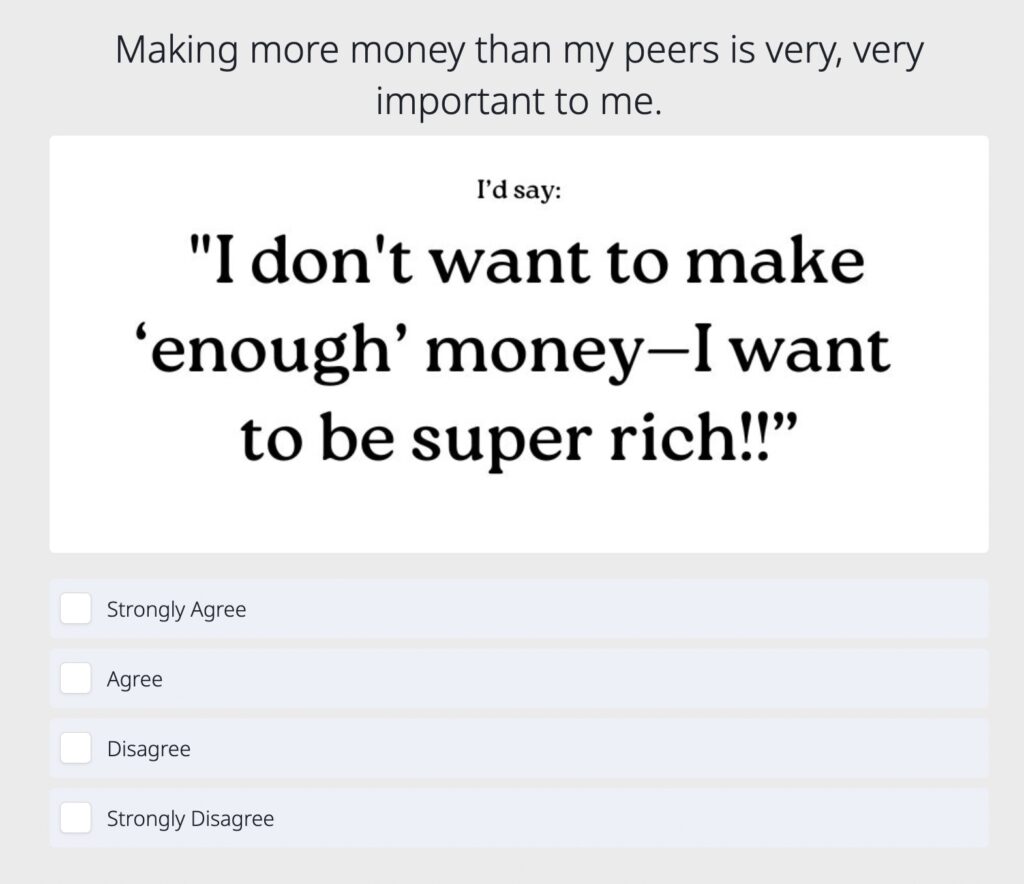
- Ask specific, pointed questions. When I interviewed Erin McGoff, founder of Advice With Erin, she shared a specific story about a specific question on her Career Type Quiz that has stuck with me. She talked about a question in her quiz that asks “Making more money than my peers is very, very important to me.” and then follows up with a quote that says “I don’t want to make ‘enough’ money – I want to be super rich!!” and she said that asking the question in this pointed way was super important because if you just asked “Do you want to make a lot of money in your job?” of course everyone would say yes. So instead, she made it more specific and more nuanced, so people can choose to answer how they really feel.
Your quiz results should always link back to your podcast episodes and give people lots of information about themselves
When someone answers all the questions of your quiz, and then sees a result that is just for them. They are infinitely curious. Please, please, take this time to give them lots of information about themselves. As long as you keep the information squarely about the quiz taker, they will stay engaged for an eternity. People love to learn about themselves. People love to hear other people talking about them, and this is your moment to shine!
The number one mistake I see podcasts make when they create their quizzes, is they don’t give enough information about the quiz taker in the quiz results. It’s the biggest missed opportunity in quizzes. Someone just spent 2-5 minutes answering your quiz questions (trust me, watch someone take your quiz in real life and you will be SHOCKED by how long they take to answer your questions). So give them some value. And by value I mean talk about them in a kind way that’s actually helpful.
Here’s a great quiz result example from Kelly Smith, founder of Yoga For You, a super popular meditation podcast. Her quiz is a meditation match quiz, and the results do not disappoint. You get a full readout of your meditation match, and she has a video embedded in each of the results as well.
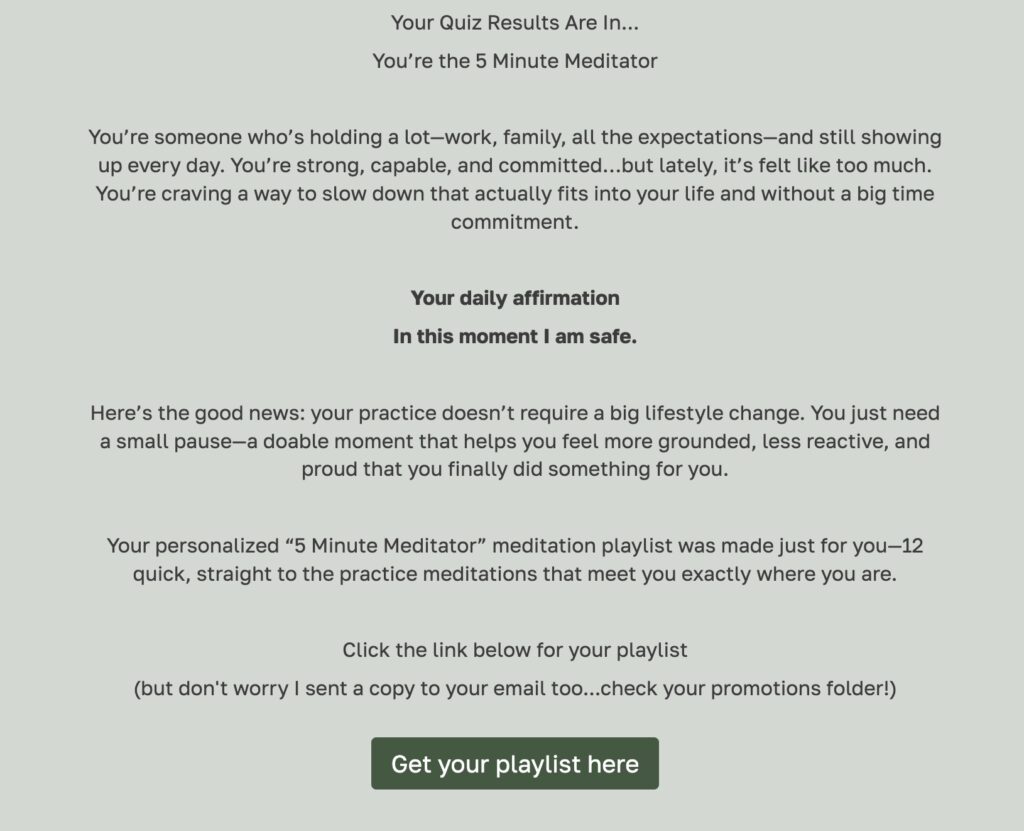
Then there is a CTA button going to her podcast playlist specifically for this outcome. Genius.
How Podcast Quizzes Actually Generate Leads
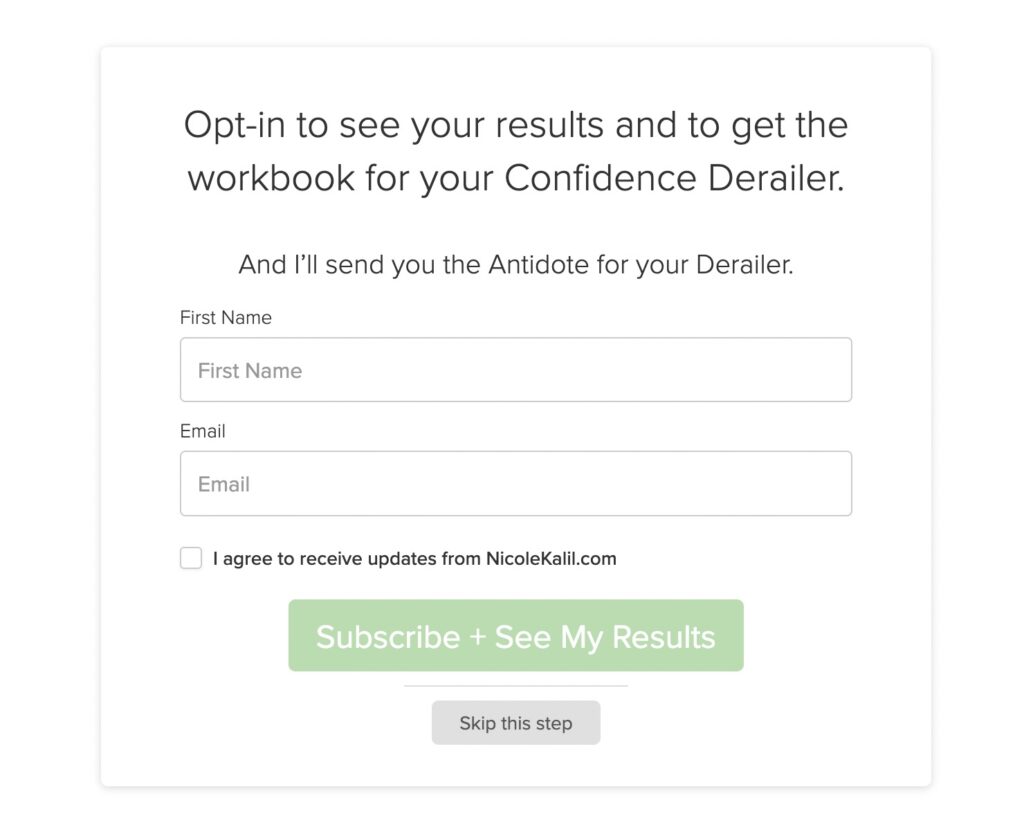
Want to know the secret to quiz opt-in forms that convert at 40%? There is no secret, if the quiz is doing the work of convincing people that you can be helpful to them, your opt-in form can be incredibly simple and still convert at 80% or higher. With Interact, the quiz opt-in form always shows at the end of your quiz, after someone has answered all the questions. This is on purpose, because you only want people to join your list if they actually want to. And they will know if they want to after they answer your questions and decide if you can ask the right questions to demonstrate you really understand who they are. If that happens, then they opt-in form can be incredibly basic and still work incredibly well.
Quiz recap of Podcast Quiz Lead Magnet best Practices
- Quiz topic has to have broad appeal and specific branded appeal for your audience
- Quiz questions must demonstrate a deep understanding of your audience
- Quiz results must give lots of information about the quiz taker and link to your podcast episodes that are relevant to each quiz result
- Quiz opt-in forms can be super simple as long as your quiz does the heavy lifting of convincing people you can be super helpful to them.