
I’m noticing a pattern with websites that have a lot of different things people could be coming there for. Maybe there is one main call to action in the header, maybe there are a bunch of different options in the menu, but either way, people are coming to the site for a reason.
They might not say why they are coming. Maybe they are coming from Instagram or something like that. But there is a reason why they clicked. They are searching for something: to do something, solve a problem, or reach a goal.
And the quiz is there saying, “Hey, how can I help you achieve that goal?”
That is really the role of the quiz. It becomes the guide to your website.
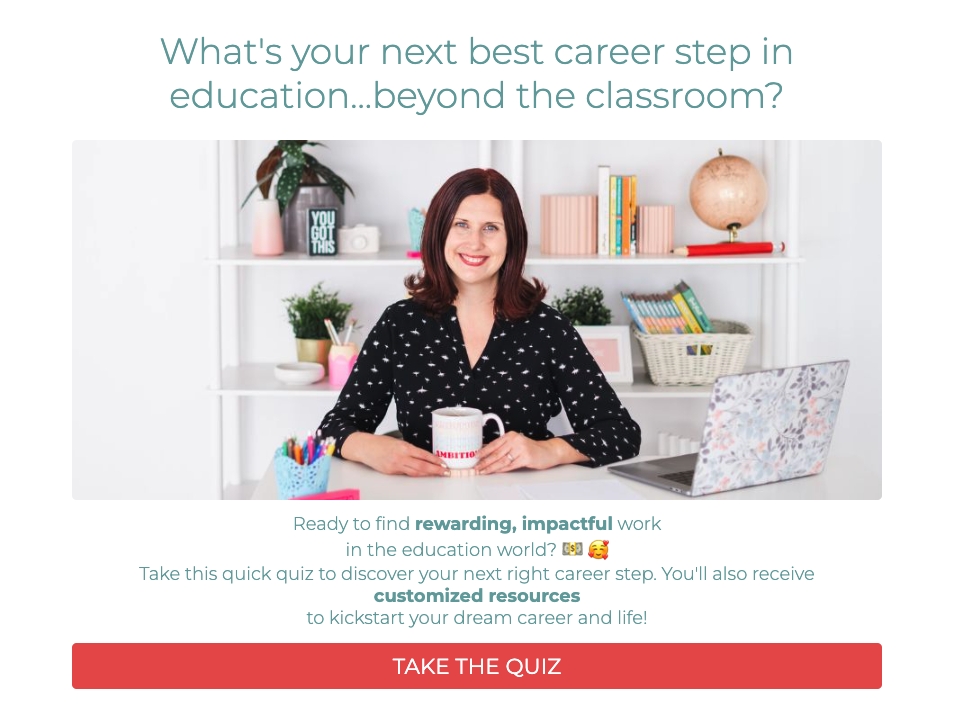
Sometimes it is literally as direct as that. In the case of MamasteFit, theirs is, “How can MamasteFit support you?” In the case of Educator Forever, it is, “What’s your next best career step beyond the classroom?” because that is what people coming to the site are trying to figure out.
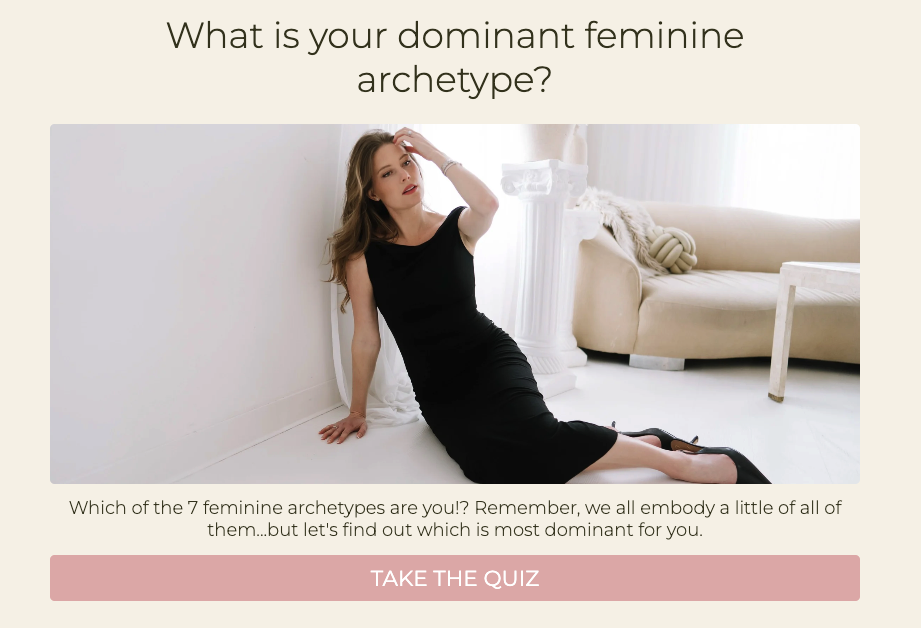
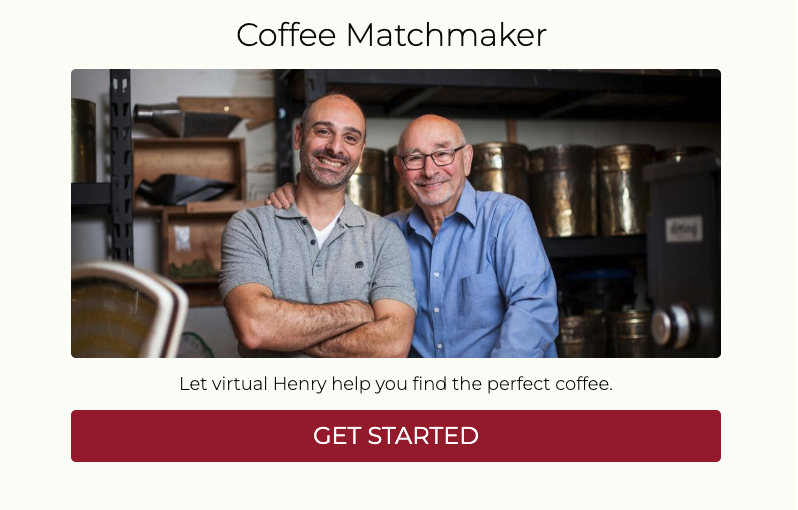
In the case of Jillz Guerin, it is her Feminine and Masculine Archetype Quizzes, because those are the questions people in her audience are wondering about. In the case of Henry’s House of Coffee, it is a coffee quiz that helps people figure out which coffee is right for them.
So the pattern between all of these is just that there is a reason why somebody comes to your site. They are looking for something.
The traditional way of handling that would be a menu. Maybe that menu has dropdowns within it, so there are a lot of options. Maybe there are product pages you can scroll through. You are giving people all of the possible places they could go, and it is their job to figure out which one is right for them.
The quiz works differently. It asks what someone is looking for, narrows down the options, and helps guide them toward the right next step.
This connects to a well-known study from 2000, when researchers Sheena Iyengar and Mark Lepper set up a jam tasting table in a grocery store. A display of 24 jams attracted more people who stopped to look, but a display of just six jams led to far more of those people actually buying.
A more recent study found a similar pattern with online product recommendations. Purchase likelihood initially increased as more recommendations were added, but then decreased once people were shown too many.
What that tells you is that fewer, more relevant options can lead to more sales.
The more relevant part comes from the answers.
One ecommerce analysis found that sessions where people engaged with a personalized recommendation converted at nearly three times the rate of sessions without that engagement. That study was ecommerce, but the principle applies to a lot of things.
So it is fewer options because you are narrowing everything down to recommendations, and it is more personalized because those recommendations are based on what the person told you.
The framing itself can vary a lot. It could be a product recommendation: find the right product. It could be, “How can I help you?” It could be an assessment, like, “How do you get to the next level?”
And that really depends on what your audience wants when they come to your site. Some audiences want to know, “What product is right for me?” Some want to know, “How do I reach this goal?” Some want to know, “How do I get to this level?”
Depending on which of those goals people have, you frame the quiz differently.
And then on the back end, there are different ways the quiz logic can work.
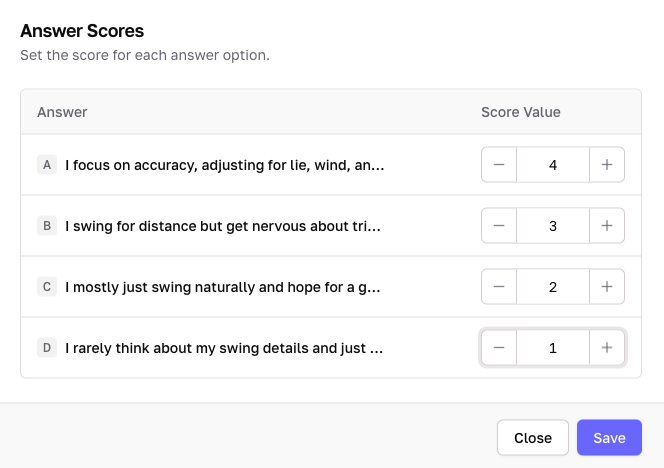
You can use scored logic, which adds up points as someone goes through the quiz and gives them a different outcome depending on the score range they land in.
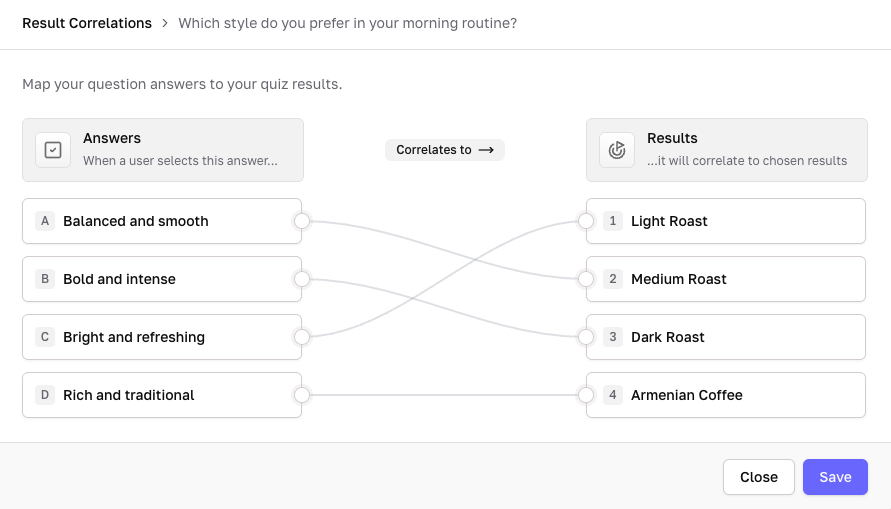
You can use personality or correlation logic, where each answer adds points to one or more outcomes, and the outcome with the most points is shown at the end.
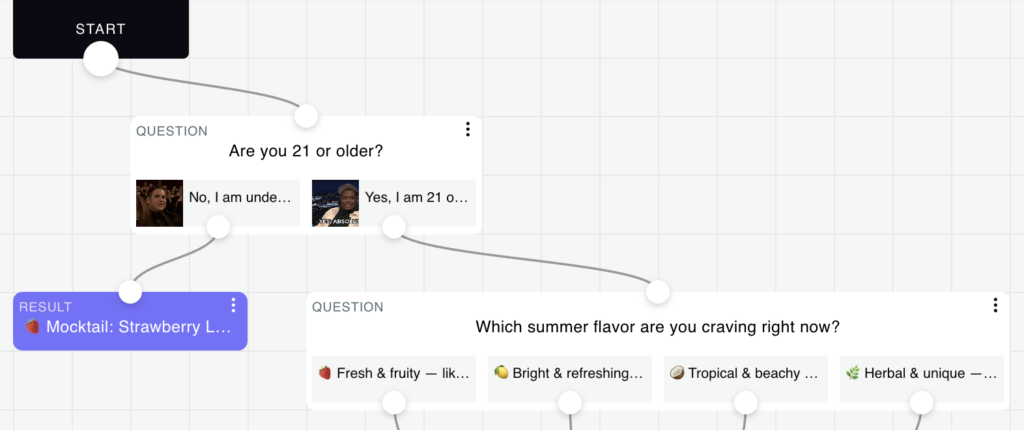
Or you can use branching logic, so if someone answers one way, they go down this path. If they answer another way, they go down a different path.
So there are many different ways you can set up the logic so that it works for the use case of your quiz, assessment, or product recommendation.
But the key is dialing in on what people want when they come to your site, figuring out what they are trying to do, and then framing the quiz as a helpful guide that gets them where they want to go.