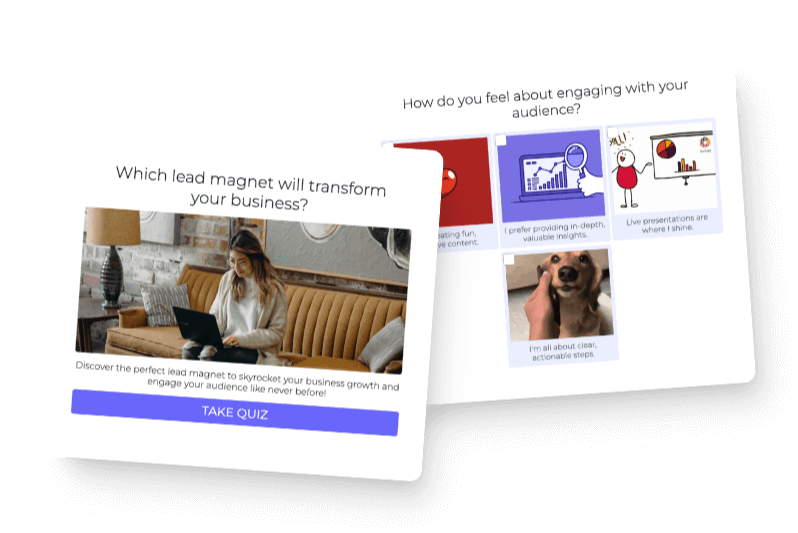

AI can create the questions and outcomes. The harder part is building and maintaining the system that connects the quiz to the rest of your business.
The answer is that you should use AI to help you create the content of your quiz, and then host that quiz using software like Interact.
AI is extremely useful for coming up with the quiz concept, drafting the questions, developing the outcomes, and writing the result pages. It can help you move through the creative process much faster, especially when you are starting with a blank page and trying to organize everything you know about your audience into a useful experience.
However, the content of the quiz is only one part of what you are building.
If the quiz is going to be used as part of your customer acquisition system, your conversion system, or your process for learning more about potential customers, you also need integrations, reliable hosting, analytics, and design customization. Those are the parts that software like Interact provides, and they are much harder to build and maintain than they initially appear.
It Depends on What You Are Using the Quiz For
If your goal is simply to create a fun quiz that you can send to a few friends, you can absolutely use AI to vibe code the entire thing.
You can describe the quiz you want, have AI generate it, publish it somewhere, and let people take it. That is a great use case because there is not much at stake. If the design is a little inconsistent or the quiz stops working six months from now, it is probably not going to affect your business.
The calculation changes when the quiz is being used to bring in new customers.
At that point, the quiz is not just a fun piece of content. It is part of the infrastructure of your business. People are discovering it through your website, social media, podcast, YouTube channel, or link in bio, and you are relying on it to turn some of that attention into subscribers and customers.
You also want to learn something from the people taking it. You want to understand who they are, what they care about, how they are answering the questions, and which recommendations are most relevant to them.
That requires much more than a quiz that simply appears on a page and produces an outcome.
1. Your Quiz Needs to Connect to the Rest of Your Business
The first major difference is integrations.
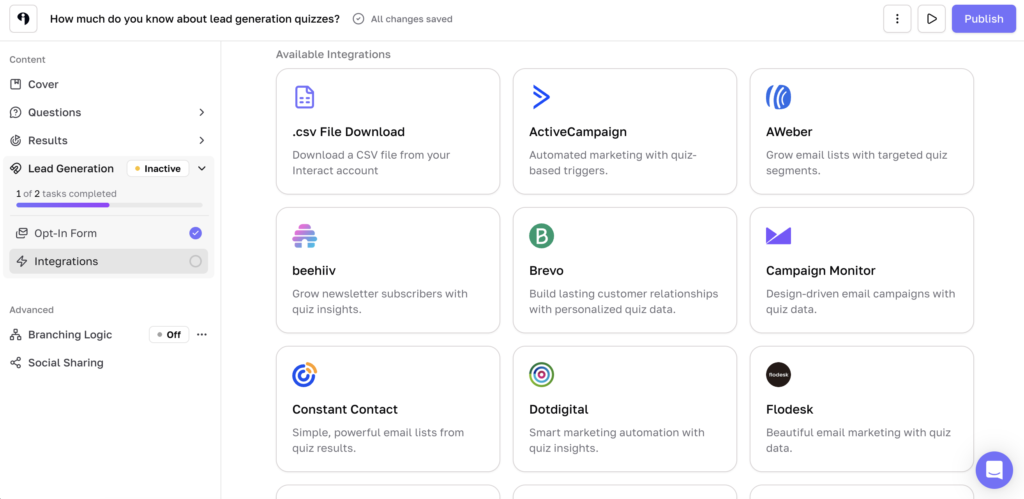
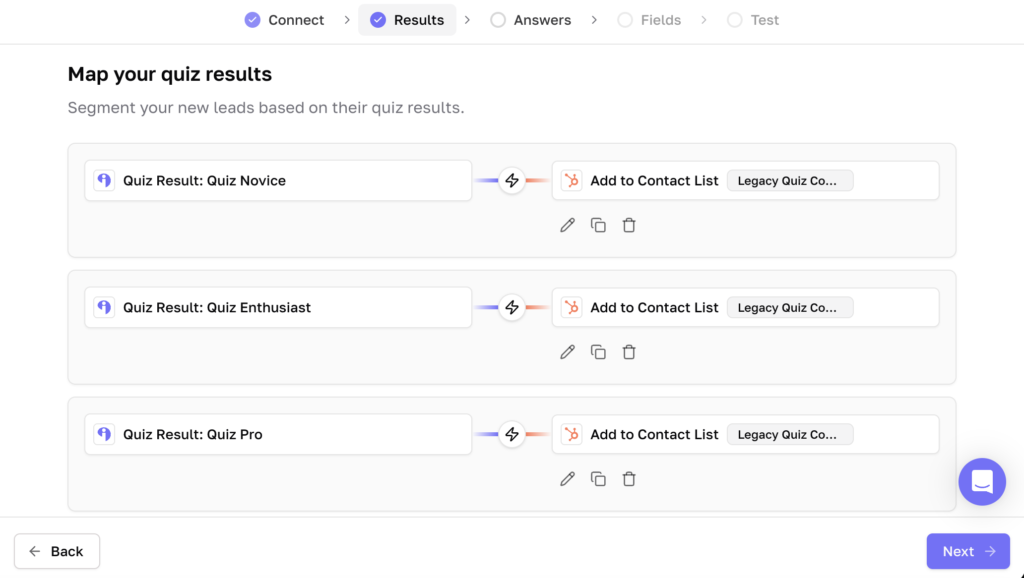
When someone completes a quiz, you usually want to collect their email address and send that information to your email marketing platform. You may also want to tag the person based on their result, add their answers to custom fields, and place them into a follow-up sequence that is relevant to what they told you.
That is what turns the quiz from a piece of content into a customer acquisition system.
You are no longer just telling someone which outcome they received. You are using that outcome to continue the conversation in a way that is more personalized to them.
It is hypothetically possible to vibe code all of this. You can ask AI to connect your quiz to an email platform, map the results to different tags, and send the data through an API.
However, once you start doing that, you are no longer just building a quiz. You are building and maintaining a software integration.
You have to account for authentication, API changes, failed requests, duplicate contacts, missing fields, error logging, and what happens when one system temporarily goes down. You also need a way to know when something has failed so you do not discover three weeks later that hundreds of leads never made it into your email list.
These are not particularly exciting parts of building a quiz, but they are extremely important when the quiz is being used to acquire customers.
Interact has maintained integrations with email and marketing platforms for more than a decade. That means the system has been tested across an enormous number of quizzes, accounts, configurations, and real-world situations that would be difficult to anticipate when building your own integration.
2. You Need Reliable Hosting and Useful Analytics
The second difference is reliable hosting and analytics.
If people are finding your quiz through your website or social content, the quiz needs to work every time they open it. It needs to load properly on mobile devices, desktop computers, different browsers, and different screen sizes.
It also needs to continue working when your traffic suddenly increases.
You do not want to find out that your quiz breaks on Safari after a post goes viral. You do not want the mobile version to cut off the answer buttons. You do not want someone to complete the entire quiz only to discover that the email form or result page does not load.
When you build the quiz yourself, you become responsible for diagnosing and fixing all of those problems.
AI can generate a large amount of code, but unless you are a high-level programmer, you may not be able to see what is happening inside that code. When something breaks, you have to ask the AI to figure out what went wrong, and the AI is often working from the same incomplete information that you are.
I have experienced this myself. The AI will tell you that an integration works, you will test it and discover that it does not, and then the AI will respond by acknowledging that you are right and suggesting another change.
That process is manageable when you are experimenting. It is much less manageable when real customers are going through the experience and you are depending on it to collect their information.
You do not want something hallucinating when it is being used to acquire customers. You do not want leads slipping through the cracks while the AI tells you that everything is working correctly.
Reliable hosting is only one part of this. You also need to be able to see what people are doing inside the quiz.
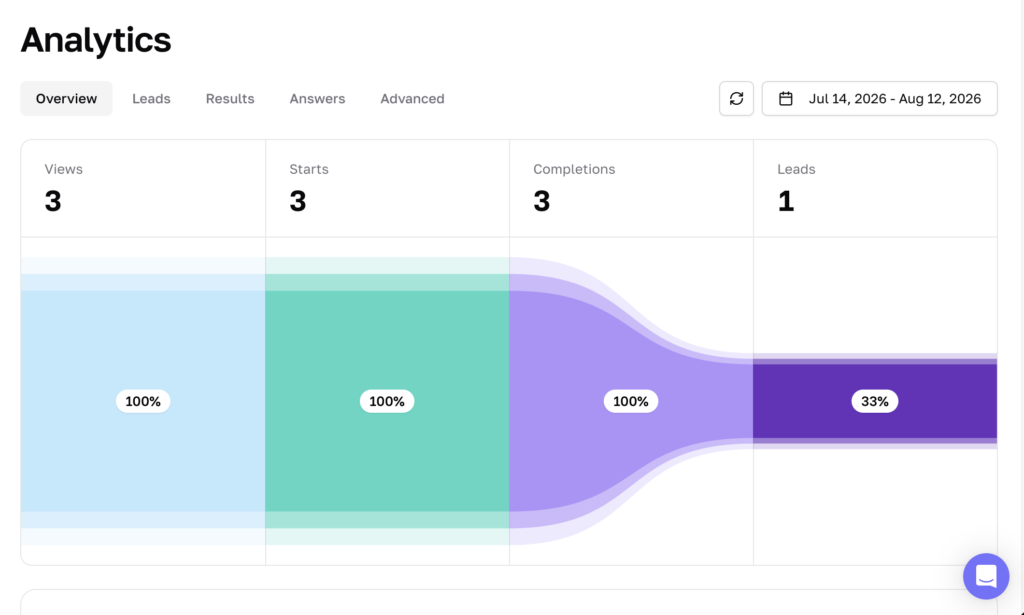
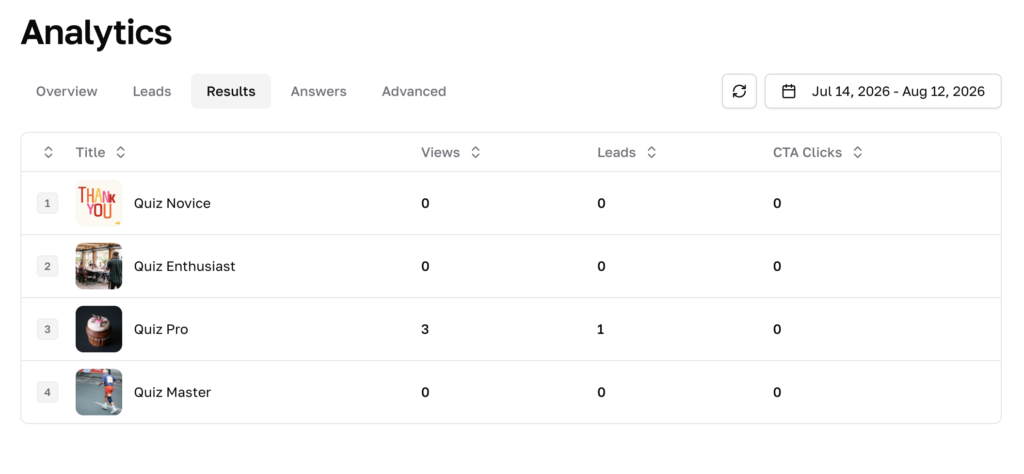
A purpose-built quiz platform can show you how many people viewed the quiz, how many started it, how many completed it, and how many opted into your email list. It can also show you how people answered individual questions and which outcomes they received.
This is not just performance data. It is customer research.
Over and over again, Interact customers tell me that the data from their quizzes surprised them. They learned that their audience was interested in a different topic than they expected, that one result was far more common than the others, or that the people taking the quiz were at a different stage of the buying process than they had assumed.
Sometimes they discover basic demographic information that changes how they think about the audience, such as the age of their customers, where they live, or what kind of work they do. Other times, the answers reveal a problem or goal that can shape the company’s products, services, messaging, and future content.
You only get that value when the data is being collected, organized, and presented in a way that you can actually use.
3. The Quiz Needs to Look and Feel Like Your Brand
The third difference is design customization.
A quiz that is part of your business should not feel like a random tool that someone was sent to after leaving your website. It should feel like a natural extension of your brand.
That means using your colors, fonts, images, logo, buttons, and visual style. It also means having layouts that work across the cover page, questions, email collection form, and result pages.
You can ask AI to create a design that looks like your brand, and it may produce something that looks good in the first preview. The harder part is making sure that design remains consistent across the entire experience and works correctly on every device.
Small design problems can quickly become functional problems. Text can overlap with an image, buttons can become difficult to tap, answer choices can wrap incorrectly, and a layout that looks excellent on a large screen can become almost unusable on a phone.
A quiz platform already has themes, layouts, and responsive design systems that have been tested across different devices. You can customize the experience without having to rebuild the underlying design system every time you make a change.
The benefit is not only that the quiz looks better. It is that you can focus your attention on the questions, outcomes, and customer experience instead of debugging spacing and browser compatibility.

The Cost Is Not in Generating the First Version
The appealing part of vibe coding is how quickly you can generate something that appears to work.
You describe what you want, and a few minutes later you have a functioning quiz. That feels incredible, and I fully endorse experimenting with it as a way to learn what AI can do and keep up with how the technology is developing.
The problem is that generating the first version is not where most of the work is.
The work is in making sure the quiz continues to function. It is in maintaining the integrations, monitoring errors, protecting the data, updating the code, testing different devices, and debugging the unexpected conflicts that appear over time.
You may technically be able to build everything that a quiz platform provides. You can build the integration system, the analytics system, the design system, the hosting infrastructure, and the administrative interface that allows you to make changes.
But at that point, you are building a software company in order to avoid paying for a software subscription.
I have done this myself, and the time investment does not pencil out. The amount of work required to build and maintain all of those systems far outweighs the relatively small monthly cost of using software that already does it.
This is especially true when the quiz is a serious part of your business. Every hour spent fixing an integration or testing a mobile layout is an hour that you are not spending creating content, serving customers, or improving the actual offer that the quiz is supposed to lead people toward.
Use AI for the Part Where AI Is Most Helpful
None of this means that you should avoid using AI when building your quiz.
AI is extremely useful for helping you think through the content. You can use it to identify possible quiz topics, turn customer questions into quiz questions, develop distinct outcomes, improve your answer choices, and draft personalized result pages.
You can also use AI to look for gaps in the logic. You can ask whether each question actually helps determine the result, whether the outcomes are sufficiently different, or whether the recommendations at the end match what the quiz taker told you.
This is where AI gives you an enormous amount of leverage. It helps you get from an idea to a strong first draft much faster than you could before.
Then you can put that content into software that handles the infrastructure around it.
The AI helps you create the experience. The software makes sure the experience reliably works as part of your business.
The Simple Decision
If you are making a fun quiz to send to a few friends, vibe code it. That is a perfect opportunity to experiment, learn, and build something without worrying too much about what happens behind the scenes.
If you are building a quiz that will be used to collect leads, segment your audience, recommend products or services, and bring new customers into your business, use a purpose-built platform.
The point is not that you are incapable of building the quiz yourself. The point is that the visible quiz is only a small part of the system you would have to build.
The integrations, analytics, hosting, responsive design, and ongoing maintenance are what make the quiz dependable. Those are also the parts you do not want to discover are broken after real customers have already started using it.
Use AI to make the content of your quiz better. Use software like Interact to make sure the quiz actually works for your business.
Use AI to create the quiz. Use Interact to run it.
Build the questions and outcomes faster, then connect the quiz to the integrations, analytics, hosting, and design system your business depends on.