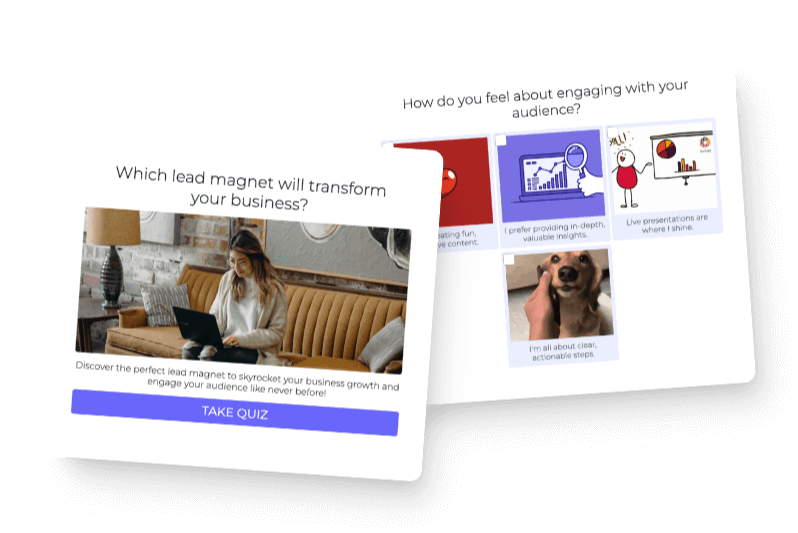

I think there is a fairly specific type of business that gets the most out of a lead generation quiz. And interestingly, it is usually not the business that needs leads the most.
It is usually a business that already has quite a bit going for it.
Most often, the business runs through an individual. That could mean the business is named after the person, or it could have a completely separate brand name. But either directly or indirectly, there is a person at the forefront of the business. There is somebody whose perspective, expertise, personality, or way of explaining things represents the brand.
That part matters because when somebody takes your quiz, what they really want is not a quiz. They want an answer from you that applies specifically to them.
Originally, this person was usually a blogger
When we started Interact, the ideal customer was usually a blogger.
These were people who were writing a lot of content and getting traffic from Google. They had already figured out how to create articles people wanted to read, and they were using quizzes on their websites as a conversion tool to move more of that traffic onto an email list.
The quizzes were interactive, which obviously helped. People like answering questions about themselves, and they like learning something about themselves. But the larger function of the quiz was that it gave somebody a reason to go from being an anonymous visitor to an email subscriber.
The quiz would ask the person questions, give them a result, and include a built-in email capture form that connected to whatever email platform the business was using.
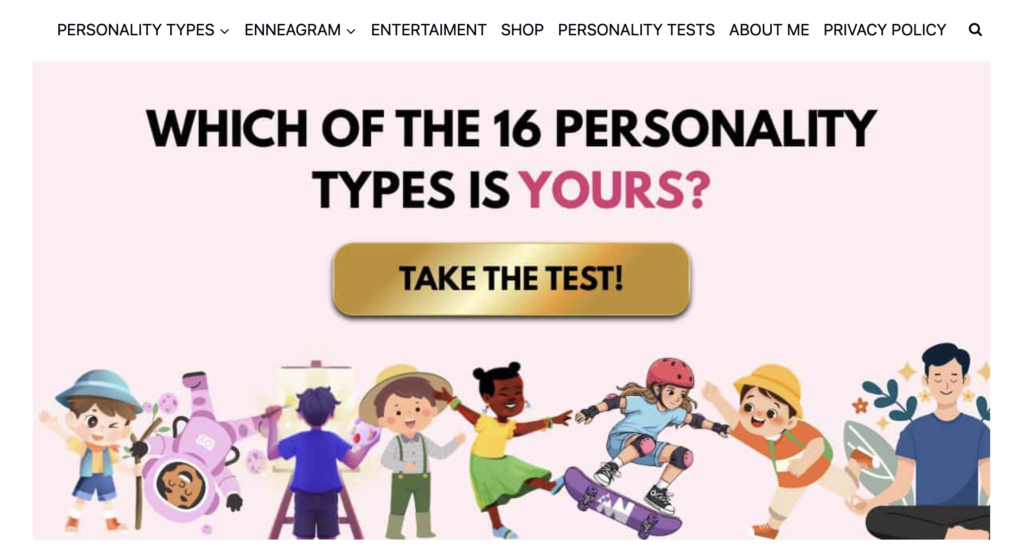
One of the clearest examples of this from the Interact Podcast is Susan Storm from Psychology Junkie. At the time we interviewed her, she had built an audience of nearly one million monthly website visitors through written content about personality types. She put a personality test on the homepage of her website as her primary lead magnet, and it generated 28,439 email subscribers in its first six months. It more than doubled her list, and her daily subscriber count went from roughly 30 or 35 people per day to between 90 and 100.
That is almost exactly the original Interact customer.
Susan had already figured out how to get attention. She was writing content people wanted, and Google was sending a lot of those people to her website. The quiz did not create that attention. It converted more of the attention she already had into an email audience she could reach again.
Now, the same person is creating everywhere
More recently, the ideal customer has shifted to look more like a social media creator.
I do not think this means the written-content persona has gone away. Written content is still very effective. It is more that people now have to do everything. They might have a website with written content, an Instagram account, a YouTube channel, a podcast, and a newsletter.
The form of the content has changed and expanded, but the underlying structure is still the same. There is a person creating useful content, people are paying attention to that person, and the quiz gives that audience a more individualized way to engage.
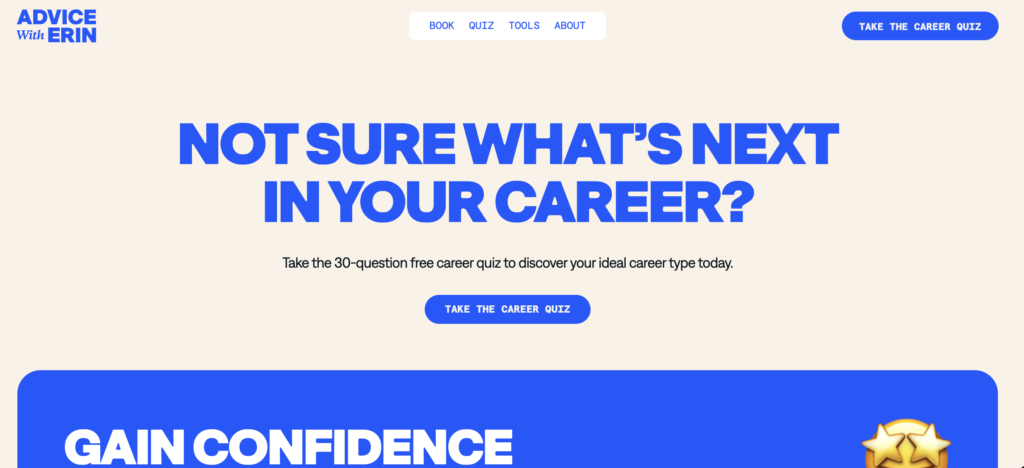
Erin McGoff from Advice With Erin is probably one of the best examples of the newer version of this.
Erin had already built a very large audience by creating career content on social media. And because of that, people were constantly asking her some version of the same question: What should I do with my life and career?
That question represented a larger feeling her audience had. People felt uncertain about where they fit, what they were good at, and what kind of career would make sense for them. Erin took the patterns she was seeing in those conversations and organized them into six career profiles.
Those six profiles became the outcomes of her quiz. The questions inside the quiz helped determine which profile fit each person. The quiz has now generated more than 140,000 leads.
What is important about Erin’s story is that she did not use the quiz to figure out how to get attention.
She already had attention. She had spent years creating content, learning what her audience cared about, and talking with people directly. The quiz gave that audience a natural next step and moved a portion of it from social media onto an email list.
That distinction is important because every time I see a quiz work really, really well, it is almost always connected to a person who has already figured out how to get attention somewhere.
It could be through Google. It could be Instagram, TikTok, YouTube, a podcast, or some combination of all of those. The channel itself does not really matter. What matters is that people are already showing up because they want to hear from you.
The people who benefit most usually do not need a quiz
The interesting thing is that when I talk to people who have reached this scale, where they would really benefit from a quiz, they usually do not need it.
Their businesses are already doing well. They already have products, services, courses, coaching programs, sponsorships, memberships, or some other way of making money. They are not implementing a quiz because the business is failing and they need something to save it.
Usually, honestly, email is more of a diversification and expansion play.
If most of your traffic comes from Google, then email becomes a secondary channel through which you can reach people. If most of your audience is on Instagram, YouTube, or a podcast, email gives you another place to continue that relationship.
You are taking attention that currently exists on a platform you do not own and moving some of it into a channel where you can communicate with people directly.
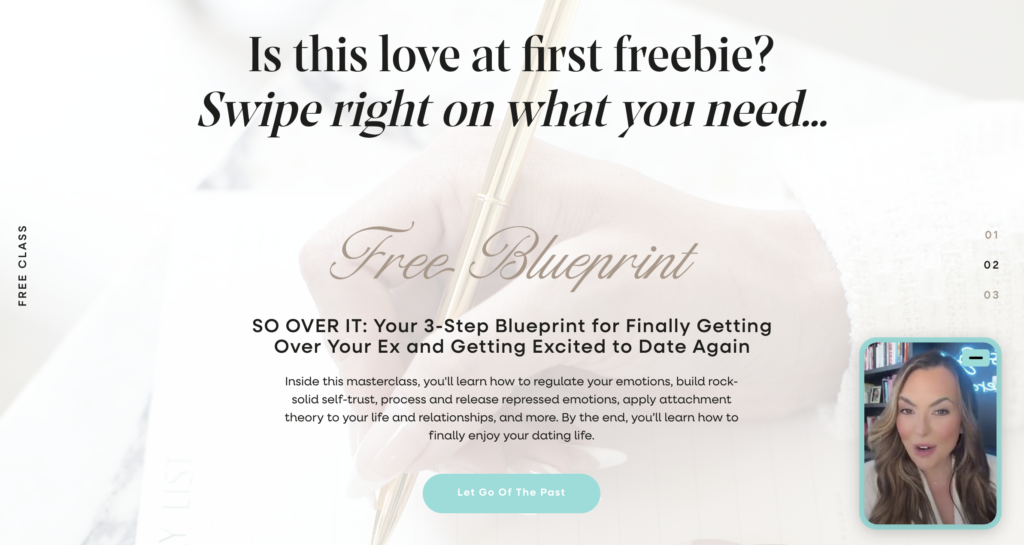
Dr. Morgan is a good example of this. People find her through her Instagram content, her podcast, and the rest of her online presence because they are already thinking about relationships and attachment styles. Her attachment-style quiz, which she launched in 2020, became a passive growth engine that has reached more than 40,000 people and helped her build an email audience while the rest of her business continued to grow.
The quiz is not replacing her content. It is not replacing Instagram or her podcast. It sits between the attention she is already getting and the email relationship she wants to build.
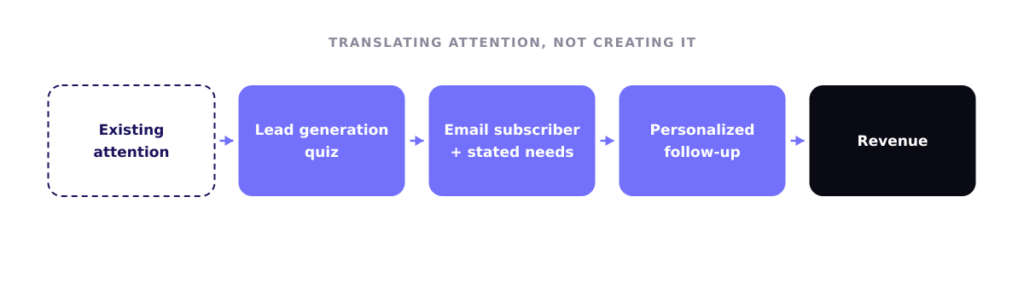
That is what the quiz is doing in most of these businesses. It is translating attention from one channel into another channel.
Email is particularly useful because it is this mixture of education, information, and promotion. You can continue sharing useful ideas and building trust, but you can also introduce people to paid offerings that are relevant to what they need.
And because the quiz has already learned something about each person, the email relationship does not have to start from zero.
The business does not have to be named after the person
When I say that the business usually runs through an individual, I do not mean that it has to be a traditional personal brand.
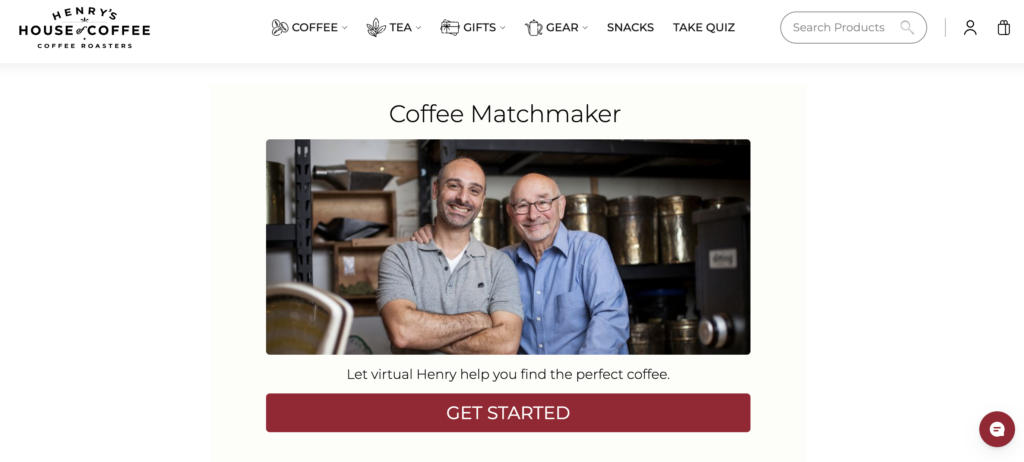
Henry’s House of Coffee is a great example of this.
The business is not called Hrag Kalebjian. It is a family coffee business. But Hrag and his father, Henry, are very clearly at the center of the brand. Their family history, coffee knowledge, and way of helping customers choose coffee are what make the business different.
When I interviewed Hrag for the Interact Podcast, he talked about how new customers would come to the website and feel confused about which coffee to buy. Some people thought they liked light roast when they actually preferred something darker. Other people knew exactly what they liked but had trouble finding the right product.
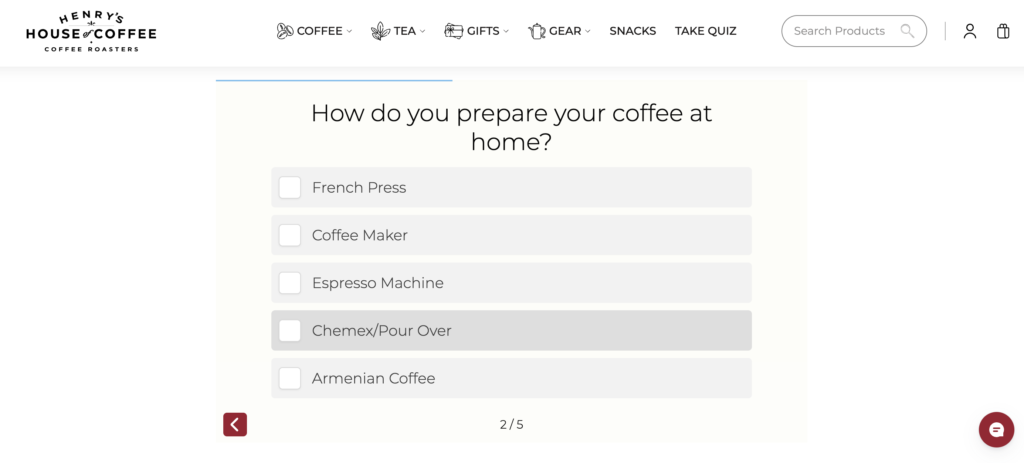
In the physical coffee shop, Henry would solve this by talking with the customer. Hrag described his dad as almost being like a coffee doctor. He would ask questions about how the person drank coffee, whether they drank it with food, and what kinds of flavors they preferred. Then he would recommend the right coffee.
The quiz was built to recreate that conversation online.
At the time of the interview, the quiz was getting around 300 to 400 views per week, and Hrag said roughly 25% of those people were becoming leads. Henry’s House of Coffee could then segment those subscribers based on whether they preferred light, medium, or dark roast and send them relevant recommendations afterward.
I think this is a really important example because it shows what I mean by having a person at the forefront of the business.
The business does not need to be named after you. But there needs to be some human expertise, perspective, or point of view that the audience wants access to.
The quiz becomes a way of making that expertise available when the person cannot personally be there.
This is why the economics can get so strong
At Interact, we have helped our customers generate more than 100 million leads.
Based on what customers have reported to us, we estimate the average value of a lead across the entire customer base at around $4. That represents roughly $400 million in estimated value generated from those leads.
Over the lifetime of Interact, we have charged our customers approximately $20 million. So, in aggregate, that comes out to around a 20x return.
But when you look at the top cohort of our customers, the people who are the most successful with their quizzes, the average return is more than 50x.
That does not mean that every person who makes a quiz is automatically going to get a 50x return. The top customers almost always have the most important input already in place.
They have attention.
They have people visiting their website, watching their videos, following them on social media, or listening to their podcast. The quiz improves the conversion of something they already know how to produce.
This is why there can be such a big difference between a quiz made by somebody who is hoping it will help them find an audience and a quiz made by somebody who already has thousands or millions of people engaging with their work.
The quiz does not manufacture attention. It translates attention into email subscribers, customer information, personalized recommendations, and eventually revenue.
More attention almost always creates more questions
There is another signal that tells me somebody is ready for a quiz, which is that people keep asking them the same question.
Once you have a lot of attention, this is almost unavoidable.
People start asking questions in the comments, in DMs, through email, during sales calls, in coaching sessions, or in person. And over time, you begin to notice that many of those questions are really variations of the same few questions.
Erin McGoff’s audience wanted to know what career they should pursue.
Henry’s House of Coffee customers wanted to know which coffee they should buy.
Dr. Morgan’s audience wanted to understand their attachment style and what it meant for their relationships.
These sound like very different businesses, but the structure is basically identical.
The audience has a question. They want an answer from a person they already trust. But the answer is not exactly the same for everybody.
In order to give somebody a useful answer, you have to ask them questions back.
You might need to know what they are trying to accomplish, where they are now, what they have already tried, what they are struggling with, or what their preferences are. Once you know those things, you typically give them one of a handful of answers.
That is the structure of the quiz.
The conversation you are already having becomes the quiz
The question people keep asking you becomes the premise and title of the quiz.
The handful of answers you usually give become the quiz outcomes.
The questions you normally ask before giving your answer become the questions inside the quiz.
You may need to flip the wording around a little bit. If people ask, ‘Which of your programs should I take?’ the quiz might be called ‘Which Program Is Right for You?’ If people ask, ‘What should I focus on first?’ the quiz becomes ‘What Should You Focus on First?’
But fundamentally, you are not inventing something new. You are taking a conversation you are already having and turning it into something that can happen repeatedly.
And the nice part about building the quiz at this stage is that you have had a lot of practice.
You know the language people use when they describe the problem. You know which details actually change your recommendation. You know what someone needs to hear when they receive a particular answer.
What you want to do when you make the quiz is recreate that experience as closely as possible to what it would be like to talk with you in real life.
The questions should sound like questions you would actually ask. The answer choices should sound like the way your audience actually describes its situation. The results should sound like the answer you would genuinely give if the person were sitting across from you.
That is what pulls people into the experience.
They are not taking the quiz because they are deeply interested in quiz technology. They are taking it because it feels like a way to get your perspective applied to their specific situation.
The quiz is a way to make more of something that is already working
So, when I think about the business that is most likely to benefit from a lead generation quiz, it is usually a business with a person at the forefront, a meaningful amount of existing attention, and a question that keeps coming up.
The answer to that question changes depending on who is asking, but there are usually only a handful of answers you end up giving.
That person could be a blogger, a social media creator, a YouTuber, a podcaster, a practitioner, an educator, a coach, a founder, or a product expert. The channel and the title are less important than the underlying situation.
People already know who you are. They already value what you have to say. And they want help applying your knowledge to their own situation.
You do not need the quiz to prove that the business works.
You use the quiz because the business is already working, and you want to make more of the attention you have earned. You want to give people a personalized answer without personally answering the same question thousands of times. And you want to move part of the audience from a platform you do not own into a direct relationship you can continue through email.
At that point, the quiz is not really a new marketing idea.
It is a conversation you are already having, turned into a repeatable system.