
Mary Marantz grew up in a single-wide trailer in rural West Virginia and went on to graduate from Yale Law School. She is a bestselling author of three books, a podcast host, and a speaker who has been featured in The New York Times, CNN, and Business Insider. She has also spent close to 20 years building a digital business from scratch, and she has a very clear read on what is actually working in marketing right now.
Her take: people are starving for human connection, most businesses are failing to provide it, and quizzes are one of the most underrated tools for closing that gap.
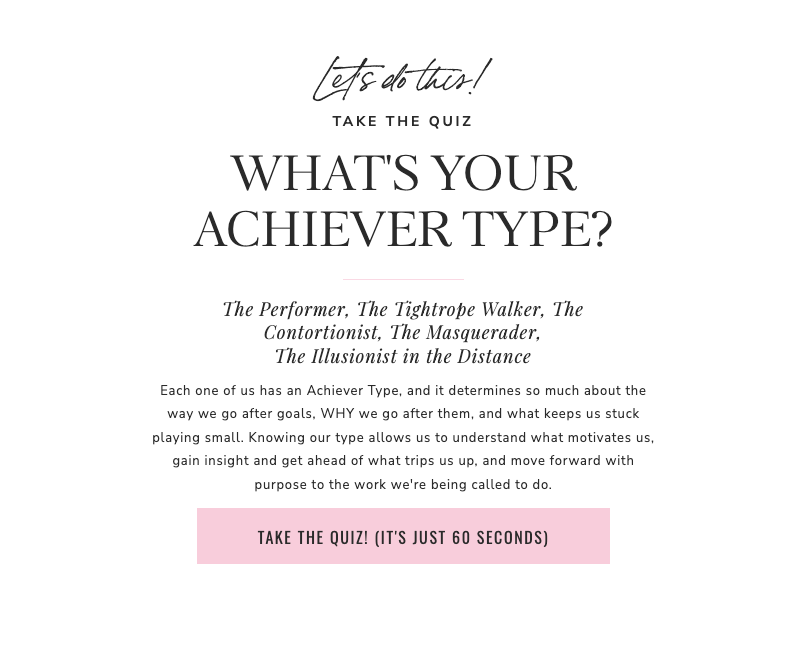
We talked to her on the Interact Podcast about her What’s Your Achiever Type? quiz, the philosophy behind how she built it, and what it means to use human connection as a genuine marketing strategy rather than a buzzword.
People Need to Feel Seen Before They Will Buy From You
This is the central idea behind everything Mary teaches about marketing, and it is also the idea behind how she built her quiz.
“Before I can ever trust you with anything else, before I can ever spend a bunch of money with you or become one of your full-fledged customers turned evangelists, I first need to know that you actually care about me as an individual person.”
She contrasts this with what she sees a lot of businesses doing: rushing to gather followers and leads without slowing down to actually speak to the individual. The number of people who take your quiz matters a lot less than whether the person taking it feels genuinely understood at the end of it.
This is not a soft or abstract point. It has a direct line to conversion. People who feel seen in your quiz result are the people who become buyers, repeat customers, and referrers. People who feel like they got a generic result leave and forget they ever took it.
The Lukewarm Litmus Test
One of the most useful frameworks Mary shared is what she calls the lukewarm litmus test. The idea is simple: the worst possible outcome from your quiz or your marketing is a “maybe.” You want strong reactions in both directions.
“You win if they super, super love it. You win if they super, super hate it, because it means you are not carving off the parts of you that made you interesting in the first place just to appeal to the masses. You are creating a tool that is helping you search and find your people.”
The practical implication for quiz builders is that specificity beats safety. A quiz with a generic voice, broad appeal, and carefully neutral questions is a quiz nobody remembers. A quiz that uses your actual language, references the things you actually care about, and takes a clear point of view is a quiz that makes the right people feel like they have found their home.
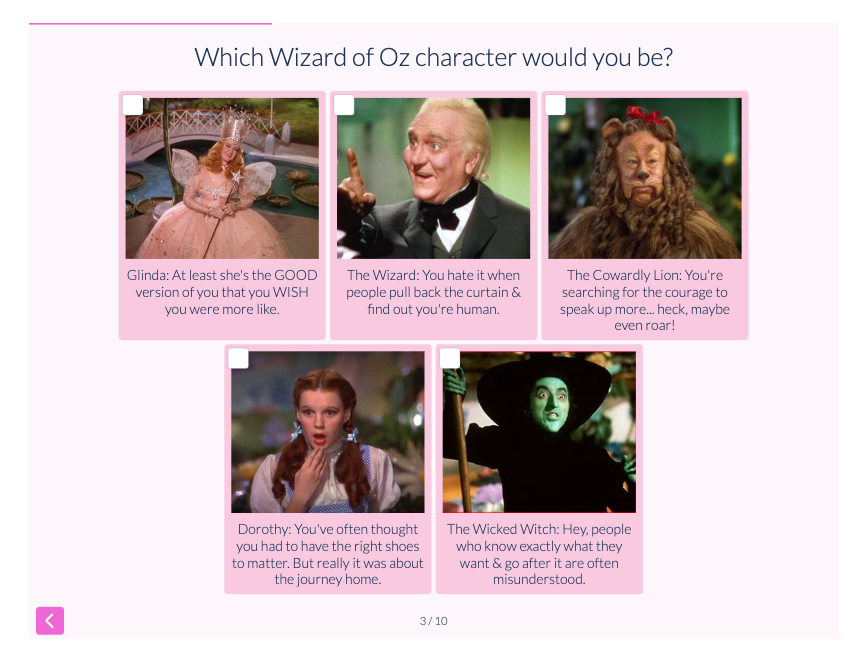
Mary’s quiz has pop culture references woven throughout. She describes herself as speaking fluent movie quote, and her questions reflect that. She is not worried about the people who don’t connect with that. Those are not her people. She is looking for the people who are, and her quiz helps her find them faster.
You Have to Know Two People Before You Can Build a Good Quiz
Mary is direct about this: building a quiz that makes people feel seen requires knowing two people inside out before you write a single question.
The first is your audience. Not a demographic description of them. The actual fears, scripts, and stuck points that run through their heads on repeat. She describes how her book Underestimated opens with a full list of those scripts because she had heard them so many times in one-on-one coaching work:
“It’s all been done. It’s all been done better. It’s all been done by somebody the world actually wants to pay attention to. I can’t start until it’s perfect. I can’t start until I’m perfect. What if I start and the critics come? What if I fail and prove all the people who said I can never amount to anything that they were right about me all along?”
You can only write questions and results that resonate like that if you have put in the time to have real conversations with real people first. This is why she is clear that a quiz is not a shortcut you can take on day one. It is something you earn the right to build by first doing the slower work of actually getting to know your audience.
The second person you need to know is yourself. What makes you specifically, uniquely you? What are the quirks, the references, the ways of saying things that people either immediately love or immediately know are not for them? Your quiz should have the saturation of your personality turned up, even just slightly. That is what makes it feel like a conversation with you rather than a generic assessment tool.
Give Them What They Want First, Then Give Them What They Need
This is Mary’s framework for structuring the quiz experience, and it maps directly to how she built her questions and results.
The questions should be fun. Lighthearted. Maybe a little unexpected. The goal is that someone taking the quiz to avoid their to-do list actually enjoys the experience and wants to get to the end. “We give them what they want with the questions,” Mary says, “so that we can earn the right to give them what they need and go deep with the results.”
The results are where the depth lives. That is where you stop entertaining and start genuinely serving. That is where you speak back to someone in the language of their own experience, name the thing that has been keeping them stuck, and point them toward a real next step.
How Mary’s Quiz Actually Works
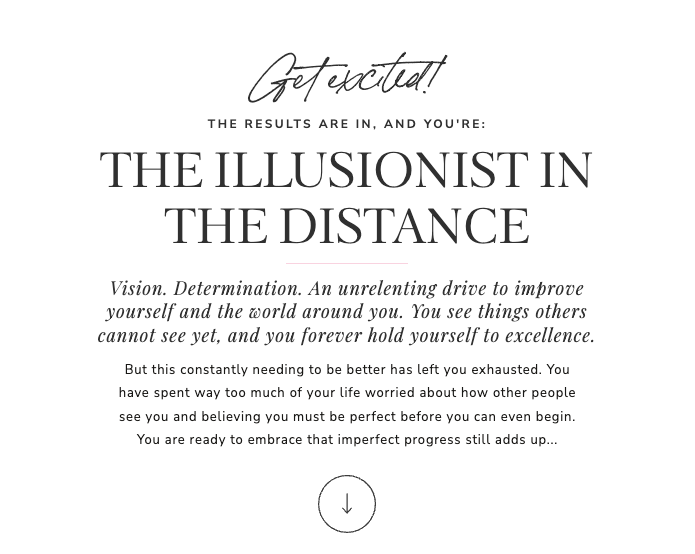
Mary’s What’s Your Achiever Type? quiz is 10 questions and takes about two minutes to complete, or ten if you tend to overthink things, as she puts it. It maps to five distinct result types, each representing a different way that high-achieving people hold themselves back:
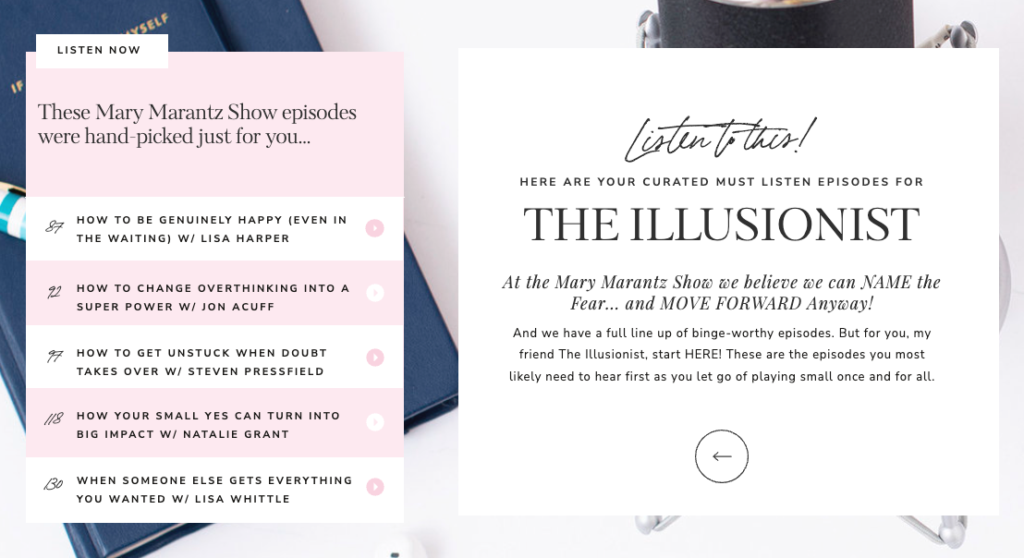
The Performer always needs to show other people how far they’ve come. The Masquerader pushes others into the spotlight while hiding in the corners. The Tight Rope Walker needs higher and higher stakes just to feel the same level of good. The Illusionist believes they can’t get started until all the conditions are perfect. And the Contortionist believes that twisting themselves to fit other people’s expectations is easier than risking criticism.
Each result has a different root cause for why someone is playing small, and each one points to a different set of next steps. The quiz connects to a curated podcast playlist for each type, links to Mary’s three books, and routes people toward her coaching and speaking work. It is a complete onboarding experience for someone new to her world.
As Mary shared on the podcast, this is also why the best quizzes produce the most unexpected feedback:
“The number of emails I get that are like, why am I crying at work reading these results to a quiz? Get out of my inbox, get out of my diary. How did you just see directly into my soul? We are just hoping for the moment when another human can really see us and really understand us.”
That is what a well-built quiz can do. Not just generate a lead, but create a moment of genuine recognition that someone carries with them. That is human connection marketing, and it converts because it is real.
If you want to build a quiz that creates that same sense of connection for your own audience, get started with Interact here.