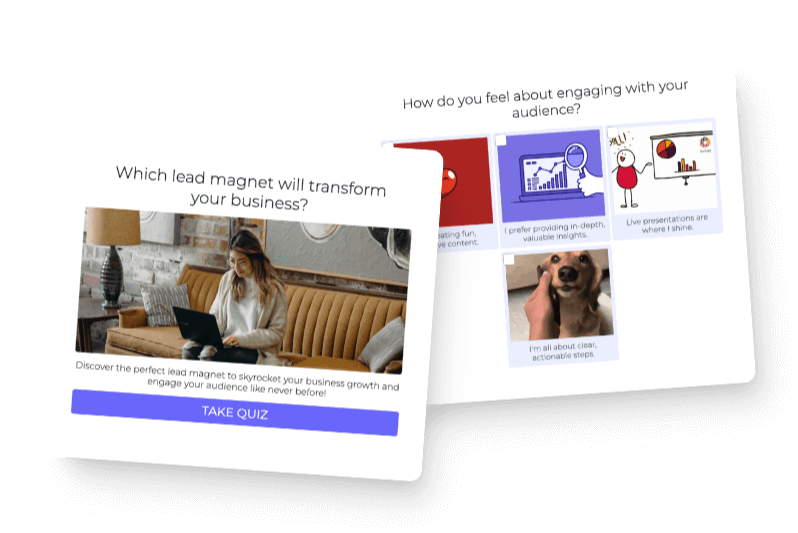

I’ve been looking back through what is actually working for Interact customers right now, and the pattern is surprisingly close to the original idea we started with all the way back around 2014. The most successful customers are using quizzes, assessments, diagnostics, and product recommenders as a way to guide people. They have an audience already, people are coming to their website already, and the quiz gives those people a way to figure out where to go next.
For some businesses, Instagram is a big part of this too. They have a substantial audience there, so the equivalent is putting the quiz in the link in bio and making it one of the main ways somebody can move from consuming content into actually getting help. But whether somebody starts on the website or Instagram, the basic job of the experience is the same. It is there to help somebody make sense of where they are and what the next move is.
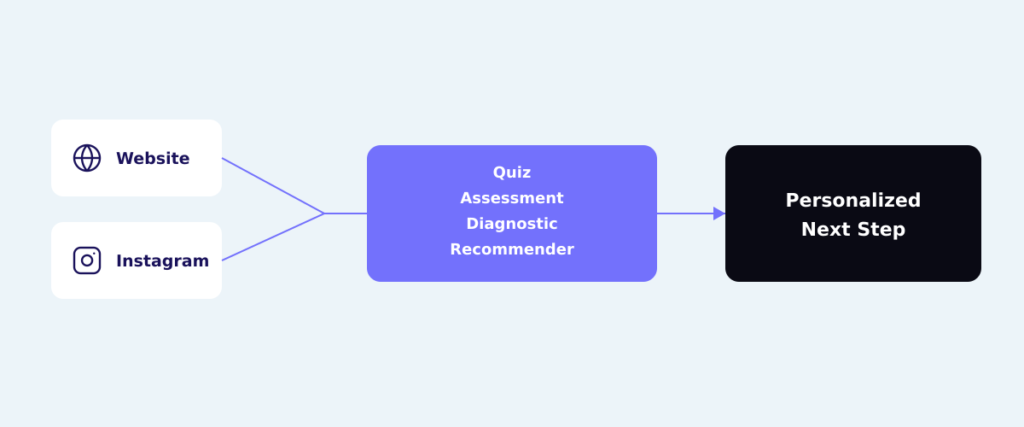
The framing changes, but the job is the same
What I keep seeing is that there really is no such thing anymore as a quiz, assessment, diagnostic, or product recommender without a purpose. Nobody is making these things just because they are fun little pieces of interactive content. There is almost always something very explicit on the other side of it, which is that the person taking it is trying to figure something out.
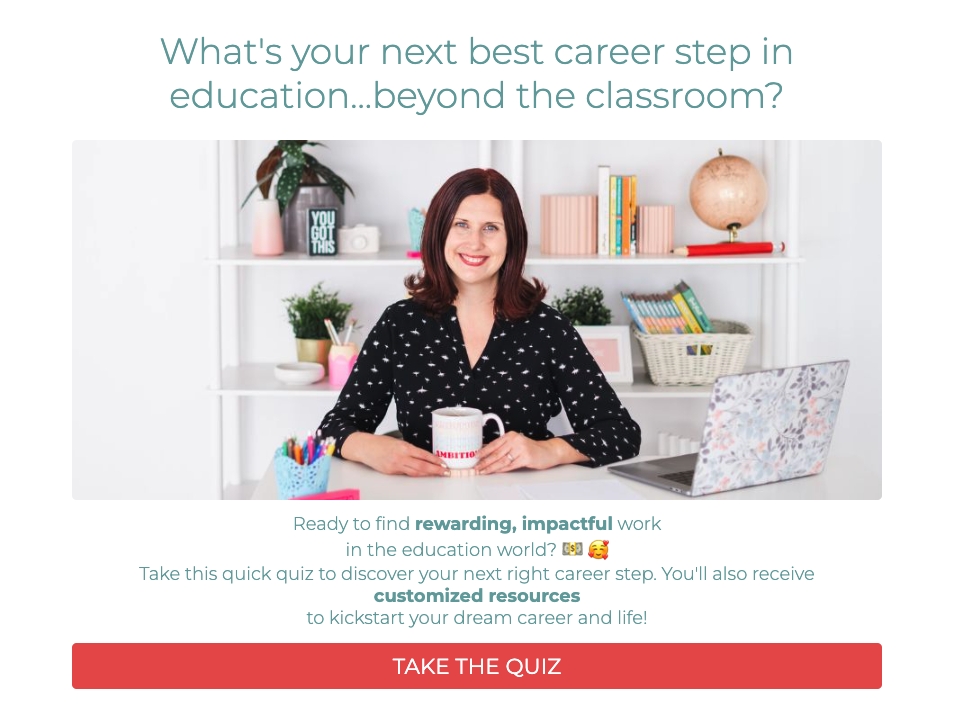
Sometimes that is extremely direct. Educator Forever asks teachers, “What’s your next best career step in education…beyond the classroom?” and Teacher Career Coach does something very similar by helping teachers figure out what career outside of the classroom might be right for them. XO Event Co asks “Do You Need a Wedding Planner or Coordinator?” which is about as straightforward as you can get.
These are all different businesses, but they are doing the same thing. The person has a broad idea of what they want, but there are multiple possible paths and they do not know which one is the right fit. The quiz sits in the middle and says, tell me a little bit about your situation and I’ll help you figure out where to go.

Sometimes the person needs help understanding where they are first
There is another version of this where the person is not quite ready to ask, “What should I do next?” because they first need help understanding what is going on. This is where assessments and diagnostics tend to make the most sense. The premise is basically, help me understand my current situation so I can make a better decision about what to do from here.
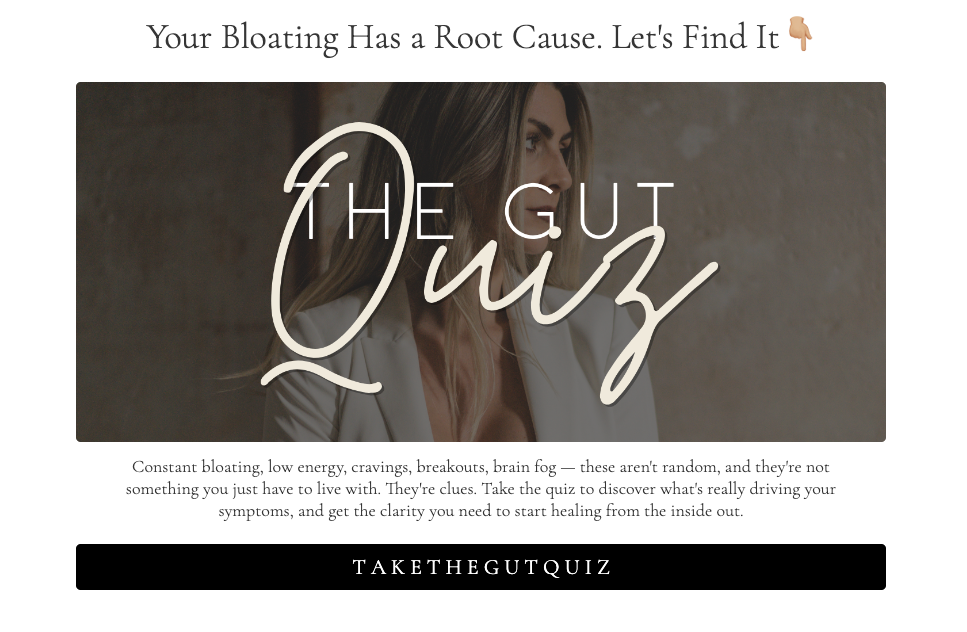
Effective Fitness has a Readiness Assessment Quiz. Rachel G. Scott has a Spiritual Growth Assessment. Alyssa Zander has a Codependency Quiz, and Dina Celina, a nutritionist, has a Bloating Root Cause Quiz.
Those all sound different on the surface, but underneath they are doing almost the exact same thing. The person is experiencing something, they do not completely understand it yet, and the assessment helps them put some shape around it. Once they can see their situation more clearly, the next step becomes much easier to understand.
The reason this works especially well for established experts is that they have probably had some version of this conversation hundreds or thousands of times already. Somebody explains what is going on, the expert asks a few questions, and pretty quickly they can start to recognize which pattern that person falls into. The assessment is not inventing a new process. It is taking a process that already exists in that person’s head and making the first part of it available to more people.
Sometimes the destination is a product
Product recommendation is really the same idea with a more concrete ending. Somebody comes to a website because they are interested in buying something, but they do not necessarily know which product, style, package, or option is right for them. Normally we solve that with navigation and filters, but that still puts most of the work on the customer.
A product recommender changes the interaction. Instead of saying, here are all of our products and here are all of the ways you can sort through them, you ask the same kinds of questions you would ask if you were standing next to the person in a store. Then you can say, based on what you told me, this is where I would start.
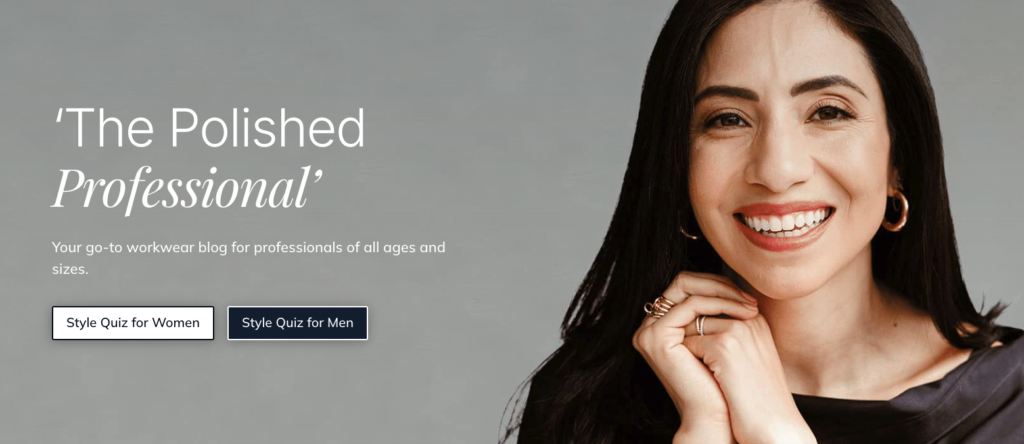
Opus Couture does this by helping people discover their bridal style. Next Level Wardrobe asks “What’s Your Style?” and uses that as the starting point for guiding somebody. The customer does not need to understand all of the options first because the business already understands the options and can help make sense of them.
Archetype quizzes are another version of the same thing
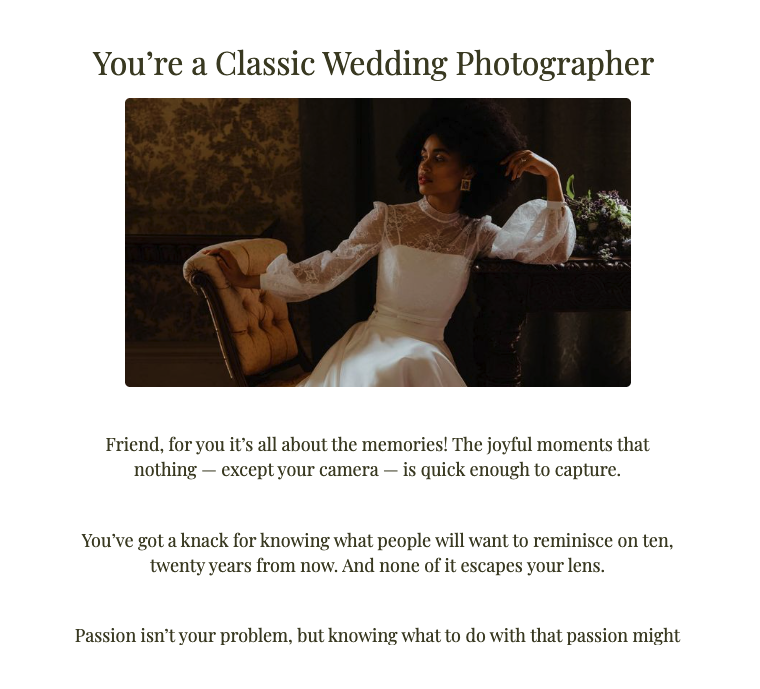
The archetype and personality side of this can look completely different at first because the framing is much more about identity. Jillz Guerin asks, “Are You in Your Masculine or Feminine Energy?” and Lisa Devlin helps photographers figure out what style of wedding photographer they are.
But the reason somebody goes through one of these experiences is still connected to where they want to go next. They want to understand something about themselves because that understanding helps them make a decision, change something, or choose a path. The archetype is not really the destination. It is the lens that makes the next step feel more relevant.
This is why I think the framing matters so much. Some people want the very direct version, which is basically, tell me which product I need. Some people want the assessment version, where they want to know where they are. Some people want the diagnostic version, where they want to understand what is causing the issue, and some people want the archetype version where they first want to understand who they are.
The wrapper is different, but the underlying job is the same. You are taking somebody from a place where they are unsure of what applies to them into a place where the next step feels clearer.
This works best when you already know your customers really well
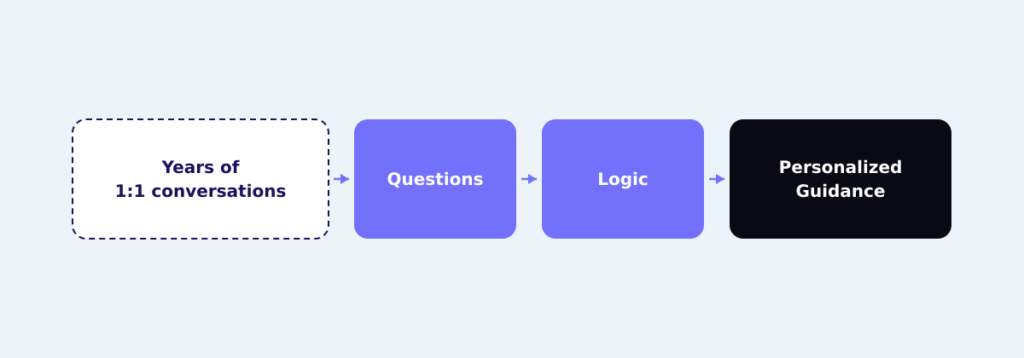
I think this is one of the most important parts of the whole thing because the ideal person to make one of these experiences is often somebody who has been doing their work for a long time. They have spent years talking to customers, coaching clients, answering emails, looking at the same situations over and over again, and learning which details actually matter. They know the questions that tend to separate one type of customer from another because they have already been doing that sorting process in their own head for years.
If you talk to people one on one all day, there are probably questions you ask almost automatically. Somebody tells you one thing and you immediately know the next question to ask. Somebody answers in a certain way and you start to have a pretty good idea of which direction makes sense for them.
That knowledge is the valuable part. The quiz or assessment is simply the mechanism for putting some of that knowledge into a format that can work when you are not there personally having the conversation.
This is really about scaling your guidance
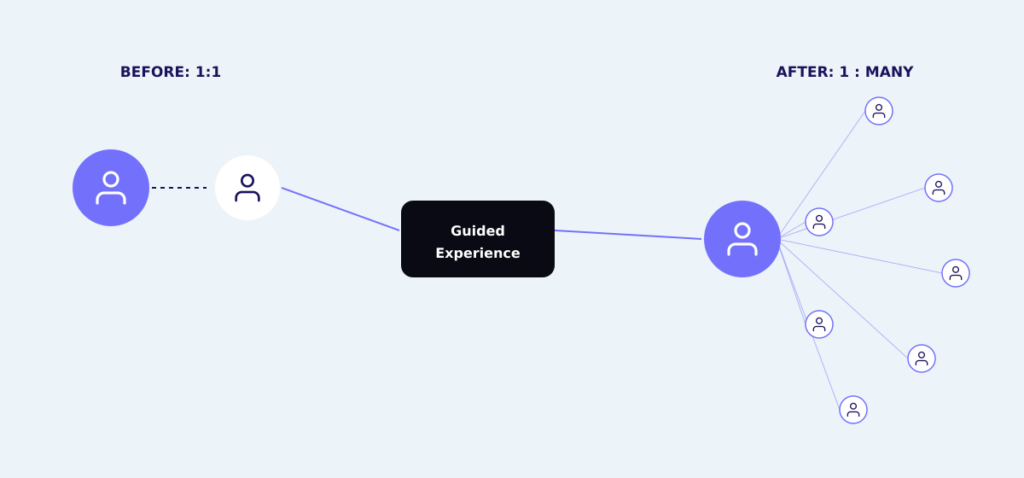
This was one of the original reasons people came to Interact years ago, before all of this got much more complicated. They had something that worked really well one on one, and they wanted to make it available to more people without losing the thing that made it good in the first place. They wanted to scale the guidance without turning it into something generic.
That still feels like the most interesting part of this to me now. If you have spent ten years figuring out how to help somebody, the goal is not to flatten all of that experience into a generic automated funnel that could have been written by anybody. The goal is to preserve the distinctions you have learned, the questions you know to ask, the language you use, and the way you actually think about the problem.
In that sense, this is a very human kind of automation. You are not trying to remove yourself from the experience. You are trying to take the part of yourself that you have repeated hundreds of times and make it available to more people.
Jenna Kutcher’s Level Up Quiz is a good example of this because “level up” is something that can apply to a huge portion of her audience, but the way each person needs to level up is not necessarily the same. So you can start with one broad desire that a lot of people have, ask enough questions to understand the person, and then make the ending more specific. Cynthia Garcia’s Get Your Personalized Hot AF Plan is another version of that same concept where the promise itself is that you are going to get something that is shaped around your situation.
This is what a good expert already does naturally. If ten different people sat down across from you and described ten different situations, you would not give all ten of them the exact same answer. You would listen, ask questions, and then start pointing each person in the direction that makes the most sense.
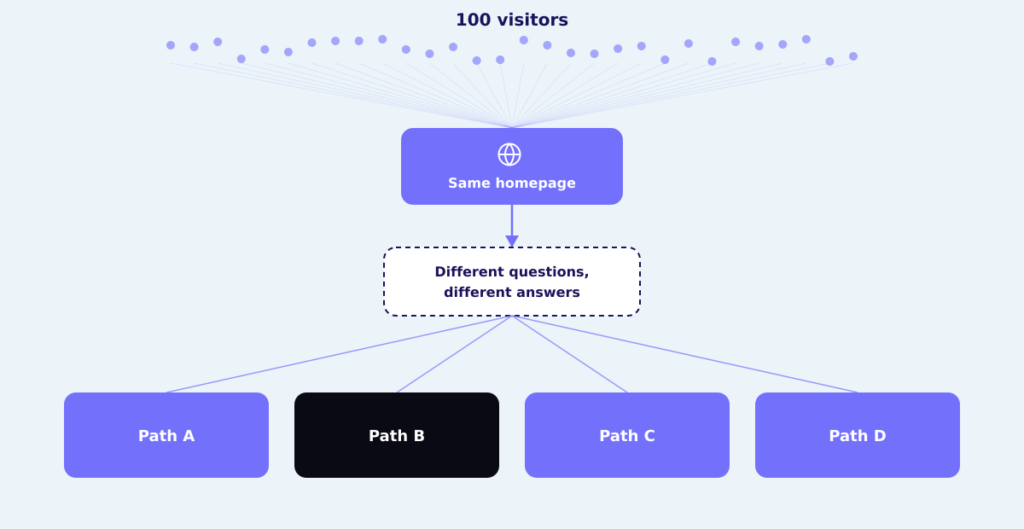
Most websites do not work that way. Everybody gets the same homepage, the same navigation, the same offers, and the same pile of content, and then we ask each person to figure out what applies to them. A quiz, assessment, diagnostic, or recommender adds one layer in between where the business can actually help with that sorting process.
The quiz is not really the point
The biggest thing I have taken away from looking through these successful customers is that the format itself is not really the through-line. One business calls it a quiz. Another calls it an assessment, diagnostic, product finder, recommender, scorecard, or archetype experience because that is the framing that makes sense to their audience.
What stays consistent is that somebody comes in with some amount of uncertainty and leaves with more clarity. They understand something about themselves, their situation, the problem they are dealing with, or the product that fits them. Then the business can point them toward a next step that actually makes sense based on what they said.
And if you have spent years getting really good at helping a particular group of people, you probably already have most of what you need to build this. The useful place to start is not by asking, “What quiz should I make?” It is by thinking about the conversations you are already having, what people usually tell you first, what you ask them next, and what you tend to recommend once you understand where they are.
That is the experience. It is a way to take the guidance that currently lives in one on one conversations and make it available to more people without losing the personhood that made that guidance valuable in the first place.