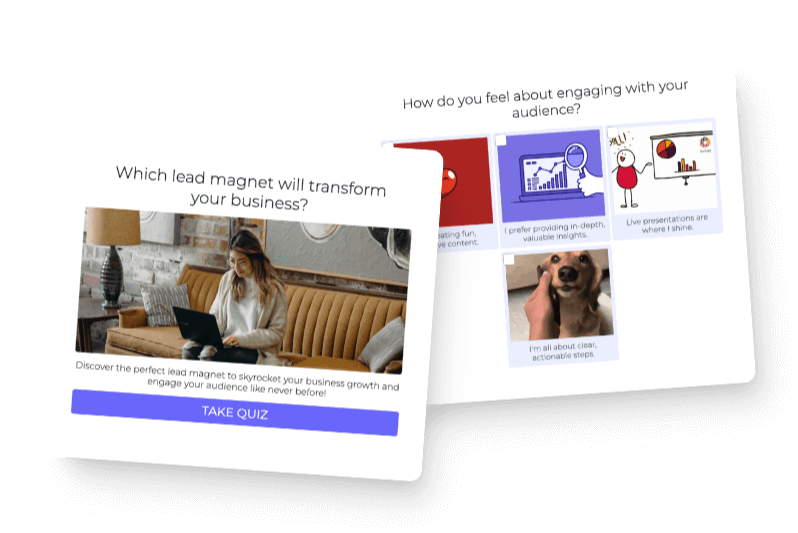

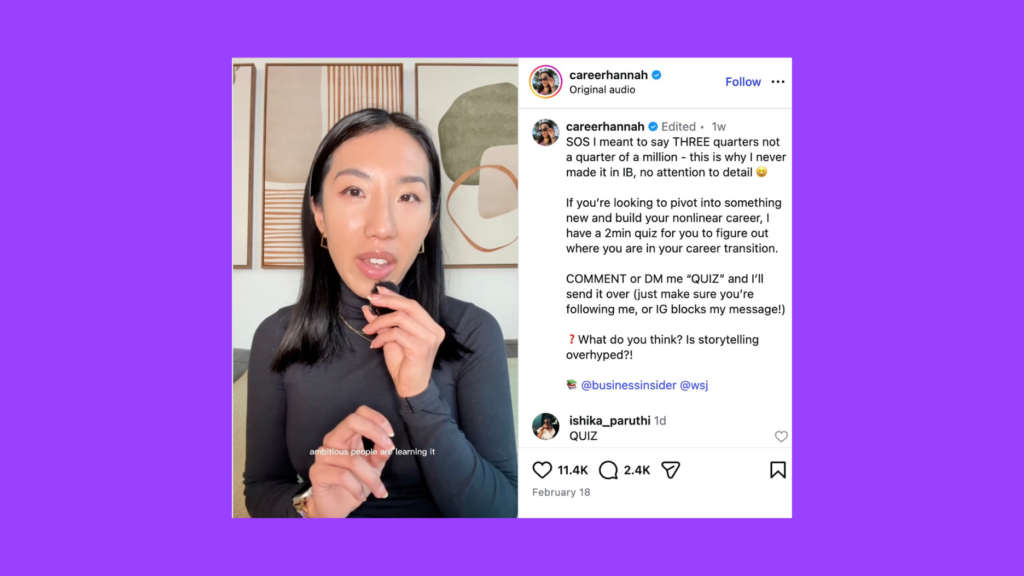
Instagram is the top source of traffic and leads for lead magnet quizzes built on Interact in 2026. The way lead magnet quizzes work on Instagram is you post a reel or carousel on a topic related to your quiz, then use a DM automation to send people your quiz if they comment a word like “QUIZ.” Let’s look at 20 successful examples of Instagram Lead Magnet quizzes following this pattern.
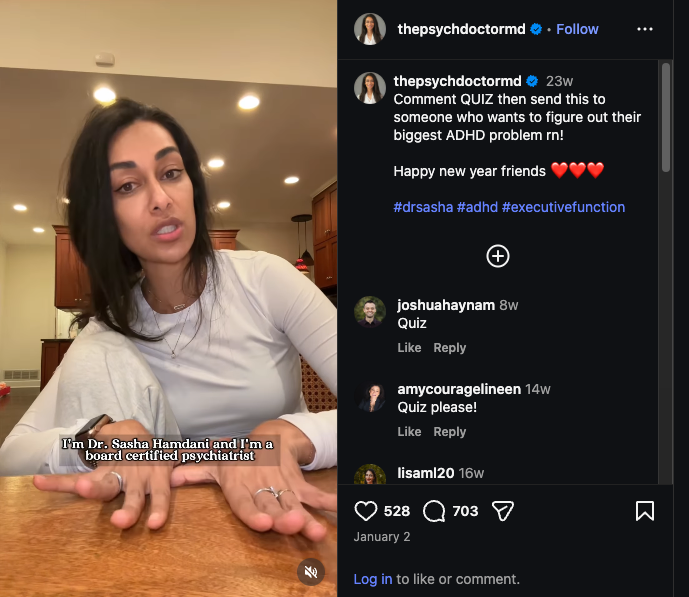
- Dr. Sasha Hamdani posted a reel about feeling overwhelmed by ADHD at the start of the new year, then asked viewers to comment QUIZ to find their biggest ADHD problem. The hook works because it names a feeling her audience already has (overwhelm) and offers a free, personalized next step instead of generic advice. Here’s the Reel.
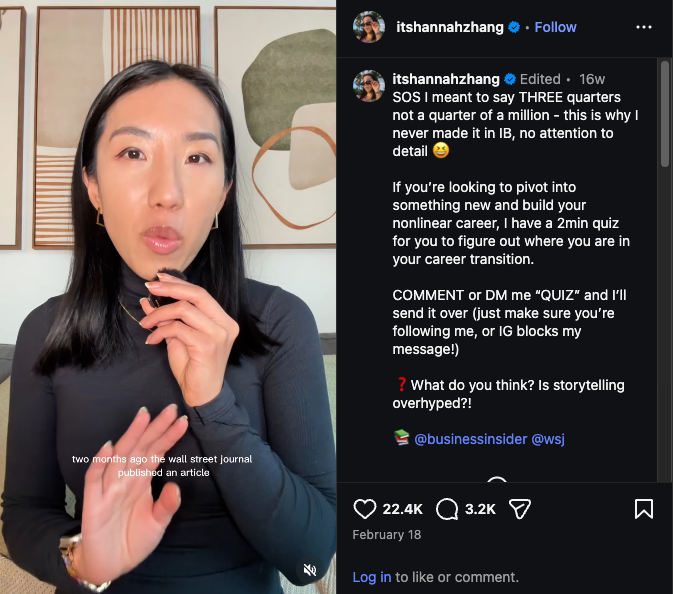
- Career coach Hannah Zhang built her post around a correction to a stat she’d gotten wrong in an earlier video, which kept people engaged in the comments, then pivoted to offering a two minute quiz for anyone thinking about a nonlinear career pivot. Commenting or DMing “QUIZ” triggers the automation. The lesson here is that a quiz offer doesn’t need its own dedicated post: it can ride along on whatever content is already getting engagement. Here’s the Reel.
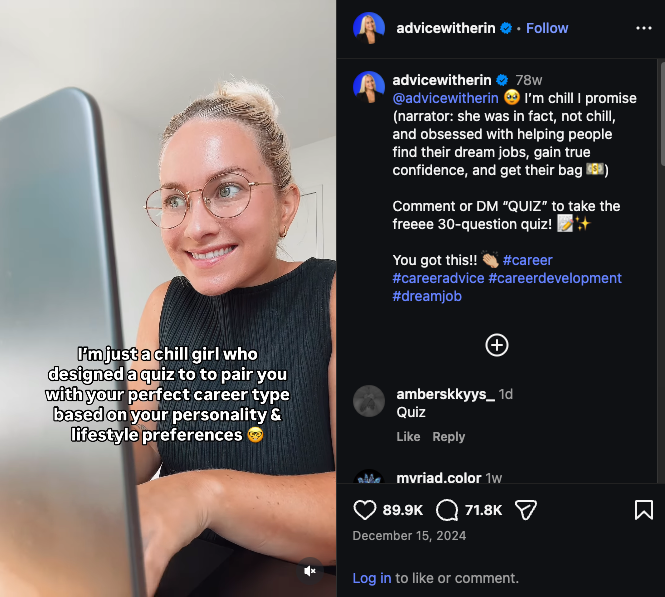
- Advice With Erin used a self-aware, slightly funny caption (“I’m chill I promise… and obsessed with helping people find their dream jobs”) to introduce a 30 question quiz that pairs people with their ideal career type. Commenting or DMing QUIZ unlocks it. The personality-forward caption does double duty: it builds rapport and qualifies the lead before they even take the quiz. Here’s the Reel.
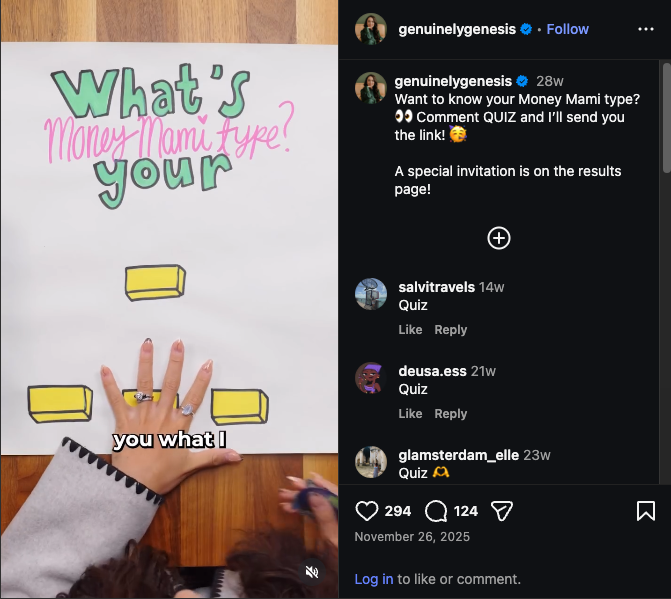
- Genuinely Genesis used a simple, visual carousel post asking “What’s your Money Mami type?” with a comment-QUIZ call to action. The post mentions a “special invitation” waiting on the results page, which gives commenters an extra reason to follow through and actually take the quiz once they get the link. Here’s the Reel.
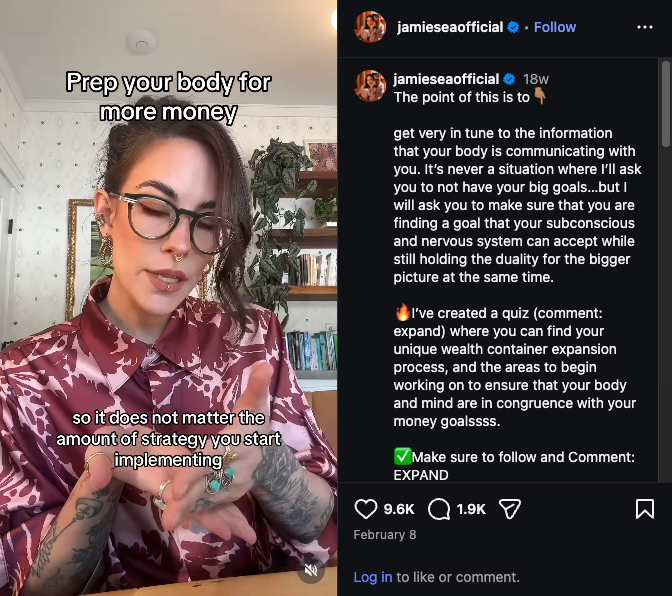
- Jamie Sea posted a reel about prepping your body and mindset for more money, then offered a quiz to help viewers find their “wealth container expansion process.” Commenting EXPAND triggers the quiz delivery. This is a good example of using a non-obvious trigger word tied to the post’s theme rather than defaulting to “QUIZ,” which reinforces the concept in the commenter’s mind. Here’s the Reel.
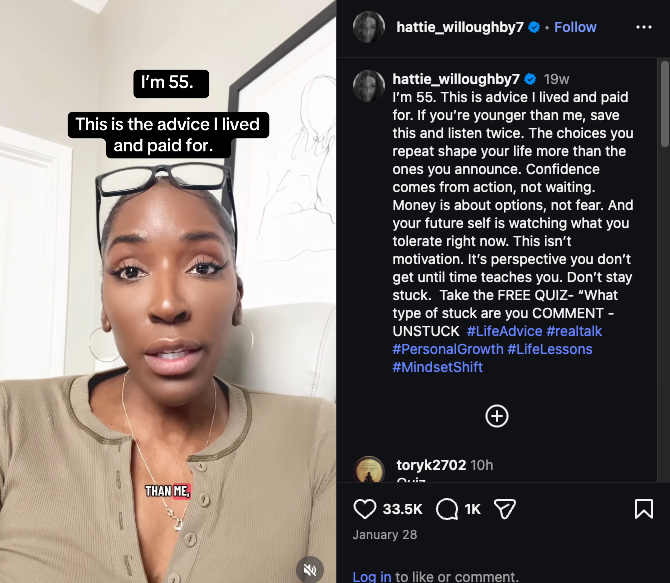
- Hattie Willoughby framed her post as hard-won life advice from someone who is “55 and paid for it,” ending with an invitation to take her free quiz by commenting UNSTUCK. The personal, slightly vulnerable framing builds trust before the ask, and the trigger word matches the emotional state the quiz promises to resolve. Here’s the Reel.
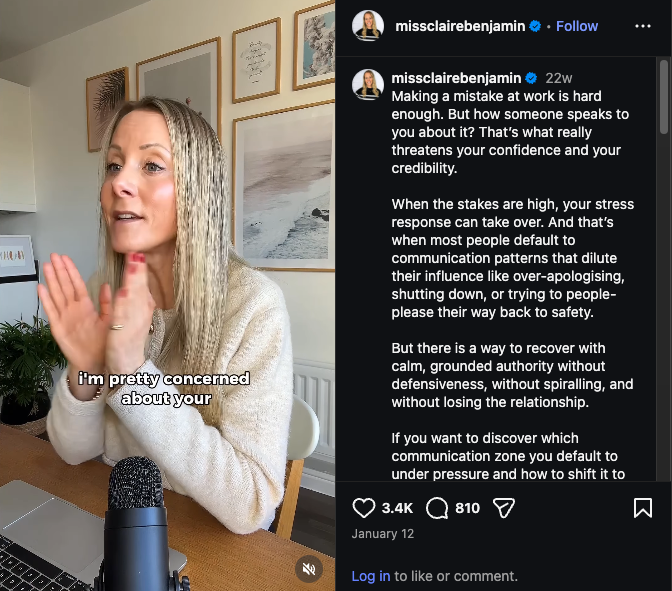
- Miss Claire Benjamin’s post addressed the fear of being spoken to harshly after making a mistake at work, then offered a quiz to help viewers discover their communication style under pressure. The caption walks through a specific, relatable scenario before ever mentioning the quiz, which means the offer feels like a natural next step rather than a sales pitch. Here’s the Reel.
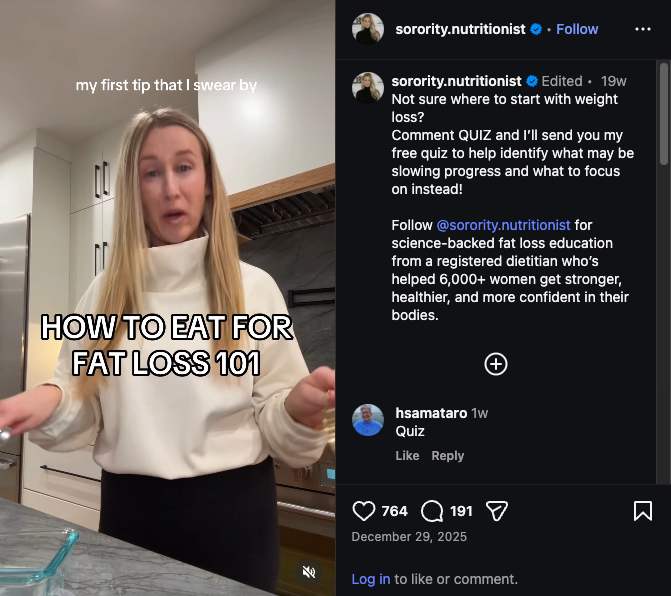
- Sorority Nutritionist posted a quick video titled “How to Eat for Fat Loss 101” and asked viewers to comment QUIZ for a free quiz that identifies what might be slowing their progress. Her caption also reinforces her credibility (helping 6,000+ women) right next to the offer, which builds trust at the exact moment she’s asking for the comment. Here’s the post.
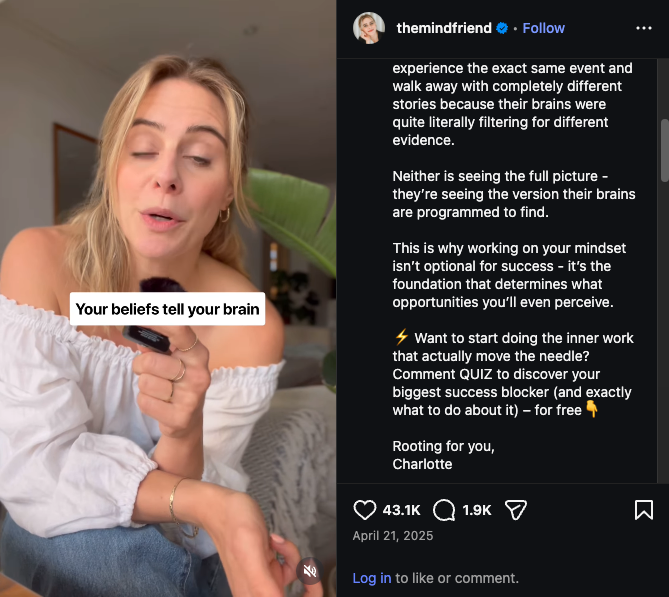
- The Mind Friend explained a psychological concept (how people’s brains filter for different evidence based on their beliefs) before inviting viewers to comment QUIZ to discover their biggest success blocker. Teaching something useful first means the quiz offer arrives after she’s already delivered value, not instead of it. Here’s the Reel.
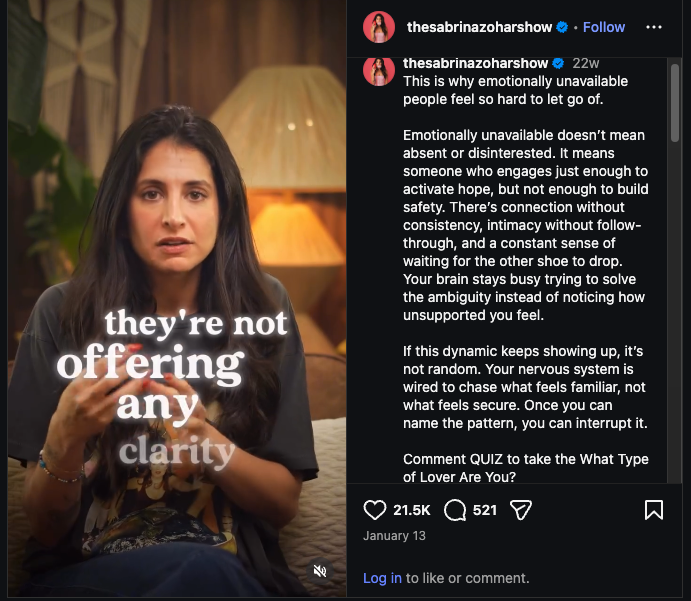
- Sabrina Zohar broke down why emotionally unavailable people are so hard to let go of, then asked viewers to comment QUIZ to take her “What Type of Lover Are You?” quiz. The post diagnoses a specific relationship pattern in detail first, so by the time the quiz is offered, the viewer already wants the personalized answer. Here’s the Reel.
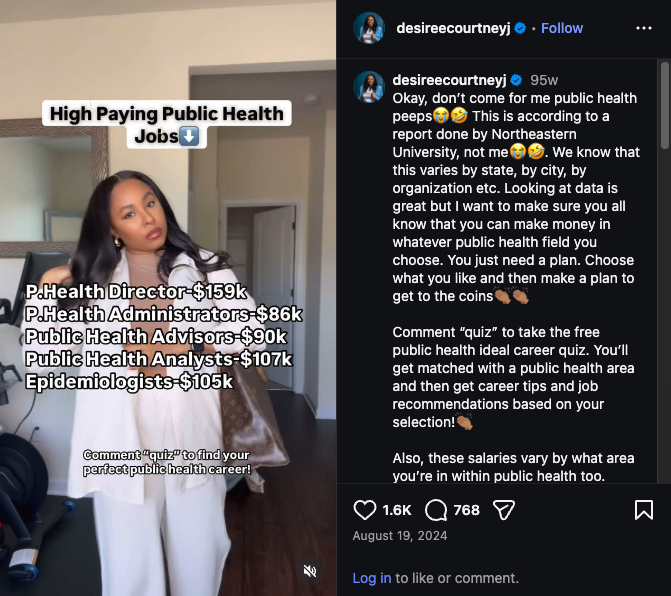
- Dr. Desiree Strickland shared a breakdown of high paying public health jobs with specific salary figures, then asked viewers to comment “quiz” to get matched with a public health career path. Leading with concrete numbers is what makes this one scroll-stopping: the quiz offer converts curiosity about the data into a personalized result. Here’s the Reel.
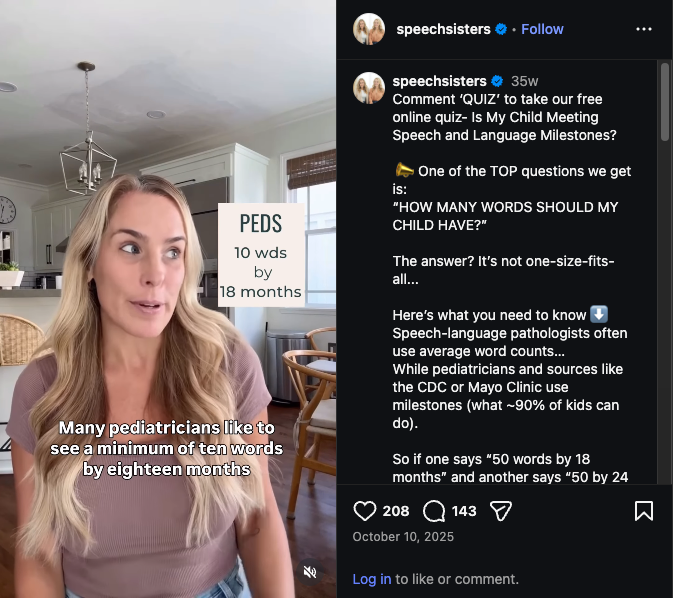
- Speech Sisters tackled a question parents Google constantly (“how many words should my child have?”) and used the conflicting advice from different sources as the hook, then invited comments of QUIZ to take their “Is My Child Meeting Speech and Language Milestones” quiz. Naming the confusion parents already feel is what makes the quiz feel like relief rather than another thing to figure out. Here’s the Reel.
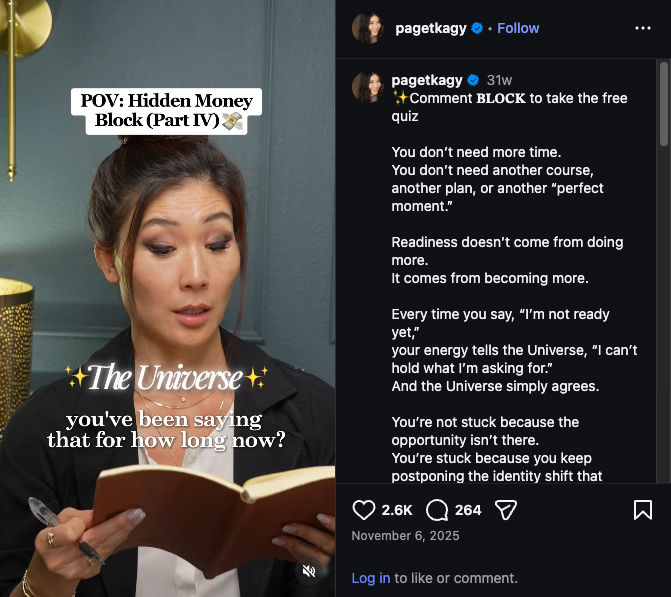
- Paget Kagy posted a video journaling through the idea of a “hidden money block,” then offered a free quiz by commenting BLOCK. Like Jamie Sea’s EXPAND, the trigger word is borrowed directly from the post’s core concept, which keeps the whole interaction thematically consistent. Here’s the Reel.
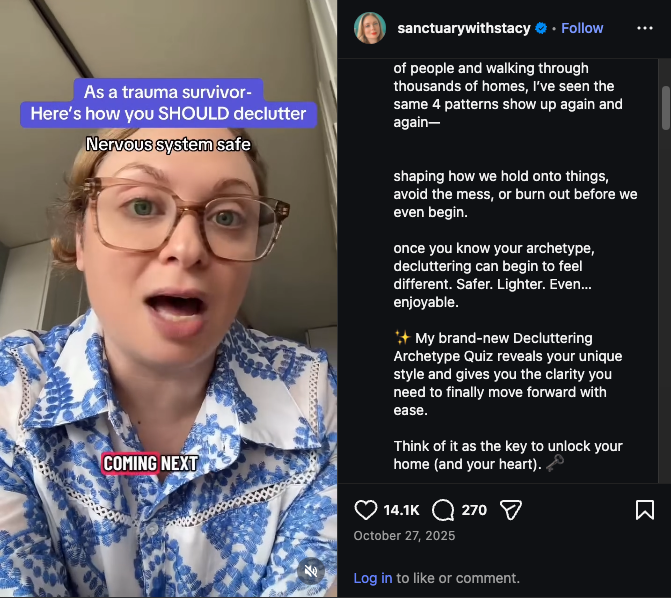
- Sanctuary with Stacy spoke to her own experience as a trauma survivor to explain why typical decluttering advice doesn’t work for everyone, then introduced her new Decluttering Archetype Quiz. The personal disclosure up front makes the quiz feel like it comes from lived experience instead of a generic productivity hack. Here’s the Reel.
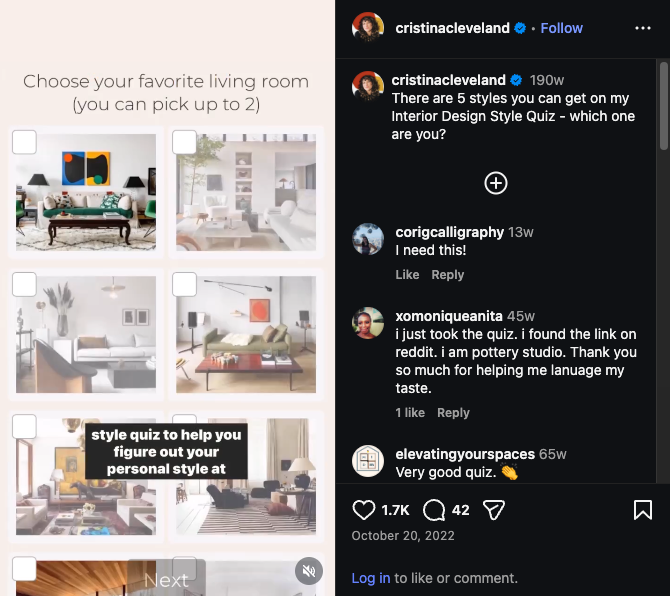
- Cristina Cleveland used a carousel format instead of a reel, letting people choose their favorite living room styles directly in the post before pointing them to her Interior Design Style Quiz. This is one of the few examples on this list that doesn’t use a comment trigger at all. The carousel itself is interactive, which means some of the qualifying work happens before anyone even leaves the post. Here’s the Reel.
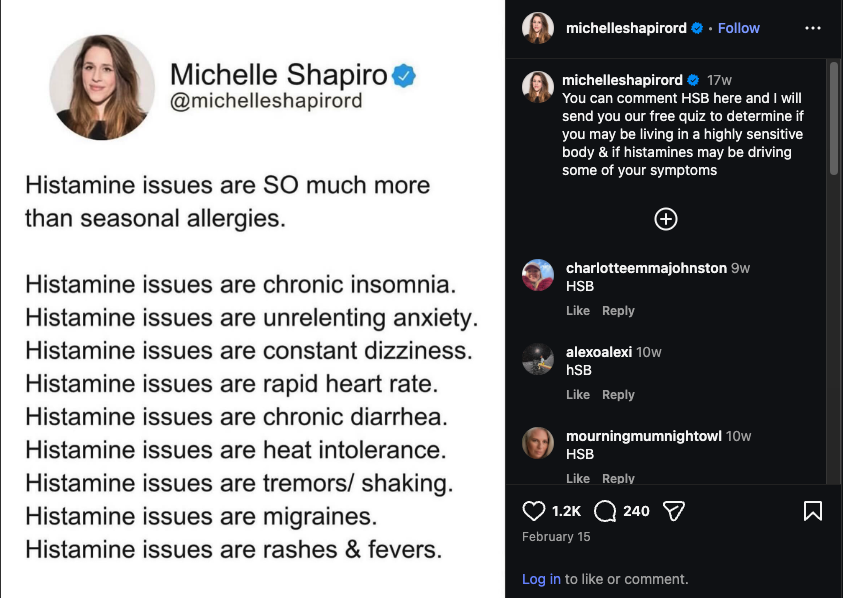
- Michelle Shapiro listed out a series of symptoms people don’t usually associate with histamine issues (insomnia, anxiety, rapid heart rate) and asked viewers to comment HSB for a free quiz on whether they’re living in a highly sensitive body. The list format does the diagnostic work itself, building urgency before the quiz is ever mentioned. Here’s the post.
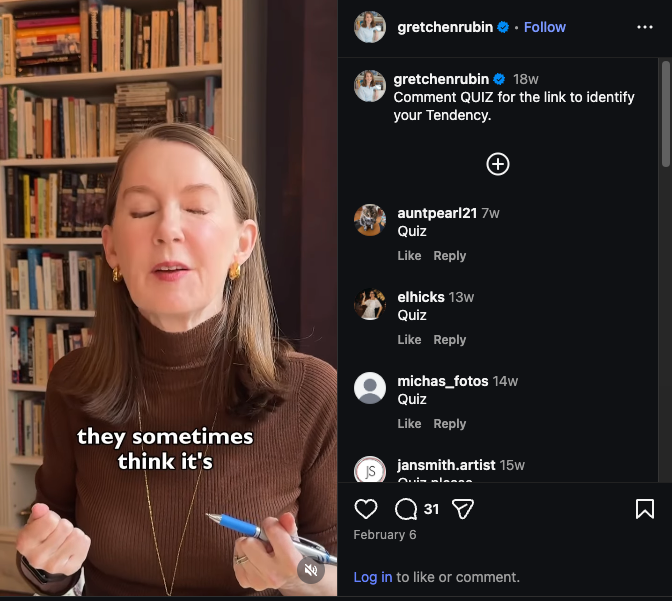
- Gretchen Rubin kept her caption to a single line, “Comment QUIZ for the link to identify your Tendency,” relying entirely on her existing audience’s familiarity with her Four Tendencies framework to drive comments. This works because the quiz topic is already a known concept to her followers: no further explanation needed. Here’s the Reel.
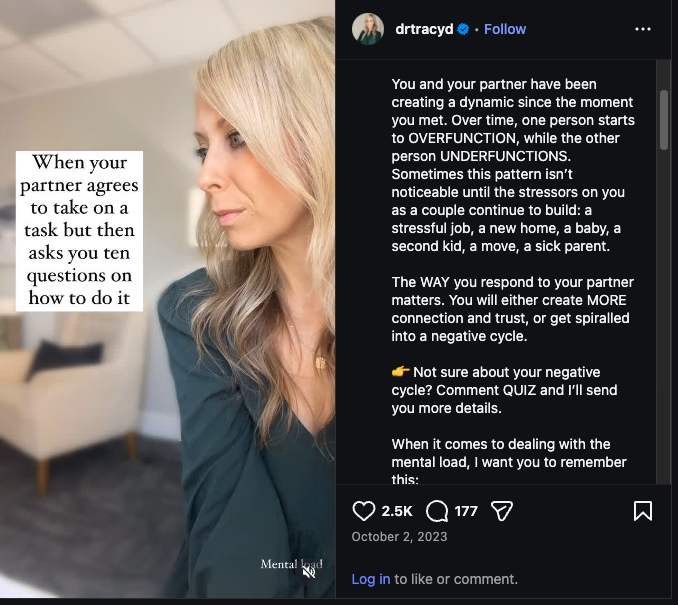
- Dr. Tracy Dagleish described a specific relationship pattern (one partner overfunctioning while the other underfunctions) in detail, then asked anyone unsure about their own negative cycle to comment QUIZ for more details. Like several others on this list, the post does real diagnostic work in the caption itself before the quiz is offered as the next step. Here’s the Reel.
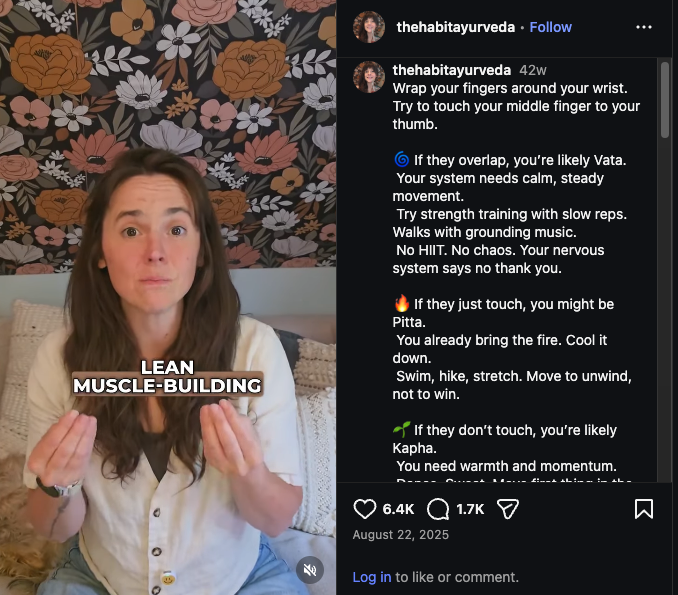
- Carly Banks used a step-by-step physical self-test (wrapping your fingers around your wrist) to introduce the three Ayurvedic doshas, building curiosity about which one applies to the viewer before pointing toward her quiz. Giving people a taste of the assessment for free is what makes the full quiz feel like the obvious next step. Here’s the Reel.
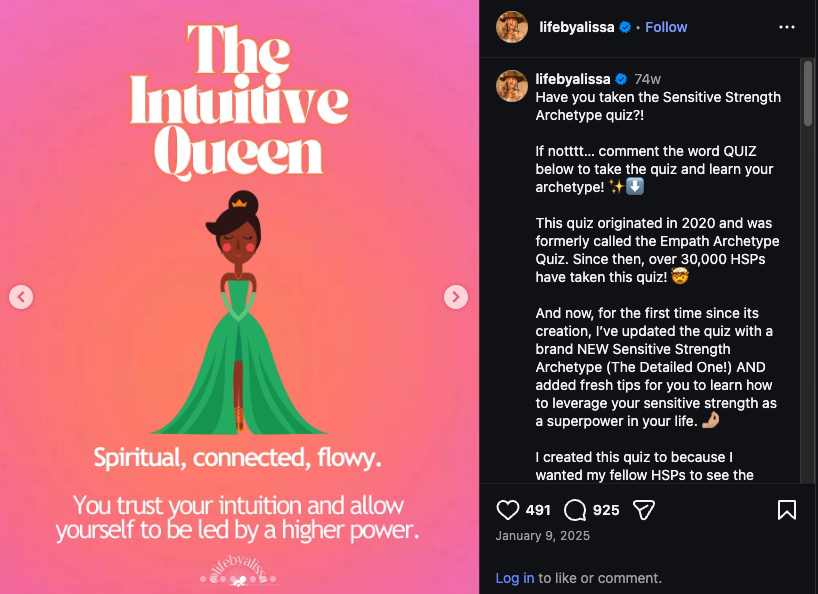
- Alissa Boyer’s carousel post introduced “The Intuitive Queen” as one possible result from her Sensitive Strength Archetype Quiz, complete with custom illustration and a short description of that archetype’s traits. Showing an actual result up front, rather than just describing the quiz, gives commenters a preview of what they’ll get if they ask for the link. Here’s the Carousel.
Across all 20 examples, the pattern holds: the content stands on its own first, whether that’s a relatable scenario, a piece of advice, a list of symptoms, or a personal story, and the quiz is offered as a natural next step rather than the headline of the post. The comment trigger word is sometimes generic (QUIZ) and sometimes tied to the post’s theme (BLOCK, EXPAND, UNSTUCK, HSB), but in every case it’s simple enough that someone can type it without thinking twice.