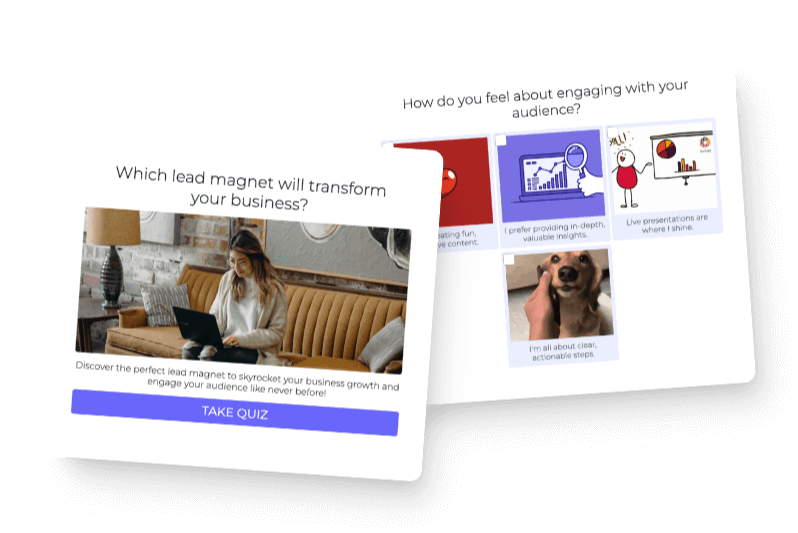

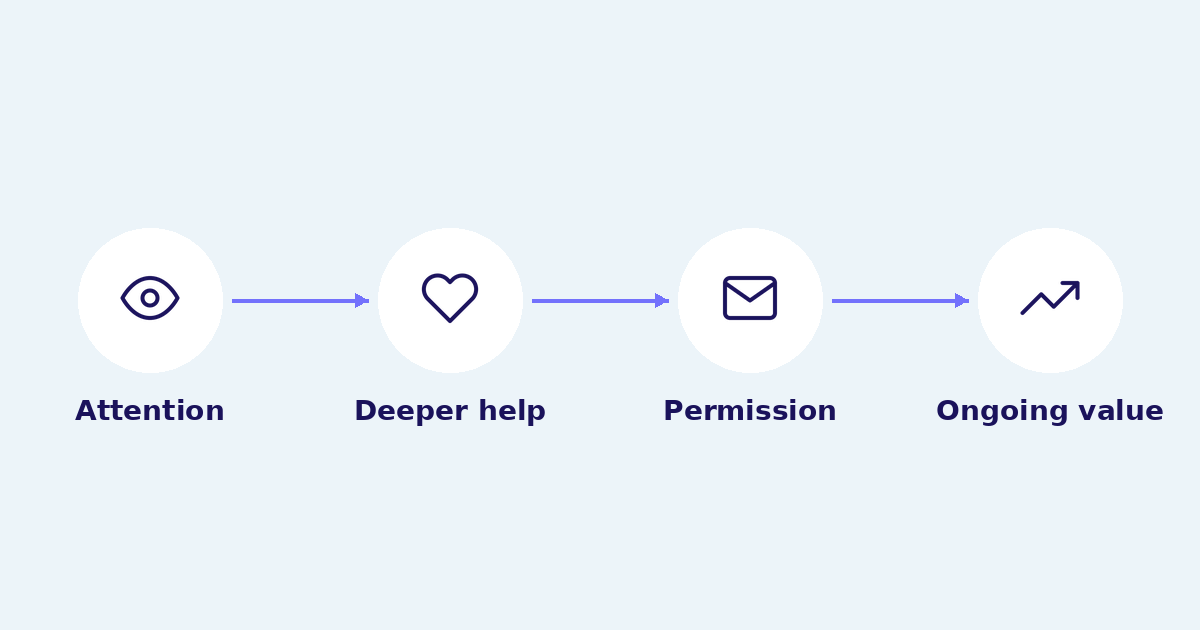
People do not wake up wanting to join another email list. They join because there is something they want help with, and you are offering to help them in a deeper, more useful way. The email address is what they give you in return for that help and for the chance to continue the relationship.
That is the whole way I think about list building in 2026. You are not trying to collect the largest possible number of email addresses. You are creating a helpful exchange with the right people, then earning the right to keep helping them.
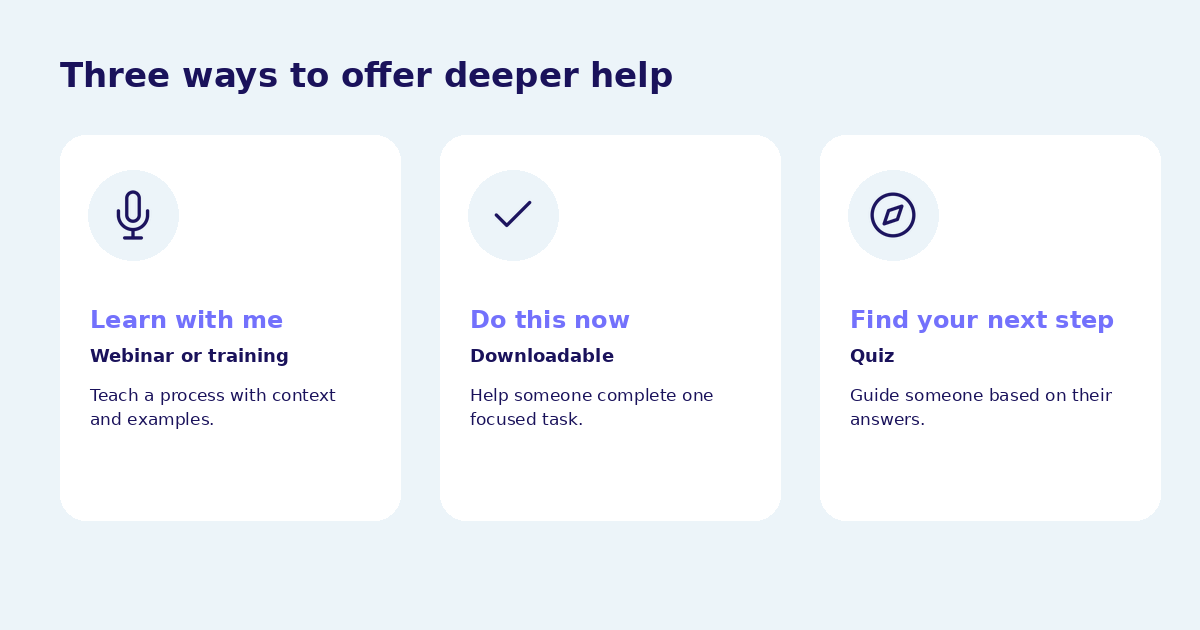
The best list-building systems I see now give people a reason to take the next step. Usually that reason is a webinar or training, a useful downloadable, or a quiz.
I call these the big three. A training helps somebody learn with you. A downloadable helps somebody do one specific thing. A quiz helps somebody understand their situation and decide what to do next.
Obviously, I run a quiz company, so I spend more time looking at quizzes than most people. But I do not think every lead magnet should be a quiz. The strongest systems I see use each format for the job it does best.
A lead magnet also does not create attention from nothing. It gives people who already found you a reason to go deeper. That attention might come from social media, a website, Google, an AI answer engine, a podcast, a video, a referral, or something else that already brings the right people to you.
List building is an exchange of deeper help
Every good lead magnet should answer one question: What can I help this person do here that I could not fully help them do in a short public piece of content?
Maybe you can teach the whole process in a one-hour training. Maybe you can turn it into a checklist that helps somebody finish a task. Or maybe the right answer is different for each person, so you use a quiz to guide them to a personalized recommendation.
The format matters less than the usefulness. A beautifully designed PDF that solves no clear problem is still weak. A plain checklist that gets somebody through a task they have been avoiding can be an excellent reason to join your list.
This also changes how you promote the offer. Instead of saying, “Sign up for my emails,” you can say exactly how you will help. “Join this training and leave with a launch plan” is clearer. “Take this quiz and find the right coffee for your taste” is clearer.
The exchange should stay clear after signup. Deliver what you promised, explain what email comes next, and keep giving the person a reason to stay. The form is not the finish line. It is where the ongoing relationship starts.
The big three I see working now
These three formats work well together because they cover three different kinds of help. You do not need all three on day one. But if list building is an important part of your marketing, this is the mix I would work toward.
| Lead magnet | The deeper help it provides | Best fit | What to keep current |
|---|---|---|---|
| Webinar or training | Teaches a process with context, explanation, and examples | A topic people need to see or hear you work through | Dates, examples, slides, links, and the next offer |
| Downloadable | Helps somebody complete one focused task on their own | A checklist, template, guide, worksheet, or reference | Steps, screenshots, terminology, and recommendations |
| Quiz | Gives guidance based on the person's answers | A repeated question where the useful answer depends on the person | Questions, outcome language, products, services, and links |
1. Webinars and trainings
A webinar or training gives you room to explain why something works, show your process, and answer the questions people tend to have. It can be live, on demand, or offered in both formats.
The strongest training offers make one useful promise. They do not try to cover an entire field in an hour. They help the person reach one meaningful milestone or leave with a plan they can use.
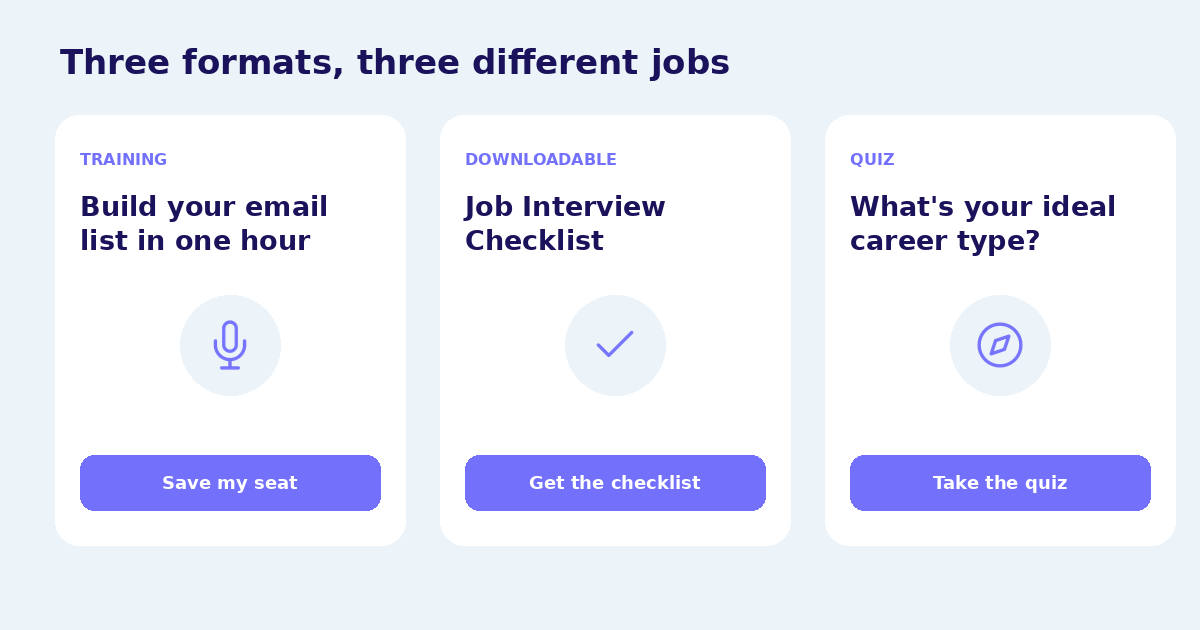
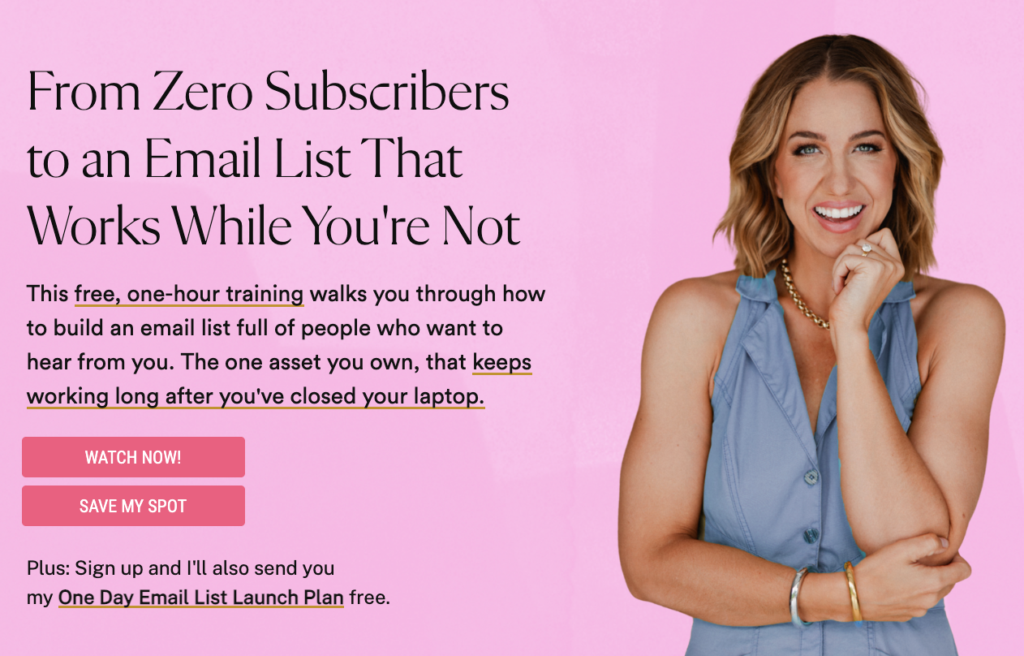
Jenna Kutcher, for example, offers a free one-hour training on building an email list. The signup also includes a One Day Email List Launch Plan. The training explains, and the plan helps the person act.
Trainings work well when people need to trust your thinking before they are ready for the next step. A consultant can teach how to identify a positioning problem, while a software company can demonstrate a workflow. A strong recording can also become an evergreen asset if you keep its examples and next steps current.
2. Downloadables
A downloadable is often the fastest path to a practical win. It can be a checklist, template, worksheet, guide, calculator, or short reference. The best ones make a specific task easier right away.
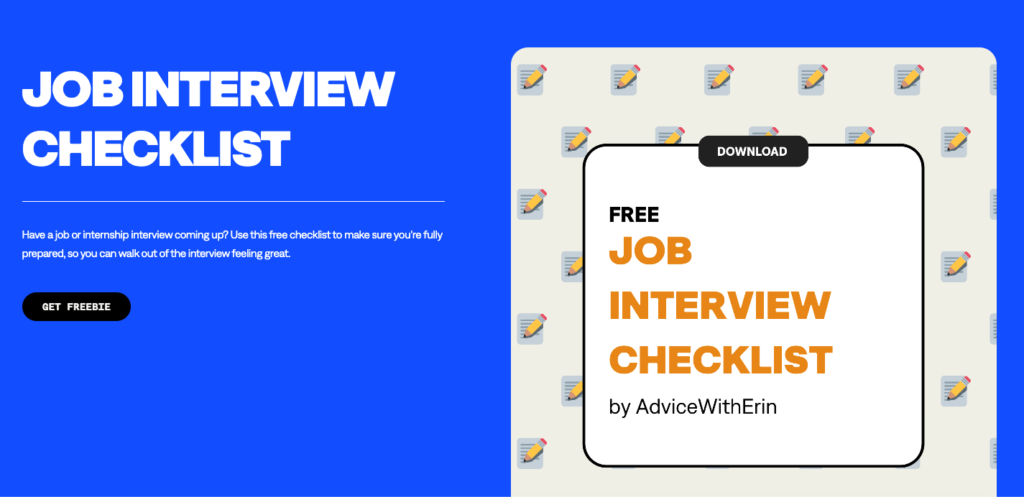
Advice With Erin offers focused career resources such as a Job Interview Checklist, resume template, five-year plan worksheet, and salary negotiation guide. Each resource addresses a narrower need than her broader career quiz. Somebody can choose the tool that matches the immediate problem in front of them.
A downloadable should not be a pile of information that happens to be in a PDF. Listen for the step where your audience gets stuck. Create a preparation checklist, decision worksheet, or template that helps them move through that step.
3. Quizzes
A quiz is the right format when the helpful answer depends on who is asking. It lets you understand what a person wants or where they are and guide them toward an outcome that fits. This article is about the quiz’s role in list building, not how to construct one.
If your audience keeps asking one question but the useful answer changes by person, a quiz can scale that guidance. The separate guide to when a lead generation quiz works best covers that decision in full.
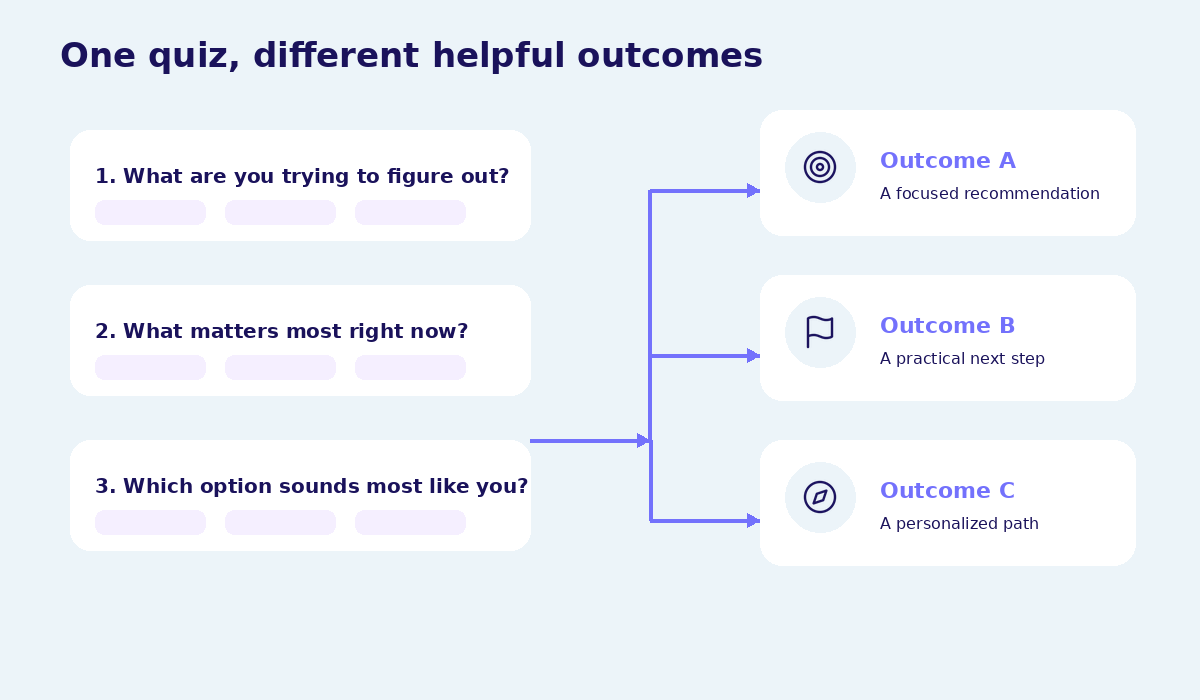
The point here is the role a quiz plays inside the larger list-building system. The examples later in this article show how quizzes can become durable evergreen assets.
A quiz can offer the outcome on screen and a fuller report by email, or deliver the complete outcome after signup. Make that exchange clear before the form, including what people will receive and what follow-up to expect.
Build two layers: a fresh rotation and an evergreen home base
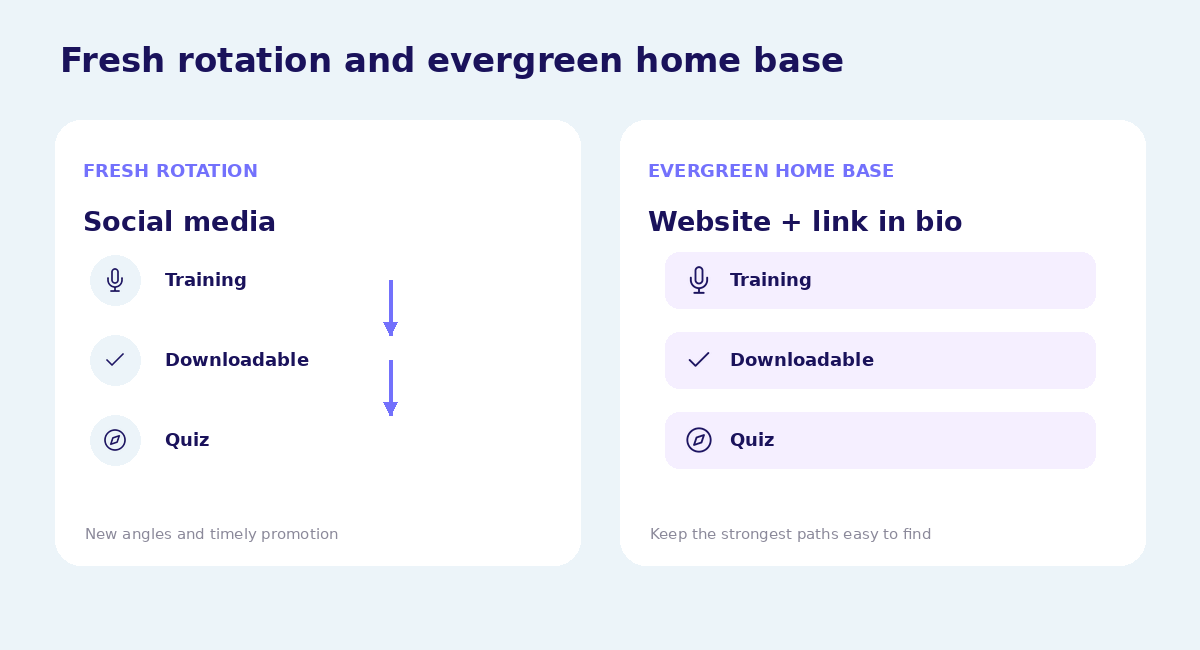
The best way to use the big three is different on social media than it is on your website or link in bio. On social, people expect something new today. On your home base, they need to understand the most useful next step on any visit.
The fresh rotation on social media
In a 2026 directional look at Interact quiz activity, leads attributed to social media and websites were roughly even. The picture one year earlier had websites clearly ahead, which suggests that social media caught up and grew faster during that period.
That is an Interact observation, not a universal benchmark, and your mix may differ. For many of the businesses I talk to, social media is now where most new attention begins. Website traffic from Google and AI answer engines still matters. The two surfaces simply have different jobs: social keeps giving people fresh reasons to act, while the website keeps the most useful next steps easy to find.
On social, rotate the big three. Promote a training around a timely question, a checklist that helps people put one part into practice, and a quiz that helps them find the right path.
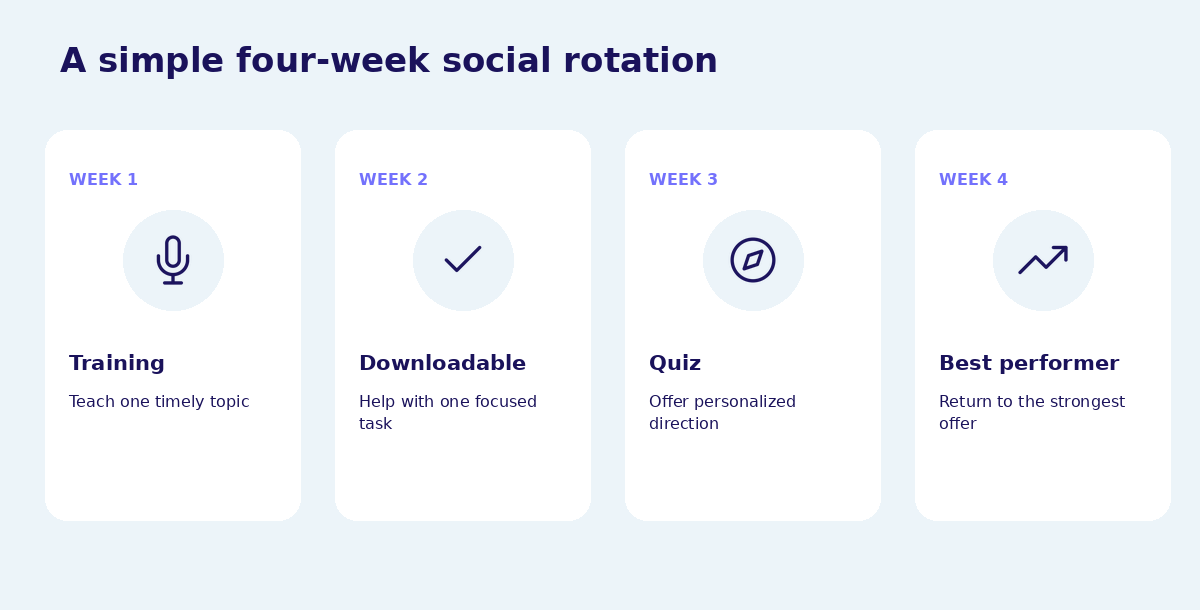
You can rotate the same three assets or create new versions as your audience’s questions change. A career coach might promote a salary negotiation training during review season, a job interview checklist the next week, and a career type quiz as the evergreen next step. The mix stays recognizable while the entry point changes.
The evergreen website and link-in-bio layer
Your website and link in bio do not need to change every day. I have seen evergreen quizzes stay useful for five, ten, or more years when the core question remains relevant and the language and recommendations stay current.
Advice With Erin, for example, features her career quiz on her website and in her Instagram link in bio. That gives people a consistent next step after they encounter her content. Her more focused downloadable resources can sit alongside it for people who already know the exact kind of help they need.
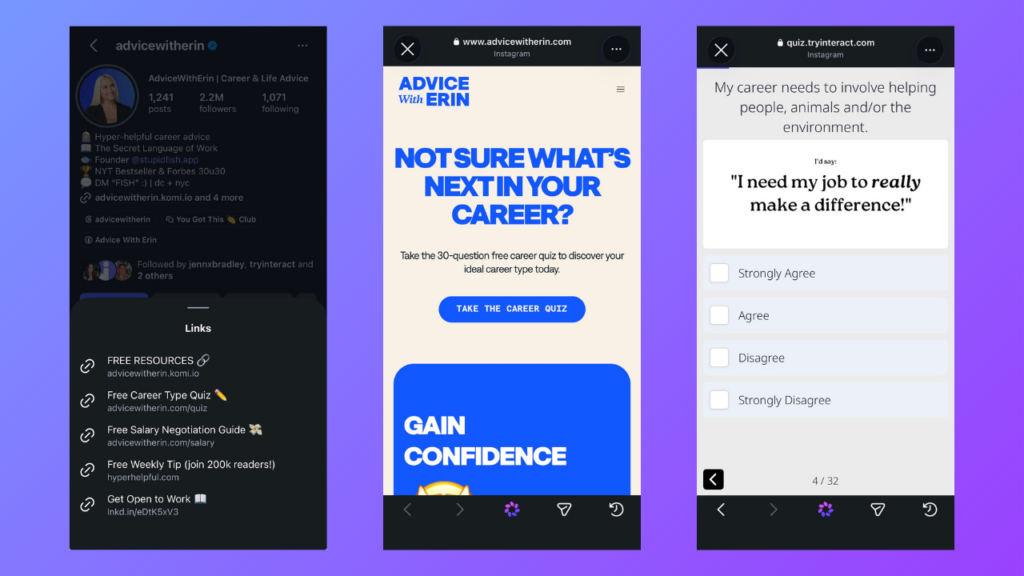
You can feature all three lead-magnet types in your home base: training for learning, a downloadable for doing, and a quiz for personal direction. Keep the menu simple. Choose the strongest paths and organize everything else underneath them.
Why I usually stop at three prominent choices
Three is my practical rule for the number of lead magnets I would feature prominently at one time. It is enough to give people meaningful choice without making the page feel like a catalog. It also happens to fit the big three formats naturally.
People often connect this idea to the famous jam study. Its field experiment compared a display of 24 jams with a display of six. The larger display attracted more attention, while the smaller display led to more purchases. Other experiments in the same paper compared six options with 30. None of them tested three choices, so the research does not prove that three is a magic number.
A 2010 meta-analysis reviewed 63 conditions from 50 experiments and found a mean effect near zero with substantial variation. It did not identify a universal set of conditions that creates choice overload. So use three as a clear starting point, then pay attention to how your audience responds.
If one offer receives almost all the clicks and produces the best-fit subscribers, make it more prominent. If people repeatedly ask for a resource you have hidden deeper on the page, bring it forward. The goal is not to obey a number. The goal is to make the next helpful decision easy.
The four moments every opt-in needs
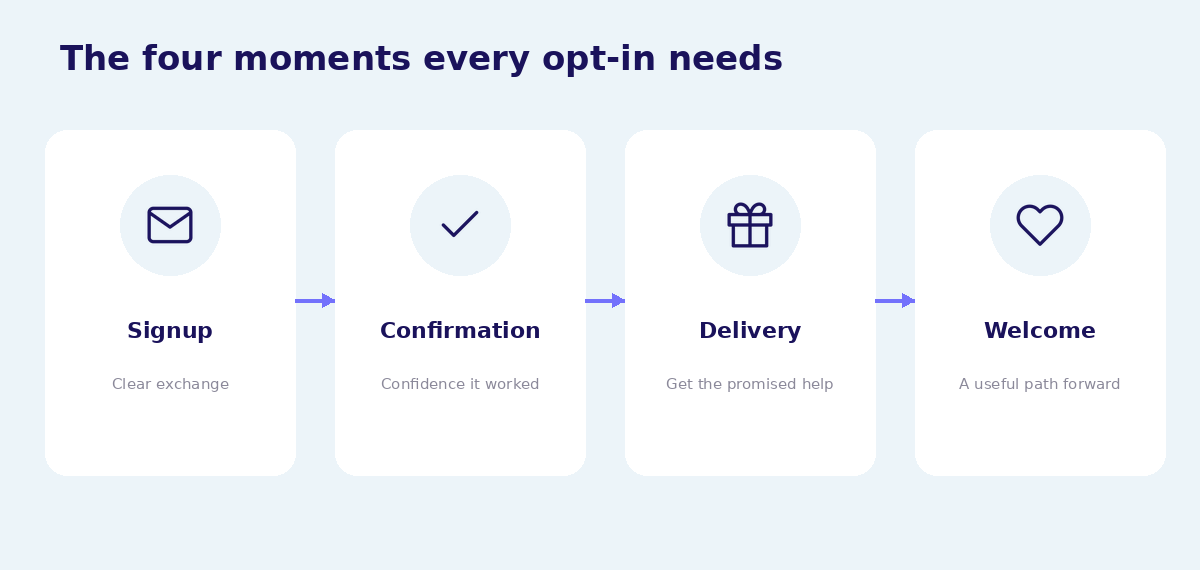
The lead magnet earns the opt-in, but the path around it determines whether the experience feels helpful. I check four moments in every opt-in: signup, confirmation, delivery, and welcome.
| Moment | What the person needs | What to include |
|---|---|---|
| Signup | A clear reason to exchange their email | The problem this solves, what they receive, and what follow-up to expect |
| Confirmation | Confidence that the action worked | A thank-you, the next step, and where to look for delivery |
| Delivery | The promised help without friction | The access link or resource, one instruction for using it, and support if it does not arrive |
| Welcome | A useful path forward | Context, related help, and an invitation to take the next relevant step |
Signup
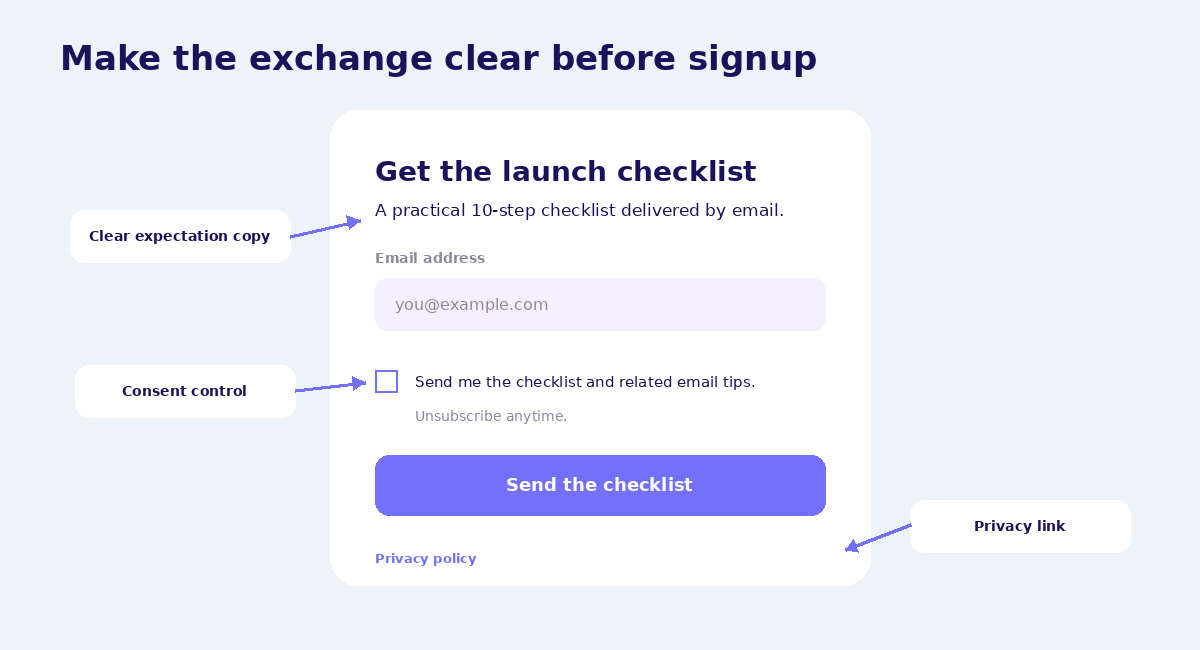
The signup page should make the exchange understandable before the form. Tell people what they will get, who it is for, and what email follows. Focus the headline on their useful result, and ask only for the information you need to deliver or personalize it.
Confirmation
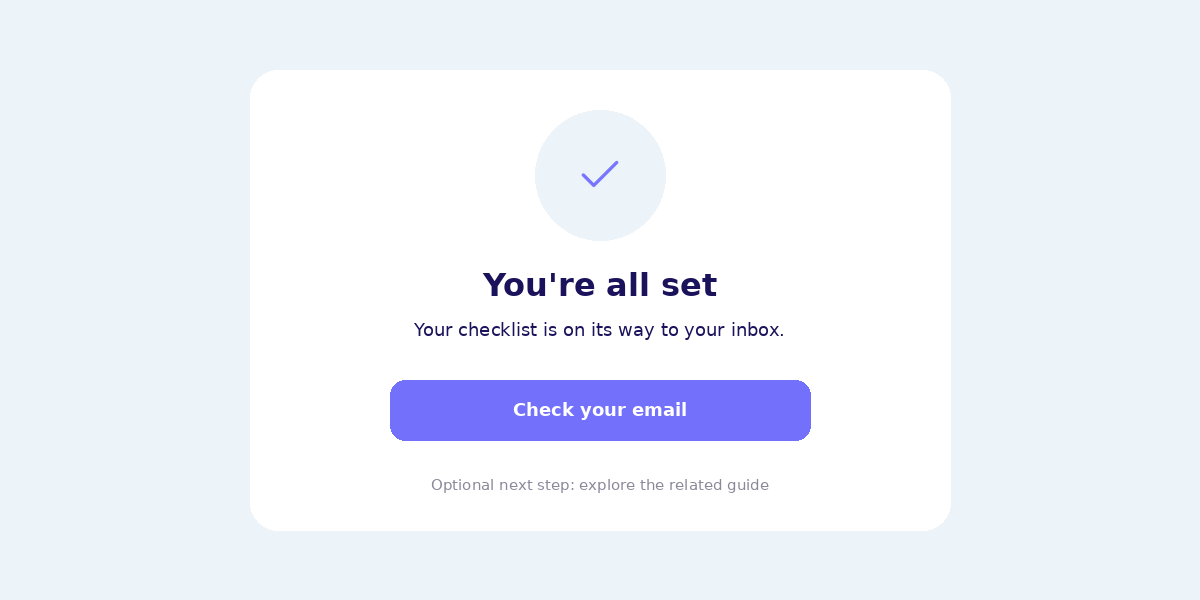
As soon as the form is submitted, confirm that it worked. Say whether the resource is available now, arriving by email, or beginning at a scheduled time. You can offer one relevant next step, but never bury the promised resource beneath a sales pitch.
Delivery
The delivery email should deliver. Put the link, access button, date, or instructions near the top, then add one sentence about how to use the resource. A person should not have to read a long origin story before getting what they requested.
Welcome
After delivery, continue with a short welcome path that helps the person apply what they received. Explain why the issue matters, share an example, answer a common question, and invite the next relevant step. The first few messages should acknowledge what brought each person to you.
Segment from what people choose and tell you
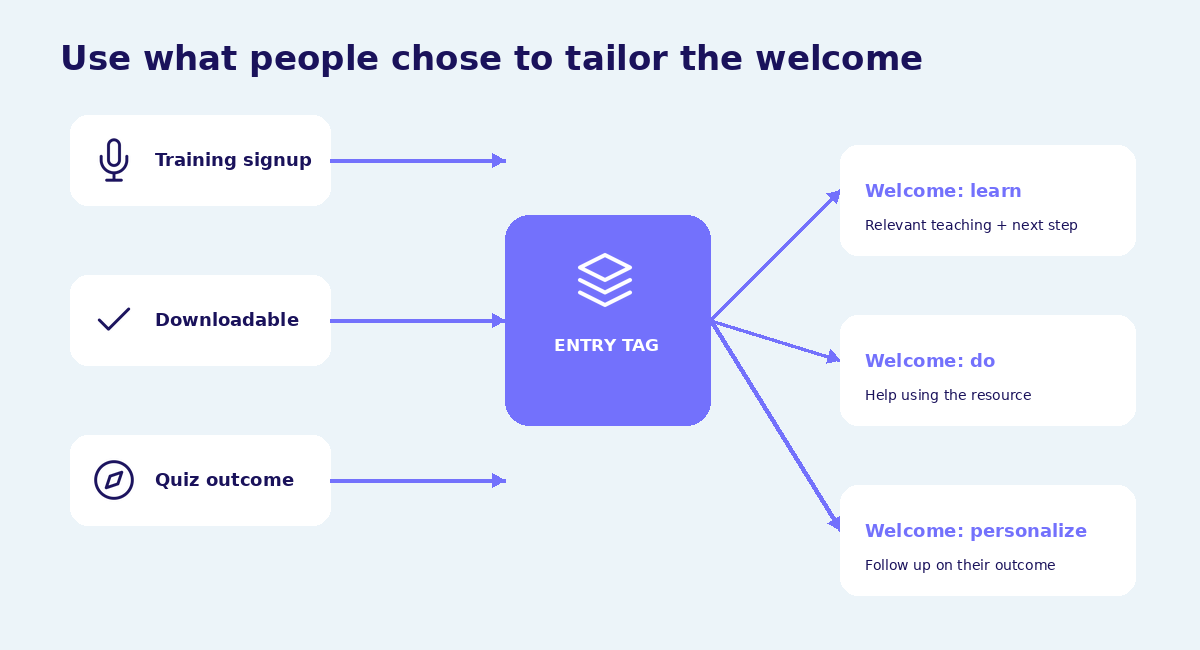
The lead magnet itself gives you useful context. Someone who registers for an introductory training is signaling a different need from someone who downloads an advanced checklist. A quiz can provide even more direct context through the outcome and selected answers.
Use that context to make the first follow-up more relevant. Refer to the resource, question, or outcome that brought the person in. Recommend the next piece of help that logically follows from it.
Do not treat segmentation as an excuse to collect everything you could possibly know. Collect what you need to deliver the promised experience and improve the next step. More data is not automatically more helpful.
Permission is part of being helpful
A good exchange also respects the person’s choice. Tell them what they are signing up for, who will email them, and how you will use their information. Make it easy to unsubscribe, and do not hide marketing consent inside vague language.
Do not assume that requesting one resource is blanket permission for unrelated marketing. Tell people what ongoing email they will receive, and use the consent or lawful-basis approach required for your jurisdiction.
Rules vary by location. In the United States, commercial email is subject to CAN-SPAM requirements including accurate sender information, a valid postal address, a clear opt-out method, and timely handling of opt-out requests. In the United Kingdom, PECR electronic-marketing rules work alongside data-protection law. In the EEA, the GDPR’s data-protection principles and applicable electronic-marketing rules can create additional requirements around consent, transparency, lawful basis, and data minimization.
An email address tied to an identifiable person is personal data under the GDPR. Ask only for what you need, explain the purpose, and keep it secure. Keep personal data only as long as needed for the stated purpose or a legal obligation, including enough suppression data to ensure that an unsubscribed address is not mailed again. If your quiz or form collects health information or other sensitive information, get qualified legal guidance before collecting it.
Make sure the promised email can actually arrive. Authenticate your sending domain through your email platform, follow its current SPF, DKIM, and DMARC setup, and support easy or one-click unsubscribe where required. The technical requirements change, so check the current sender guidance for the inbox providers your audience uses.
This is general information, not legal advice. The specific rules depend on your business and audience. But the practical principle is simple: the person should understand the exchange and remain in control of the relationship.
Measure whether the help is working
List size by itself does not tell you much. Measure the whole path, not only the final count.
Start with the attention source. Track which social posts, podcast appearances, search pages, website pages, and partner referrals send people to each offer. Then look at what happens on the offer itself.
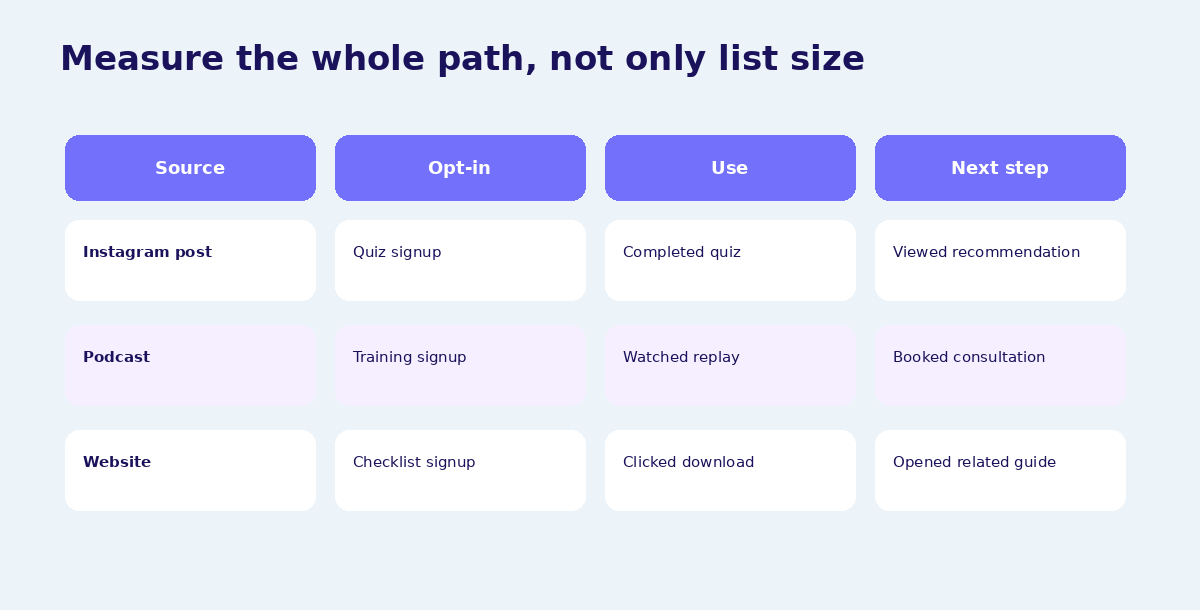
For a training, track signup rate, attendance or viewing, and the action people take afterward. For a downloadable, track signup rate, delivery clicks, replies, and the next relevant action. For a quiz, track starts, completions, opt-ins, outcomes, and what people do after receiving the recommendation.
Look for evidence of usefulness too. Are people replying, showing up prepared, or choosing the service that fits them? Those signals help you improve the lead magnet and follow-up.
Compare each offer against its own purpose. A training that prepares consultation calls does a different job from a quiz that segments a broad audience.
Maintain the system without rebuilding everything
The day-to-day social layer needs fresh promotion. The evergreen layer needs periodic maintenance. Neither one requires you to start over every month.
Before each social campaign, refresh the promotion angle and check the date, links, and call to action. The underlying asset can stay the same if it is still useful.
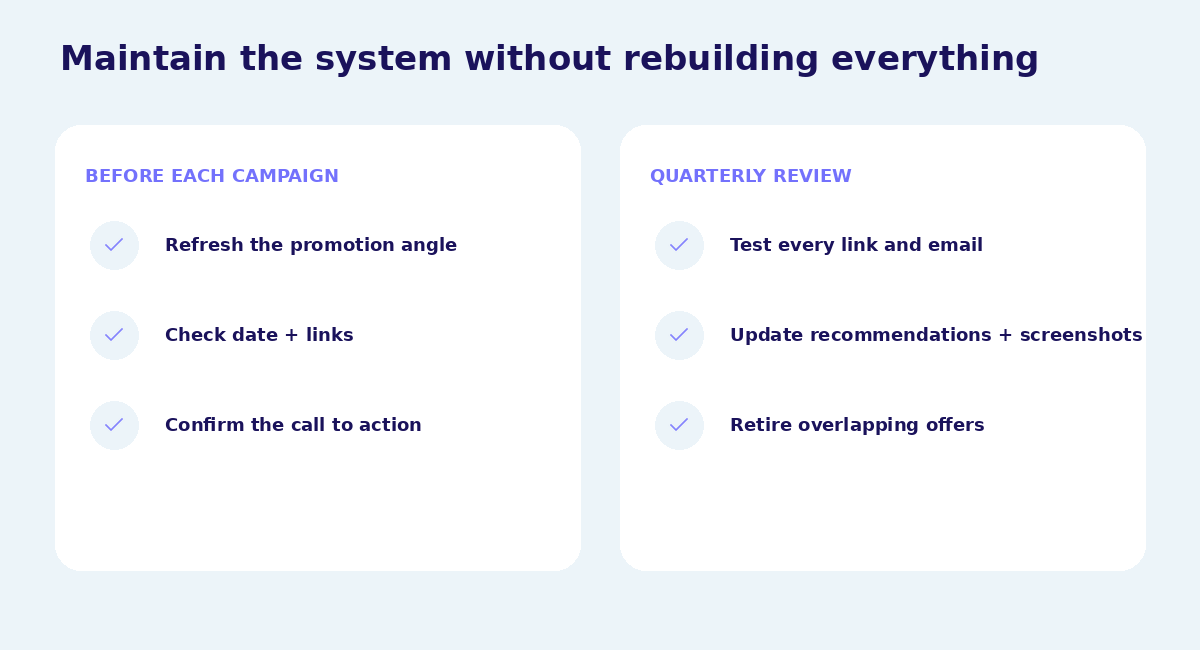
Review evergreen offers regularly. Check every link, email, recommendation, service name, screenshot, date, and outcome. Make sure the promise still matches what arrives.
Quizzes can remain useful for years because the recurring question can remain useful for years. Interact first documented Henry’s Coffee Matchmaker in 2021, and the quiz is still live in 2026. TONIC’s template quiz has evolved through multiple versions since 2018. Both businesses can update the recommendations and language without throwing away the core experience.
Retire or combine offers that solve the same problem for the same person. A smaller set of maintained paths is easier to understand and support.
A simple 30-day plan
Do not begin with software. In week one, review DMs, calls, comments, and support requests to find one place where your audience repeatedly asks for deeper help. In week two, decide whether the person needs to learn, do, or receive personalized direction, then build the smallest useful training, downloadable, or quiz.
In week three, connect signup, confirmation, delivery, and welcome, then test every step on a phone and desktop. In week four, promote the offer where you already have attention, collect questions and replies, and improve the weakest moment. Add a second format only after the first one works.
Frequently asked questions
How many lead magnets do I need?
Start with one useful lead magnet. Work toward three distinct options if list building is central to your marketing, usually a training, a downloadable, and a quiz. I would avoid featuring more than three equally prominent choices unless your audience data gives you a good reason.
Can one quiz really stay useful for years?
Yes, if the underlying question remains relevant. Review it regularly and update the language, links, outcome guidance, products, and services. The quiz does not need to be rebuilt just because the calendar changed.
Should I put all three lead magnets in my link in bio?
You can, as long as the choices are clear and distinct. Label them around what the person wants to do, such as learn, use a tool, or find the right path. Put the most broadly useful evergreen option first.
What if I do not have much traffic yet?
Build distribution and the opt-in path together. Use social content, partnerships, search, podcasting, video, referrals, or whatever channel fits your work to bring the right people to one focused offer. Then improve the offer from the questions and behavior you see.
Do I need a website before I start?
No. You can send people from social content, a podcast, a video, or a partner directly to a focused signup page or quiz. A website becomes useful as an evergreen home base, but it does not have to be the first thing you build.
Does a webinar need to be live?
No. Live works when questions and interaction are part of the value. On-demand works when people need access on their own schedule. You can also run a training live, improve it from the questions people ask, and turn the strongest version into an evergreen recording.
Which email platform should I use?
Use a reputable platform that can deliver the promised resource, record the source of the signup, segment people when that improves relevance, automate a welcome path, and handle unsubscribes correctly. Product names, limits, and prices change, so verify the current plan against your actual workflow instead of choosing from an old feature chart.
The bottom line
The best way to build an email list in 2026 is to become more helpful, not more aggressive. Give people a way to go deeper than the content that first earned their attention. Make the exchange clear, deliver what you promised, and keep the follow-up connected to what they actually wanted.
Use the big three as your system: a webinar or training for learning, a downloadable for doing, and a quiz for personalized direction. Rotate them where people expect freshness, and keep the strongest paths easy to find on your website and link in bio. That is a list-building system that can grow without losing the reason people joined in the first place.