
TONIC Site Shop has a template match quiz that has added more than 80,000 subscribers to its email list. The quiz has gone through multiple iterations since it first launched in 2018, and the current version is one of the best examples of a successful product recommendation quiz in 2026. It is direct, beautifully designed, and fun without making people work too hard to get what they came for.
If you are not on TONIC’s email list, you should be. It is one of the best examples of a branded newsletter in existence. Take their quiz, get your template recommendations, and then stay on the list for a prime tutorial in email marketing.
Jen and the team at TONIC have actually created two versions of this quiz over the years. Both are excellent examples of what was working at the time, and the evolution from one to the other represents a broader shift I have seen in quiz strategy since we started Interact in 2013.
From ‘What’s Your Brand Cocktail?’ to a Template Match Quiz
The first version was called ‘What’s Your Brand Cocktail?’ It started with self-discovery. You answered fun questions about your style, personality, and business, learned which cocktail represented your brand, and then received a website template recommendation based on that result.
It was an incredibly successful quiz. TONIC reported that the original version generated more than 7,000 subscribers in one year, while pairing people with the Showit website template that fit their brand. The result told people something interesting about themselves while naturally leading them toward a product.
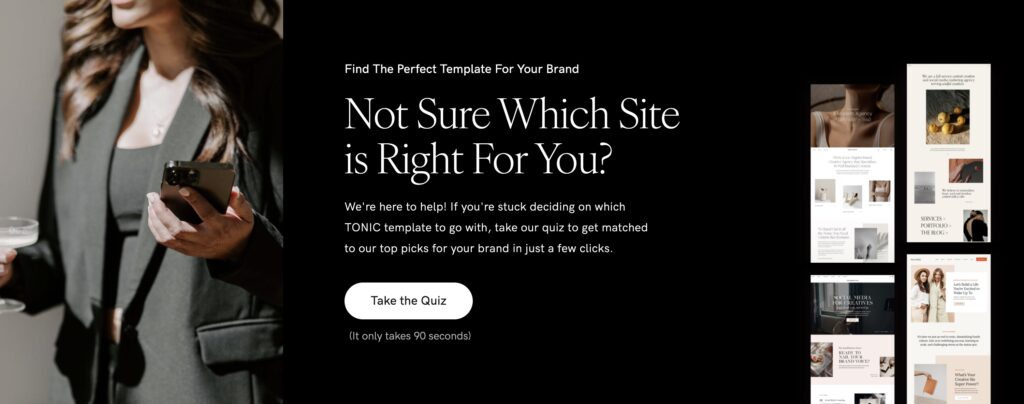
The second version is more simply a template match quiz. The promise is direct: take a 90-second quiz and receive three hand-picked templates that match your style, brand, and goals. There is no mystery about where the experience is going. You take the quiz because you want help choosing a website template, and the quiz gets you to that answer quickly.
This represents one of the biggest changes I have seen in what audiences want from quizzes.
People Still Want Self-Discovery, but They Also Want the Answer
The first version of TONIC’s quiz led with discovery. The product recommendation was woven in at the end. The new version leads with the product recommendation while weaving moments of self-discovery throughout the experience.
That is the shift.
People still enjoy thinking about themselves. They still enjoy identifying their style, preferences, personality, and goals. But the broader sentiment has moved toward: Just give me the answer. Just give me what I came here for. Do not beat around the bush or make the experience more complicated than it needs to be.
At the same time, direct does not have to mean stale.
The questions in the new quiz are still fun. They still make you think about yourself, and they still create an enjoyable experience. TONIC has simply removed the distance between what the person wants and what the quiz delivers.
The Quiz Helps Segment Quiz Takers
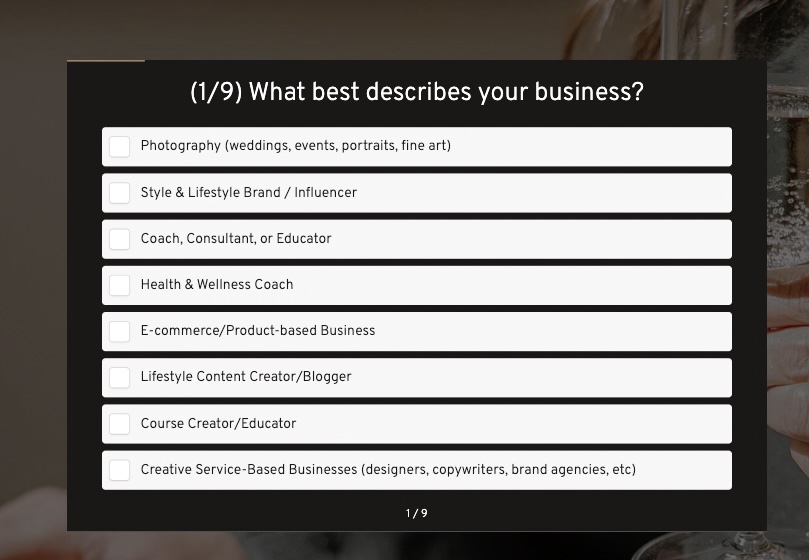
One of the first questions asks what type of business someone is running. Options include photographers, coaches, consultants, educators, ecommerce businesses, creators, influencers, and creative service businesses.
That information is relevant to recommending a website template at the end. A photographer may need a very different layout from a course creator or an ecommerce business.
It is also valuable information for TONIC’s email marketing. TONIC can use the answer to understand who is joining the list and send more relevant emails, examples, resources, and product recommendations.
Two birds, one stone.
This is one of the biggest advantages of a product recommendation quiz. You are not asking questions just to make the quiz feel interactive. Every useful question can improve the recommendation and help you understand the person who is taking it.
Visuals Make the Quiz Highly Engaging
Of course TONIC would have amazing visuals in its quiz, but the team takes the cake when it comes to creating an engaging experience.
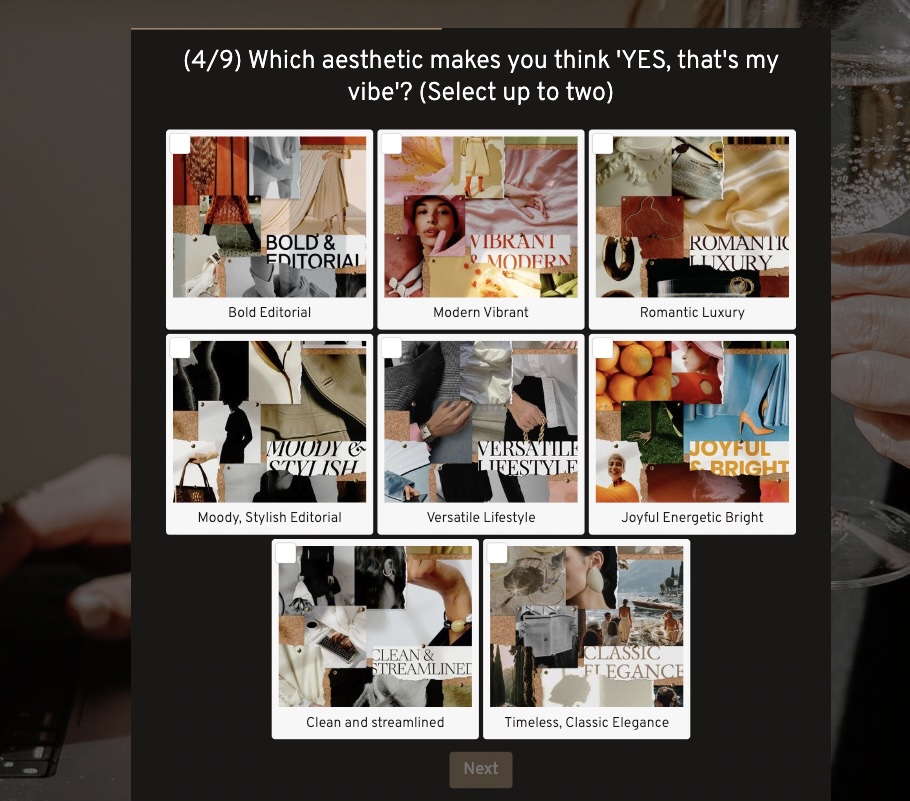
One of the questions asks which aesthetic makes you think, ‘Yes, that’s my vibe.’ Instead of describing the options with text alone, TONIC presents visual mood boards for styles like bold editorial, romantic luxury, joyful and bright, and classic elegance.
This does two things at once. It makes the question easier to answer because people can react to something visual, and it makes the experience more enjoyable.
It also collects much better information. Someone may have difficulty describing their desired aesthetic in words, but they can look at an image and immediately recognize what feels right.
Why This Quiz Can Beat a Chatbot
This is where a product recommendation quiz like TONIC’s can beat AI every single time.
It is not that an AI chatbot could not recommend a website template. Given enough information about TONIC’s products, the AI could probably produce a reasonable answer.
The difference is the experience.
Going through Jen’s quiz does not feel like asking a generic system for a recommendation. It feels like Jen and the TONIC team are guiding you through the decision. Their humor, judgment, aesthetic taste, and understanding of their customers are built into every question and answer.
Even the page introducing the quiz includes a joke about TONIC being qualified to play matchmaker because the team has successfully predicted the winner of The Bachelor four seasons in a row. That line has nothing to do with the technical process of selecting a website template. But it immediately sounds like TONIC.
A chatbot is going to speak like a chatbot. Jen speaks like Jen.
That matters because people do not only want an accurate answer. They want an answer from someone whose judgment they trust. They want the feeling that a real person who understands the problem has thought through the recommendation.
The current quiz toes the line perfectly. It is more focused on the product than the original Brand Cocktail quiz. It gets people to their goal faster. But it still retains the unique humanity people crave.
The Opt-In Form Adds Value
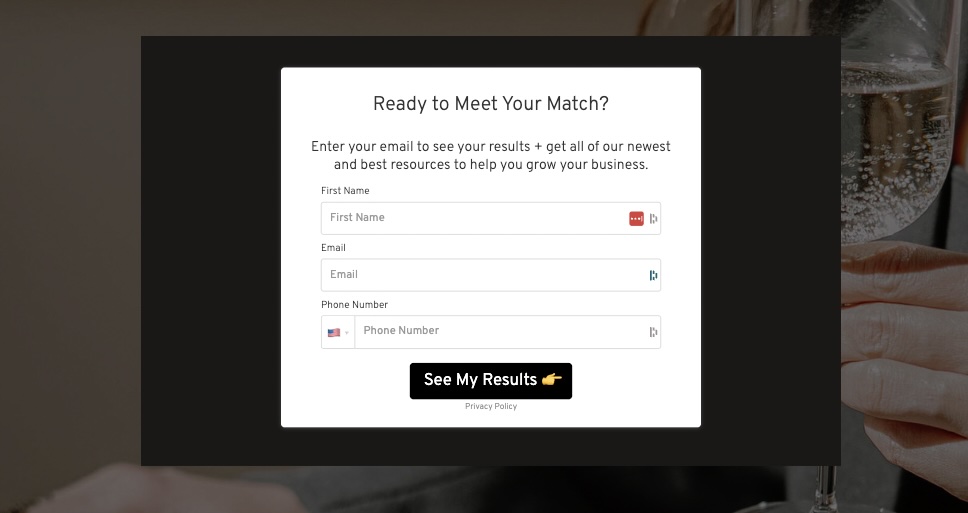
The opt-in form appears after someone has answered the quiz questions and is ready to see their match.
TONIC does not frame the form as, “Give us your information so we can market to you.” The promise is that you will see your results and receive additional resources to help grow your business. The form is a natural continuation of the experience rather than an interruption.
That distinction is important.
People are not entering their email address just because they enjoyed answering questions. They are entering it because the quiz has built momentum toward something they now want to see.
The form integrates and segments directly with ActiveCampaign, so the answers and result can follow the person into TONIC’s email marketing. The business gets a new subscriber, but it also knows something useful about that subscriber.
The Results Give Immediate Value
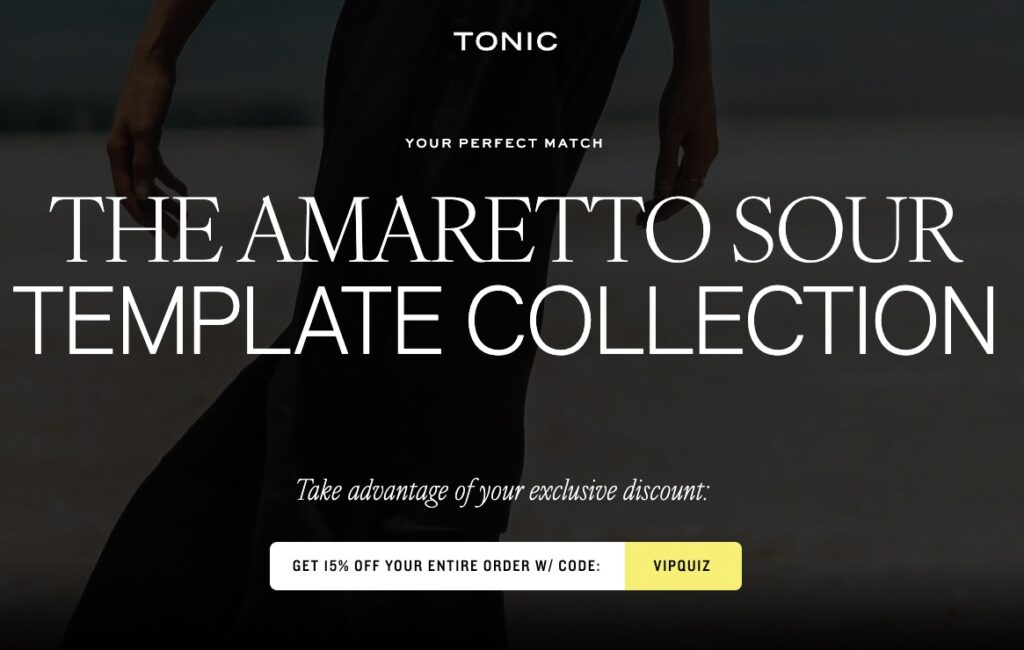
The result pages are full of value. They do not simply display the name of a template and send you to a generic shop page.
The result introduces your template match as the right fit for your brand and gives you a clear next step. The current experience can also include a discount that makes it easier to move from recommendation to purchase.
Jen and the TONIC team are seasoned entrepreneurs. They have worked with thousands of creative business owners and understand what people are trying to communicate through their websites.
That judgment is encoded into the results.
This is what makes a strong product recommendation quiz different from a filtering tool. A filter asks what features you want and narrows down a catalog. A recommendation quiz interprets what you have said and guides you toward the option that makes the most sense.
The person does not just get an email subscription in exchange for completing the quiz. They receive personalized direction that can help them make a real business decision.
Follow-up Emails Make a Smooth Transition to Email Marketing
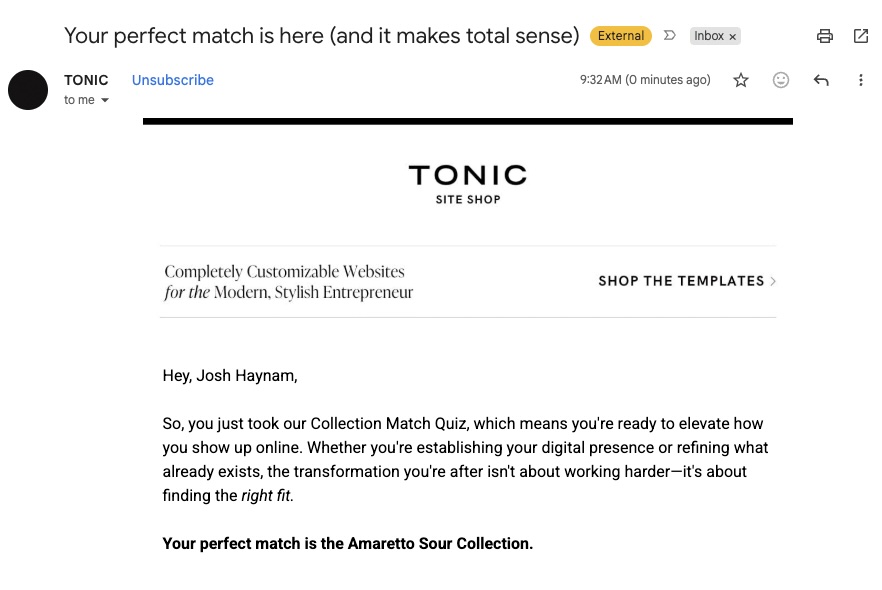
TONIC sends a welcome email immediately after the quiz with the person’s result included in the message.
The email does not suddenly change the subject or begin an unrelated marketing sequence. It continues the exact conversation the quiz started. The subject line announces that the person’s perfect match is ready, and the email reminds them which collection was selected for them.
That creates a smooth transition from the quiz to the inbox.
The subscriber immediately gets used to hearing from TONIC through email, and the first message proves that the emails will be connected to something they care about. From there, TONIC can introduce templates, teach website strategy, share examples, and bring the person further into the brand.
Again, the emails from TONIC are some of the best. The quiz is not an isolated lead-generation tactic. It is the front door to a much larger branded email experience.
What the Evolution of TONIC’s Quiz Shows
The original Brand Cocktail quiz was not wrong. It was exceptionally creative and successful. It matched what people responded to at the time, and it turned self-discovery into product recommendations in a way that felt completely natural to TONIC.
The current template match quiz represents the next evolution.
It is more direct about the problem it solves. It tells people exactly what they will get, gets them to the answer quickly, and makes the product central to the experience.
But it does not lose the personality that made the original version work.
That is why the quiz has continued to operate so successfully and has generated more than 80,000 leads over its lifetime. It does both things people want. It gets them where they want to go quickly and succinctly, while still bringing the humanity, judgment, and personality of the people behind the brand.
People do not want to fight through an elaborate experience just to receive an answer.
They also do not want a stale recommendation from a faceless machine.
They want a person guiding them toward what they want. TONIC Site Shop’s template match quiz shows exactly what that looks like.